




The News
South Africa will raise the alarm over the steep decline in global health aid at a UN HIV/AIDS meeting opening today, officials said, which comes as the US plans to permanently cut its $8 billion HIV relief programme, pushing the country’s fragile coalition government toward a fiscal and diplomatic crisis.
The withdrawal of the President’s Emergency Plan for AIDS Relief (PEPFAR), first reported by Semafor on Thursday had already been slashed by 75%, leaving a $115 million stopgap until March 2026.
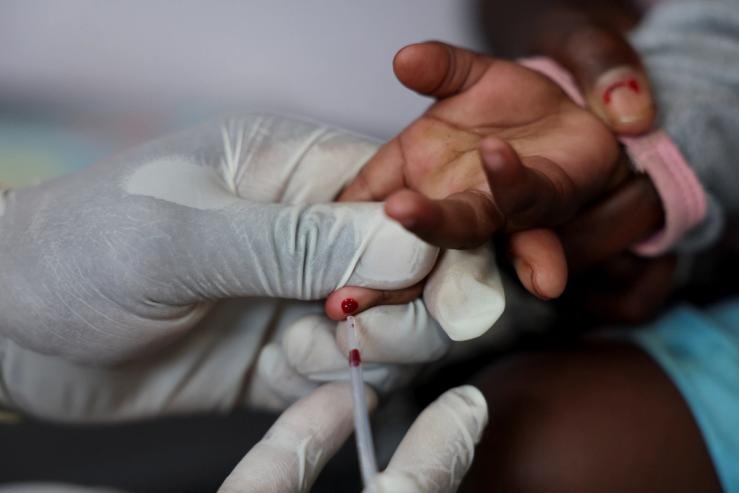
Washington’s move has raised fears among frontline nonprofit organizations that interrupted health visits and missed treatment will hamper patient care in the country with the world’s largest number of HIV patients.
South Africa’s health ministry spokesperson Foster Mohale said the country had already been eyeing a plan B for HIV/AIDS funding, while acknowledging that the decision to wind down PEPFAR “did not come as a surprise” after the initial freeze at the beginning of last year.
“The department has long been working on a self-reliance plan... to minimize the impact of PEPFAR withdrawal,” Mohale said.
Pretoria plans to raise the issue of broader health funding cuts at a two-day UN High-Level Meeting on HIV/AIDS in New York, opening today, which brings together ministers, development banks, and major donors to assess the gap between global health needs and available funding.
South Africa is expected to use the meeting this week to rally more funding from delegates, including UNAIDS, the Global Fund, and the World Bank on grounds that the contraction of US support risks reversing two decades of progress in the world’s largest HIV program.
The PEPFAR decision comes against a backdrop of diplomatic tensions between Washington and Pretoria — in part over South Africa’s Iran relationship, and economic policies for its Black population — and could further strain ties.
A senior government official, speaking to Semafor on condition of anonymity, said they were surprised by Washington’s decision to link HIV treatment to domestic policy changes — including what they described as “invented issues” such as claims of genocide against Afrikaners. The official said the demand to dismantle Black Economic Empowerment policies was viewed internally as a direct reversal of commitments made to South Africans who fought against apartheid.
Another official said the move was especially baffling given recent progress in economic ties between the two countries, including the preliminary gas supply agreement between ExxonMobil and the planned Zululand LNG terminal.
But Kamil Ali, spokesperson for the trade, industry and competition department, said negotiations with the US over a new trade deal remained constructive.
In this article:

Know More
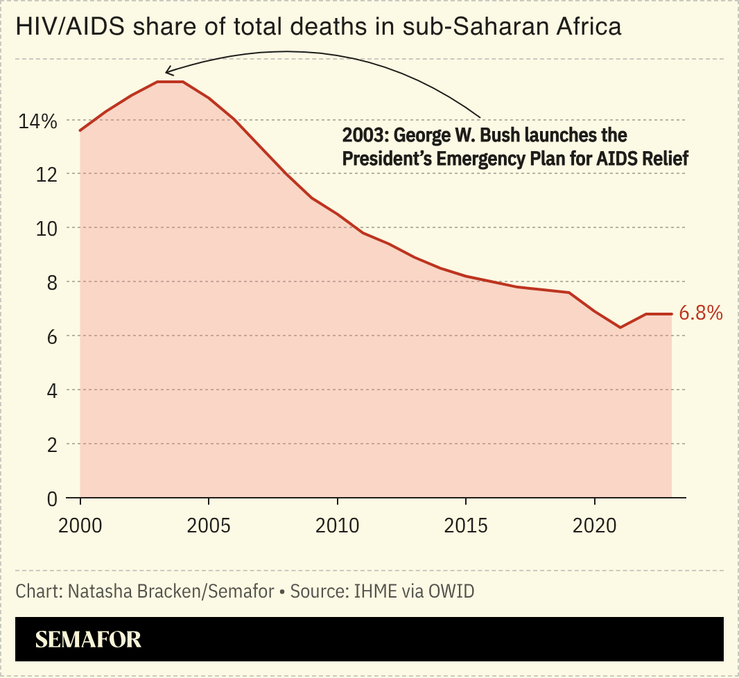
The South African HIV treatment program is already under strain, say researchers and nonprofit groups. South Africa has about 8 million people living with HIV, the most in the world, and PEPFAR has been a cornerstone of providing treatment since its founding under President George W. Bush in 2003. South Africa’s budget is unlikely to absorb the hundreds of millions of dollars needed to replace PEPFAR-funded services without major reallocation or external financing, experts say.
While the state produces most antiretroviral drugs directly, PEPFAR funds the data capturers, tracing teams, and community health workers to keep patients on treatment. The first phase of the US drawdown has already led to more than 8,000 job losses, disrupting services in 40% of public clinics in KwaZulu-Natal.
The Aurum Institute, one of the country’s largest frontline health partners, has cut its workforce from roughly 400 staff to just 17 in the rural province of Limpopo 18 months following the collapse of US grants. Abram Mashabela, an operational site manager for Aurum Institute, told Semafor the total withdrawal will all but wipe out the NGO’s capabilities in the province. “My biggest worry is that people will miss treatments… that will lead to drug-resistant HIV strains. All the hard work we have done will go down the drain,” he said.
Mashabela said the collapse of this community tracing network directly complicates and undermines South Africa’s rollout of Lenacapavir — the new, twice-yearly preventive vaccine — leaving public clinics without the administrative personnel required to manage the complex distribution of the breakthrough therapy.
Researchers’ models indicate an unmanaged US withdrawal could lead to as many as 296,000 additional HIV infections and up to 65,000 extra deaths by 2028. Scenario modeling suggests that higher transmission and treatment interruption could raise domestic health spending by nearly $2 billion over the next decade.

Tiisetso’s view
When a donor turns a health program into leverage, clinics and community workers pick up the tab. The US decision to end PEPFAR threatens the operational backbone of South Africa’s HIV response and converts a predictable funding stream into a fiscal gap.
PEPFAR did more than buy pills. It paid for data capturers, tracing teams and outreach workers who keep patients in treatment. Strip that support and Pretoria inherits rehiring, retaining and the clinical fallout from interrupted care.
That said, there is a case for transition. After two decades of external support, moving toward country ownership and sustainable financing is reasonable. Emergency aid, by definition, is temporary. The arrival of Lenacapavir massively cuts the frequency of missed doses that require tracing, adding weight to the argument in theory because it means fewer visits to far-flung areas and longer protection. The community workers PEPFAR pays are often the ones who remind patients, follow up on missed visits and keep records up to date.
This is not to say Washington’s attempt to force Pretoria into gutting laws born of its constitutional settlement doesn’t cross a line. Pressing South Africa to dismantle post-apartheid transformation measures as the price of treatment is indefensible, undermining sovereignty and making cooperation on health harder.
The current approach undercuts Washington’s own interest in disease control. Curbing an infectious disease abroad protects health at home, reducing the risk of cross-border transmission and lowering the chance of new, costlier public health threats.
So, the question is design, not principle. A defensible transition needs to protect the continuity of care by preserving outreach teams during the glide path and coordinating the rollout of new products like Lenacapavir so clinics can deliver injections on schedule. An abrupt, politicised withdrawal will be costly — in money, in trust and in lives.

Room for Disagreement
Right-leaning local organizations like Lex Libertas and Solidarity — who have been lobbying the White House directly — have backed the withdrawal of PEPFAR.
“The government was given reasonable concerns but chose ideological defiance instead,” said Ernst Roets, executive director of Lex Libertas. “The American response is therefore reasonable even if its consequences may be deeply tragic.”
Tech billionaire Elon Musk, who has repeatedly called South Africa’s black economic laws racist, labeled the US State Department checklist on his X feed “reasonable demands.”

Notable
- Zambia has suspended talks with the US over a proposed $2 billion health funding package after Washington linked the deal to the signing of a critical minerals agreement and made demands for sensitive health data, which Lusaka rejected.