



The News
The Trump administration’s Ebola quarantine facility in Kenya is drawing criticism from public health experts who warn it could undermine the broader virus response.
Dr. Craig Spencer, an emergency physician and professor of public health at Brown University who survived Ebola in 2014, told Semafor that the Kenya facility — built to isolate Americans exposed to the Ebola virus during the outbreak in Africa — and quarantine requirements could deter would-be American volunteers from helping with the response.
“It could lead potential volunteers to stay home, with the knowledge that they may not be able to be let back into the country if they’re infected,” Spencer told Semafor. “It’s already hard enough to get six or eight weeks off of your job if you’re an infectious disease doctor or nurse. It’s going to be that much harder if you have to beg your boss for eight weeks, and then in addition, you need to spend three weeks afterwards quarantining someplace like Europe or Kenya, because the US won’t allow you back in.”
“And we know, from my own experience and from others, that you’re not going to transmit the disease if you’re not symptomatic,” he added.
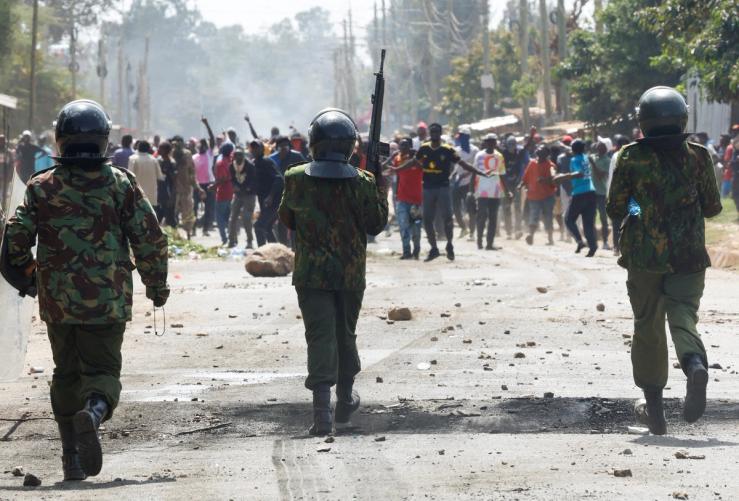
The plan for the Kenya facility has faced local protests and legal challenges, with a Kenyan court ordering the suspension of the project after a lawsuit raised constitutional concerns. Nonetheless, construction has continued and a State Department official confirmed to Semafor that exposed but asymptomatic Americans may be transported to the facility for a 21-day quarantine period.
“The US government is working with the Government of Kenya and other partners to plan for a facility for individuals at risk of exposure to the Ebola virus. Kenya was selected due to proximity, airports in the region having limited capability, and to ensure Americans can be evaluated and receive assistance in a timely [manner],” the official added.
Spencer compared the arrangement to the US pilot rescue from Iran, arguing that while the US went to great lengths to evacuate the pilot and ensure his safety, American Ebola responders are instead offered only a “maybe” on transfer to care at a permanent facility.
In a statement to Semafor, a HHS spokesperson said the administration “has identified tertiary facilities with the necessary expertise and ability to provide full-service, high-level care to Americans [at the Kenya site] who the onsite clinicians feel require evacuation.”

Notable
- The full scale of the outbreak in the Democratic Republic of Congo is still unclear, Reuters reports.