




The News
MTN Group – Africa’s biggest mobile operator – is leading an industry push to relax national telecoms rules, pitching shared networks as a fix for the continent’s $100 billion digital infrastructure deficit.
Senior Vice President Ebenezer Asante told Semafor the old telecom model, in which companies competed to build their own private networks, must be replaced by “shared ownership” of critical infrastructure if Africa is to capitalize on the next wave of financial technology and artificial intelligence.
The GSMA, the industry’s main lobby group, has reinforced the message, calling for “urgent, coordinated action” between governments, regulators and companies to treat telecoms as infrastructure and adopt a “shared responsibility.
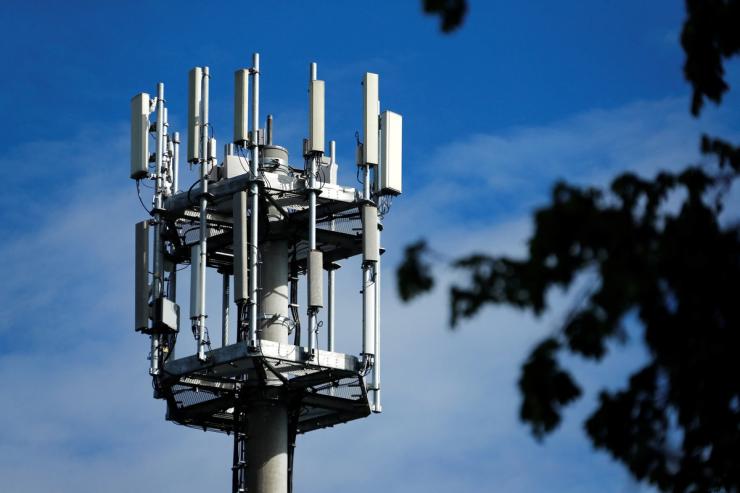
For years, the continent’s telecom companies followed a simple playbook: buy the rights to broadcast a mobile signal, spend billions building a proprietary network of cables and towers, and guard that physical equipment from rivals. It is an expensive strategy that paid dividends during the voice boom. But as the continent moves from basic telecom services to complex data, cloud computing, and mobile financial services, that siloed infrastructure model is proving costly.
Estimates from the industry and the World Bank place Africa’s digital infrastructure funding gap at $100 billion. Even for giants like MTN —– which already pours $2 billion in capital expenditure into its networks annually —- the realization has set in that no single balance sheet is large enough to bridge the gap alone, while also funding next generation technologies like 5G rollouts and localized AI models.
“That layer of digital infrastructure is not one that requires competition. It’s one that requires shared ownership,” Asante said. “And that is a conversation we are having … even for the governments and regulators we’re engaging with, we’re telling them that the issue of risk should be a shared responsibility”.

Know More
In practice, the shared model Asante proposes treats internet infrastructure as a critical public utility. Instead of digging trenches to lay fiber cables to the same city block, or building duplicate cell towers, rivals would co-invest in a single physical network, competing only on the services they run over it.
To make this a reality, MTN is spearheading the African Group of Six, an alliance of the continent’s largest mobile operators that also include Vodacom, Airtel Africa, Orange, Axian Telecom and Ethio Telecom. The alliance, set up in 2023 accounts for 60-65% of the continent’s subscriber base. Asante did not name the governments it is having conversations with.
Beyond infrastructure sharing, the grouping has been lobbying governments to help close the usage gap where an estimated 700 million-plus Africans live within range of a mobile network but cannot afford to get online. In early 2026, the alliance signed an agreement with the GSMA to launch a pilot program aimed at putting $40 entry level 4G smartphones into the hands of the poorest citizens.
The operators want finance ministries in six target countries — DR Congo, Ethiopia, Nigeria, Rwanda, Tanzania, and Uganda — to remove import duties and luxury taxes on entry level devices.

Tiisetso’s view
Africa’s telecoms operators are making a rational push that the continent’s regulatory patchwork is becoming too expensive to tolerate.
Central banks and national antitrust watchdogs worry that shared networks and cross-border licensing will entrench incumbents. That risk is real, but so is the cost of clinging to a model that forces each national operator to build out their own towers and fiber while capital remains scarce. The industry’s push for harmonized rules is a recognition that fragmentation imposes its own monopoly — one of inefficiency, higher prices and stalled digital adoption.
The geopolitical backdrop strengthens the operator’s case. As the US, China and Europe harden their digital borders, scale has become a prerequisite for survival. North America enjoys the scale of federal hegemony while Europe engineered a single digital market to outlaw roaming chargers and harmonize data laws across sovereign states. MTN, Vodacom and Airtel and their peers are the closest thing Africa has to continental champions. Backing them is a strategic hedge against irrelevance. A continent that wants to matter in the next phase of the digital economy can’t afford to behave like 50-plus separate countries.

Room for Disagreement
Think tanks such as Cape Town-based Research ICT Africa champion infrastructure sharing to lower market entry barriers, but warn that it must be coupled with strict open access mandates. Without them, industry bodies like the Internet Service Providers’ Association, a trade body, fear consolidation simply creates a closed cartel that permanently locks smaller operators out.
The most prominent example of this regulatory friction played out in South Africa with a gruelling, multi-year saga of Vodacom-Maziv deal. In an attempt to pool physical resources, Vodacom proposed a $750 million tie up with Maziv, the country’s largest fiber network company, to jointly accelerate fiber rollouts. Regulators blocked it, fearing the deal would create an unassailable monopoly. It took an appeal, and binding commitments — including divestitures — for the decision to be overturned in 2025.

The View From Rwanda
The debate extends to digital payments. Operators want “passporting,” where a financial license issued in one country is recognized across borders. Ghana, Rwanda and Kenya have introduced a fast-track system under which a financial app is vetted and approved in one of those countries, the others will automatically accept it.
Rwanda’s Central Bank Governor John Rwangombwa said the goal is instant, low-cost cross border payments. “Africa hosts one of the most dynamic financial ecosystems, yet cross-border transactions remain costly and inefficient, limiting trade and financial inclusion,” he told the Inclusive FinTech Forum in Kigali.
This pilot is closely watched as a test case for the Africa Continental Free Trade Agreement (ACfTA), which aims to break down these barriers. The Central Bank of West African States still demands country-by-country licensing even among the eight countries that share the same currency. Financial watchdogs view telecoms acting as dangerous regulatory arbitrage, fearing that seamless digital wallets are a backdoor for capital flight.

Notable
- MTN is upgrading its sprawling network of cell towers, installing computer servers at the base of them to process artificial intelligence.