




The News
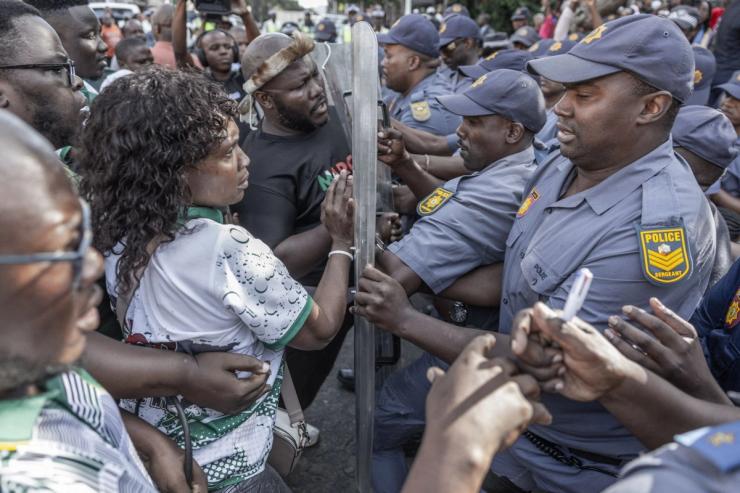
South African police fired rubber bullets, tear gas, and stun grenades to disperse hundreds of migrants seeking emergency refuge following a wave of vigilante assaults — violence that has escalated diplomatic tensions with Ghana and Nigeria.
The forceful clearance of roughly 400 displaced African and Asian migrants gathered outside a police station in Durban on Thursday has drawn sharp condemnation from Human Rights Watch, which said that the vigilantes were operating with impunity.
The spate of vigilante attacks on migrants in South Africa coincides with a highly contested local government election campaign. Independent researchers warn that political parties and self-appointed community leaders are increasingly weaponizing anti-immigrant sentiment to capture votes from a frustrated electorate.
The violence has also seen Accra and Abuja petition the African Union to force an emergency debate on the subject at next month’s AU summit. Pretoria has hit back at their request, labeling Ghana’s move as “regrettable” and saying South Africa has a right to secure its borders.

Know More
Both Ghana and Nigeria have formal evacuation programs to repatriate citizens who feel unsafe. The number of distressed Ghanaians signing up to leave has risen to 800 this week, from 300 when foreign minister Samuel Okudzeto Ablakwa announced the rescue plan earlier this month. Abuja has registered at least 130 Nigerians, while Malawi, Zimbabwe, Lesotho and Kenya have issued security advisories to the nationals.
According to data from the Inclusive Society Institute, a Cape Town-based policy think tank, public distrust of African immigrants in South Africa climbed to more than 73% in 2025, up from 62% four years earlier. Emerging civic movements like “March and March,” working alongside established groups like Operation Dudula, have capitalized on this shift, expanding their footprint from the coastal KwaZulu-Natal province directly into the economic hubs such as Gauteng.
Armed with traditional weapons, sjamboks, and pepper spray, these groups have conducted aggressive so-called “citizens’ audits” of small businesses, blockaded public health facilities, and set up unauthorized checkpoints outside schools to vet individuals based on language, accent, and documentation.
Political analysts say the country’s expanded unemployment rate, currently sitting above 40%, have made non-nationals an easy target for political figures. The violence comes weeks after the South African cabinet approved a plan to institutionalize a “First Safe Country” principle, which automatically disqualifies asylum seekers who pass through other safe nations before reaching South Africa.
Home Affairs Minister Leon Schreiber has welcomed the policy, saying it will improve national security and attract skilled professions. But human rights lawyers argue the state is advertently validating the core grievances of the vigilantes.

Notable
- Tens of thousands of anti-immigration protesters took over central London for a “Unite the Kingdom” rally. Demonstrators marched against high net-migration numbers and what they termed a threat to British identity.