




Yinka’s view
The debate about who controls Africa’s resources has expanded considerably in recent years, from critical minerals to domestic capital to the terms on which foreign investors operate. But one frontier remains underweighted in that conversation, despite being among the most consequential: digital public infrastructure.
Control of digital infrastructure is not a question of ownership. It is a question of planning. You can let someone else build the road but you shouldn’t let them decide where it goes.
State regulators will need to focus on the architecture of governance, meaning the decisions about how systems are designed, what data they collect, and how they interconnect. Within those guardrails, private partners can bring financing, expertise, and deployment speed. That is not a sovereignty concession. It is a division of labor that has successfully built everything from ports to power grids.
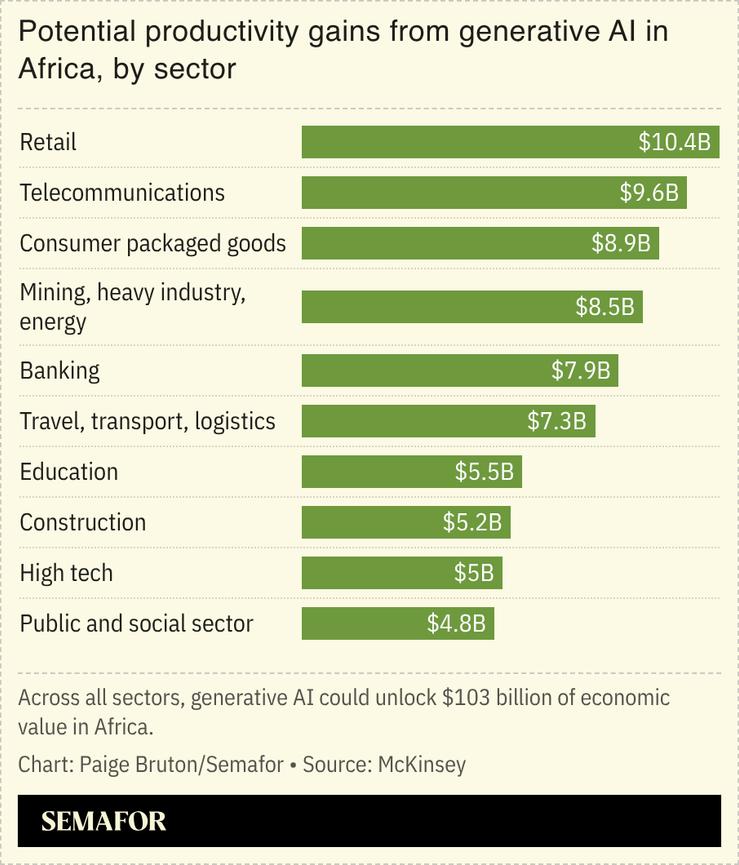
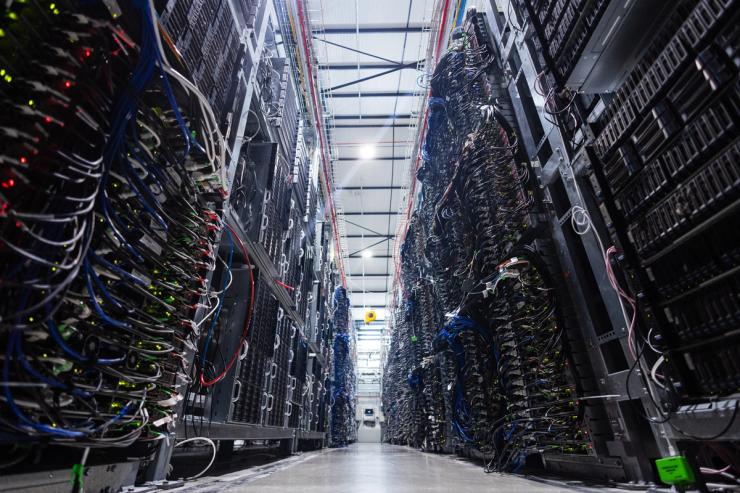
The scale of what needs to be built is significant. Meeting the continent’s growing demand for data center capacity could require as much as $20 billion in cumulative investment — and that’s before AI began accelerating the timeline. Yet the funds can be sourced at home. The continent holds $4.4 trillion in domestic capital, with more than $2 trillion managed by institutional investors. Hardy Pemhiwa, CEO of Cassava Technologies, which operates one of Africa’s largest fiber and data center networks, says the biggest bottleneck is financing new digital asset classes — not technology or even demand.
African countries are entering the AI era at roughly the same starting point as the rest of the world, argues Pemhiwa. Sovereignty at this moment is not about keeping foreign partners out. It is about being absolutely clear — in law, in design, in governance — about what can never be handed over.

Notable
- Africa’s data center construction market is set to reach $4.58 billion by 2031, according to new research from Arizton.