




The News
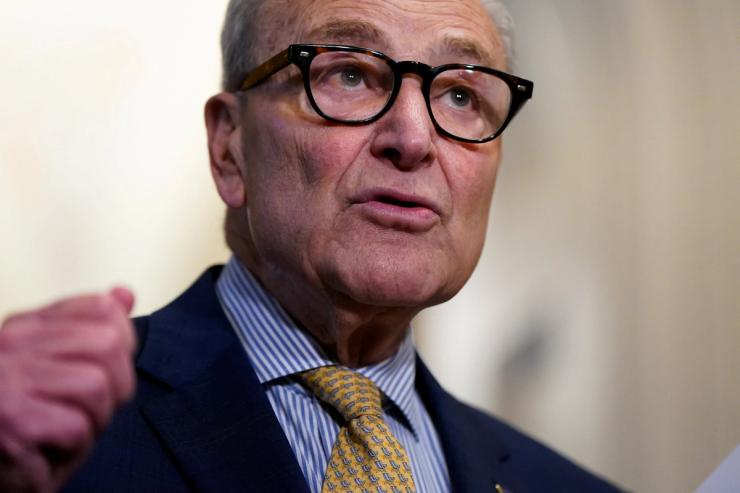
This week marked the start of a new era in cyber risk with threats of artificial intelligence hacking — and Senate Minority Leader Chuck Schumer fears that Washington isn’t ready.
Anthropic’s new frontier model, Mythos, cracked MacOS during testing, according to The Wall Street Journal. On Monday, Google’s Threat Intelligence Group said it thwarted the first known case of cybercriminals using AI to discover and target a previously unknown software vulnerability that could have allowed hackers to bypass two-factor authentication.
“There’s a discussion now that says, ‘it’s coming,’ right?” Google Threat Intelligence Group Chief Analyst John Hultquist said in an interview with Semafor. “That’s a misinterpretation of facts. The new era is here.”
Google engineers said they detected hackers targeting a “zero-day vulnerability,” a type of security weakness unknown to the software’s developers, which therefore leaves defenders “zero days” to deploy patches.
Schumer wrote to Homeland Security Secretary Markwayne Mullin earlier this month warning that new AI systems could dramatically accelerate cyberattacks against critical infrastructure, while criticizing the agency for its response thus far. He said he wants DHS to provide Congress with a national coordination plan for responding to “frontier AI-enabled hacking” by the start of July.

Know More
“This is a race between cybersecurity defenders and AI-enabled hacking — and there’s no time to waste,” Schumer wrote, citing risks to hospitals, energy grids, water infrastructure, schools, elections systems, and telecommunications.
Schumer also urged Mullin to encourage President Donald Trump to nominate a director for DHS’ Cybersecurity and Infrastructure Security Agency, which has gone without a permanent leader since the start of the second Trump administration.
Trump has hamstrung the agency in his second term: Five months in, one-third of CISA’s workforce had left the agency through layoffs, buyouts, or resignations. The Trump administration’s proposed 2026 budget sought to cut CISA’s funding by nearly $500 million, or around 17%, and its proposed 2027 request would cut the agency’s funding by a further $707 million. Presidential budgets are aspirational and rarely become law, however.

Notable
- US cybersecurity officials are considering shortening deadlines to fix critical flaws in government IT systems in light of threats posed by AI hacking tools, Reuters reported.