Takeaways from the US-China summit

May 15, 2026, 10:36am EDT
PostEmailWhatsapp
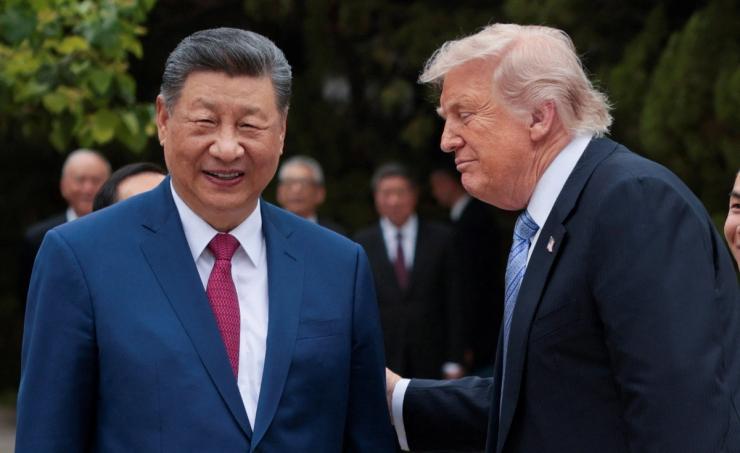
Xi and Trump.
Evan Vucci/Pool/Reuters

Disillusion with China was building within the US before President Donald Trump first arrived in the White House in 2017, but he defined the darkening mood with Cold War-style language.

Then during his recent summit with Chinese leader Xi Jinping, two countries that had a year ago been raising tariffs on each other to well north of 100% — effectively barring trade between one another — were suddenly behaving like long-lost pals.

Semafor China Columnist Andy Browne wrote of how the meeting in Beijing harkened back to a prior, simpler era. Semafor also reached out to a bevy of experts and politicians for their assessment of how this long-awaited summit went from a US perspective, and what their takeaways were.
Ely Ratner, Principal, The Marathon Initiative, former US Assistant Secretary of Defense  The summit did little to allay concerns that President Trump is retreating from the strategic competition with China that his first term rightly recognized.
Sen. Thom Tillis, Republican from North Carolina:  90% of success is showing up. … It’s worth being there. But the details will be what we finally find out about any change in posture on Taiwan — hopefully not, I would be opposed to that — and any kind of details on potential future adjustments for tariffs and non-tariff trade barriers.
Erica Downs, Senior Research Scholar, Columbia University’s Center on Global Energy Policy:  It’s not entirely surprising that Xi ‘expressed interest’ in buying US oil. He undoubtedly knows that Trump wants China to buy more big ticket items from the US and oil certainly fits the bill along with Boeings and agricultural products. So, expressing interest in buying oil from the US is a way to please Trump without actually making a firm commitment. And, yes, China never purchased much oil from the United States.
Ian Bremmer, President, Eurasia Group  the world’s strongest leader hosts the weaker president of the world’s strongest country…and for all the posturing and symbolism, not much happened on trade or tech, taiwan or iran. most meaningful outcome probably the intended start of some discussions on ai guardrails, but the biggest news is—for now—a mutual interest in stable relations.
Ken Moriyasu, Senior Fellow, Hudson Institute  Xi’s oft-cited ‘transformation not seen in a century’ is a veiled reference to US decline and China’s ascent. He’s asking Trump to accommodate that shift — including restraint on Taiwan arms sales. Compared to his predecessors, Xi is less focused on reforming China itself and more on reshaping how the world engages with — and ultimately accepts — China as it is.
Rep. John Moolenaar, Republican, chair of the US House of Representatives Select Committee on China:  President Trump was very respectful, gracious, and received a warm welcome. And I think that set a tone for future meetings, because difficult subjects are being discussed. ... I think it’s building a relationship of trust.
Evan Feigenbaum, VP, Carnegie Endowment, former US Deputy Assistant Secretary of State  The trip involved a lot of theater, some modest agreements, and perhaps greater predictability going forward — which is an achievement with a president as mercurially unpredictable as Trump. But we should have no illusions that this has ‘stabilized’ US-China relations because all of the things that made them unstable in the first place are still with us: clashing security concepts, obvious differences of ideology, and competing economic interests.
Jim McGregor, Chairman for Greater China, APCO  Trump will come home to face a large group of China hawks in Congress and within his own administration who recently have been quiet. But they are still dead set against selling China advanced chips and tools, and opening up the US market to Chinese factory investments that can over time overwhelm and underprice American manufacturers.
Bob Davis Author of Superpower Showdown  President Trump did everything but literally mouth the words ‘constructive strategic stability’ to indicate that he shared Xi Jinping’s new formulation for engagement. Quite a turnaround for a president whose first term saw the US disengage from a China his team labeled a ‘revisionist power.’
Ryan Hass Director, John L. Thornton China Center, Brookings Institution  Both leaders framed the visit as a success on their terms without yielding any major concessions to the other. Xi highlighted that he had established a new US-China relationship based on ‘constructive strategic stability,’ whereas Trump touted his personal chemistry with Xi and the positive results it generated for American companies.
Scott Kennedy Senior Adviser, Center for Strategic and International Studies  Considering the overall framing (‘constructive strategic stability’), President Trump’s ingratiating tone, the lack of any challenge to Xi’s claim that the US and Taiwan are the only source of risk in the Taiwan Strait, no Chinese commitment to help with Iran, the meager business deliverables, and absence of discussion of the global distortions created by China’s industrial policy machine and high-tech push, China clearly comes away the winner from the summit.
AD
AD