




Tim’s view
So far, the main direct threat that average Americans seem to have faced from the Iran War has been higher gasoline prices. But more could be at risk.
On Monday, as US President Donald Trump launched a short-lived naval operation to escort ships through the Strait of Hormuz, Iran carried out an air attack against an oil storage terminal in Fujairah, UAE. The port — now one of only a few crucial trade lifelines for the Gulf — has been hit several times during the war, occasionally forcing a pause on oil exports. The storage facility is owned by the energy infrastructure company VTTI, which is jointly owned by the UAE’s state oil company ADNOC, the commodities trader Vitol, and IFM, a private equity firm. IFM’s global infrastructure fund counts some of the largest US public pension funds, including CalPERS and New York State Common, as investors.
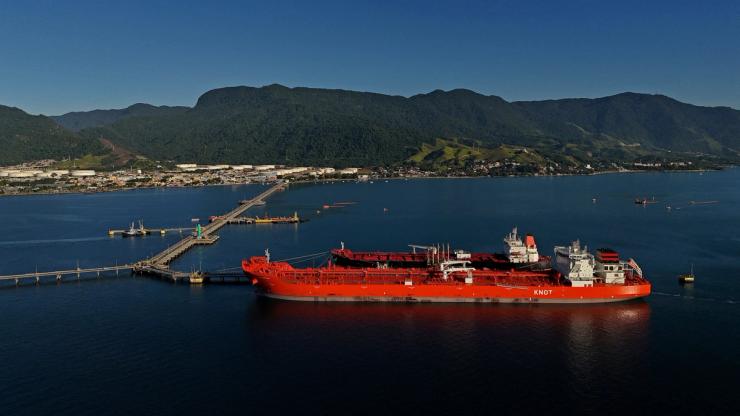
Many US pensions have in recent years put a larger share of their assets into the hands of private equity firms, chasing higher returns for retirees. PE, meanwhile, has poured capital into the infrastructure needed to move fossil fuel molecules around the world. Firms like Brookfield, GIP, BlackRock, and Stonepeak own networks of pipelines, terminals, tankers, and more — including many in the Middle East that are now under threat of being either bombed, or at least suspended from service.
Put it together, and wars that revolve around energy infrastructure could pose a new material risk to long-term investors, Jim Baker, executive director of the Private Equity Stakeholder Project, a nonprofit watchdog group, told me. “Until a couple of months ago, most people in private equity didn’t think there was a geopolitical risk in shipping LNG in and out of the Gulf. Events have proved otherwise,” he said. “There’s a question of whether these firms have fully communicated potential risks to their investors.” (IFM didn’t return a request for comment; CalPERS declined to comment.)
Arguably, despite certain physical risks, a war like this one is exactly the perfect time for gutsy investors to dive into the energy midstream, as the consequences of an overreliance on chokepoints drive renewed spending on supply chain diversification, especially in the Gulf. But as Carlyle CEO Harvey Schwartz — whose firm is pursuing its own risky venture into Middle East energy infrastructure via its acquisition of Lukoil’s global assets — said during Semafor World Economy, markets are bad at assessing geopolitical risk. Retired teachers shouldn’t pay the price.

Notable
- Carlyle Group is partnering with Diversified Energy to acquire approximately $1.2 billion worth of oil and gas assets in Oklahoma from Camino Natural Resources, the Financial Times reported, as the investment firm seeks to benefit from rising energy demand driven by AI growth.