




The News
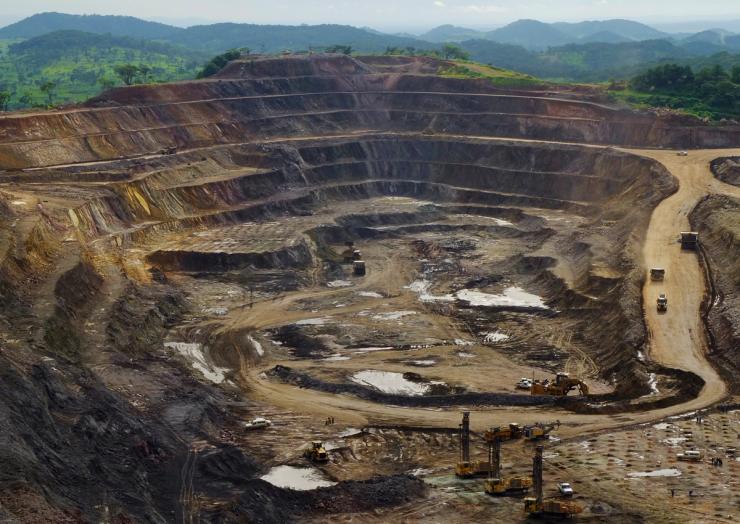
DR Congo’s cobalt export quotas have forced the metal’s largest producers to adopt new strategies as the central African country seeks to capture more value from its natural resources and curb illegal flows.
DR Congo, which accounts for over 70% of global cobalt mine supply, introduced export caps late last year, ending a long stretch in which shipments were frozen, aiming to steady the market in freefall and give Kinshasa firmer control of a mineral that underpins the global battery industry.
Last week the London-listed Glencore confirmed that its cobalt output fell 39% in the first three months of the year to 5,800 tons compared to the same period in 2025, a deliberate move to avoid producing material it cannot export under its 2026 quota of 22,800 tons. The company has instead adopted a copper-first regime, lifting production by 19%.
“Our DRC assets are now prioritising copper production as existing finished cobalt inventories are sufficient to fully deliver into near-term quota levels,” the Swiss-based mining major said. The strategy — leaving cobalt in the ground or dissolved in processing circuits — avoids the cost and regulatory hassle of producing metal it cannot immediately ship out.
China’s CMOC, the world’s largest cobalt supplier, is also leaning into copper expansion but it has decided to keep cobalt output at record levels, telling investors earlier last week that its high ore grades and low byproduct costs mean there is a commercial logic to maintaining normal output even if only a fraction can be exported.
The executives’ comments at the CMOC shareholder meeting last week suggest that the company is sticking to its guidance issued in January to produce as much as 120,000 tons of cobalt from its DR Congo operations. Its export entitlement is just 31,200 tons — roughly a quarter of DR Congo’s 96,600 tons basic national quota.
In another quota-driven move, Eurasia Resources Group, a privately owned Luxembourg-based miner in which the Kazakh government owns a 40% stake, slashed cobalt hydroxide output by 70% to 5,7000 tons in 2025, giving it scope to double output in 2026 from the depressed base. Its ERG export entitlements are 12,325 tons.
In this article:

Know More
The cobalt market swung from a post-pandemic peak above $77,000/mt due to supply chain bottlenecks and surging EV demand, but they spend much of 2023 and 2024 in a dramatic collapse, bottoming at $22,000/mt in 2025, a nine-year low driven by oversupply.
In response, the DR Congo froze exports the same month, followed by the quota system in October. The idea was to tighten supply, lift prices, and give Kinshasa more control over the mineral against the backdrop of a vast unregulated artisanal mining sector and conflict in eastern DR Congo.
Prices more than doubled within a year, surging back to $57,000/mt by December, with industry trackers and analysts immediately flagging operational and logistical challenges in implementing quotas. Kinshasa’s intervention is now the central rule shaping the world’s most important cobalt supply chain.

Tiisetso’s view
The days of cheap, easy-access minerals are over. Or at least that is the message DR Congo hoped to send when it introduced its export quotas. And it worked out exactly as intended, as seen in the country’s big-three cobalt producers production reports, which wrapped up with Glencore’s first quarter output report last week, and in the cobalt market.
The pay off for the Congolese people is real. For a start, S&P Global’s modeling shows that the quotas could push the market into a near-term deficit, lifting prices and the DRC’s export value by roughly 24% in 2027 versus 2024.
Secondly, few can dispute the industrial logic of the system. ARECOMS, DR Congo’s mining regulator, and the government say the strategic quota carve-out is intended to reward refineries and projects that create domestic processing jobs and skills.
For the first time in centuries, DR Congo is not a spectator in the pricing of its own wealth. Through the strategic reserve, administered by ARECOMS, Kinshasa is positioning itself as a swing producer — much like OPEC in the oil markets.
For companies, the winners of this regime are deep-pocketed miners with export entitlements or the ability to carry stockpiles. For example, CMOC can keep its mines running at full speed, betting that it can simply stockpile the metal it isn’t allowed to ship yet. Glencore, on the other hand, can choose when to process and sell.
This dynamic creates a survival-of-the-fittest scenario where smaller companies — who can’t afford to sit on piles of unsold metals — might be forced into the arms of larger competitors.
The role of the regulator, ARECOMS, has the potential to further complicate the situation for smaller operators. The agency has reserved the right to buy back cobalt stocks that exceed authorized quotas to build up its national reserve. It is unclear whether Kinshasa will pay market rates or cover production costs, meaning miners face a layer of price uncertainty that could spark a wave of deals.
Ultimately, it all adds up to a system designed to benefit Congolese people with higher prices, jobs, and by creating sovereign mineral levers it can pull whenever global markets get too comfortable.

Room for Disagreement
Peter Major, mining analyst with Modern Corporate Solutions, said that while the quota logic assumed that formal channels could be strengthened, in practice, it would make the black market even more valuable. “The DRC has so many (unregulated artisanal miners), the ban is only partially effective and it affects the legitimate transparent large producers more than it does the non-transparent opaque producers,” he said, referring to illicit mining.

Notable
- Zimbabwe, Africa’s biggest lithium producer, granted Chinese firms special quotas last month, allowing them to export the battery metal, barely two months after Harare banned exports.