




The News
South Africa is hoping to lure back engineers working abroad as part of a recruitment drive to ramp up nuclear power capacity and ultimately supply about a tenth of the nation’s electricity, the country’s most ambitious energy project in decades.
The plan aims to attract skilled migrants and South African expatriates, especially those working in the United Arab Emirates, which hired large numbers of local engineers during the build-out of its Barakah Nuclear Plant over the last decade.
It forms part of a $120 billion-plus energy roadmap aimed at stabilizing South Africa’s electricity grid and transitioning away from the nation’s longstanding reliance on coal. The nuclear component, targeting 5,200 MW of new generation capacity by 2039 — is the most contested pillar of a strategy that includes a major expansion in solar, wind and gas to power infrastructure.
But state-owned entities — from power utility Eskom to energy regulators — tasked with pulling off one of the most sweeping energy projects on the continent are facing a severe shortage of skills.
The urgency was underscored in parliament last week, where the National Nuclear Regulator CEO Ditebogo Kgomo told lawmakers that the government was casting a wide net to source reactor operators, safety specialists, and engineering consultants.
“The 168 people we currently have are not enough to be able to undertake the work related to the expanded program,” she said. This recruitment drive is designed to provide immediate technical support while local “talent pipelines” are rebuilt, Kgomo added, creating a knowledge transfer bridge between South African teams and international specialists.
In this article:

Know More
The collapse of a major nuclear energy project in South Africa in 2010 saw thousands of specialists leave the country. Many went to the UAE, while others joined US-based startups like X-energy. The country had poured more than 9 billion rand ($550 million) into the Pebble Bed Modular Reactor, which briefly made South Africa one of the global centers for advanced nuclear engineering before the project was shelved due to delays and rising costs.
South Africa’s earlier attempt to scale up nuclear power was also stymied because of growing concerns over corruption. Under former President Jacob Zuma’s administration, a 9,600 MW plan tied to Russia’s Rosatom was struck down by the courts for bypassing parliamentary oversight.
The new push to expand nuclear skills is unfolding just as South Africa’s nuclear program enters a more concrete phase on the ground: Eskom recently wrapped up a fresh round of public hearings in the Eastern Cape as part of the environmental impact scoping process for the Thyspunt site — a remote stretch of South Africa’s southern coastline.
Residents in nearby towns packed into community halls last week as consultants presented the project scope, which lays out Pretoria’s option to build the 5,200 MW plant through either traditional reactors or a fleet of small modular reactors (SMRs) that are faster to build. Earlier this year, the state-owned nuclear corporation, NECSA, launched an international search for SMR development partners.
The draft report setting out what will be scrutinized in the environmental impact assessment estimates that the construction phase at Thyspunt could create more than 10,000 jobs, drawing engineers, welders, and project managers into an undeveloped landscape of dunes, wetlands, and rough Atlantic surf.
Residents raised concerns about fishing grounds, heritage sites, dune systems, and the impact of thousands of workers arriving in small towns, a sign that public resistance could slow the project.
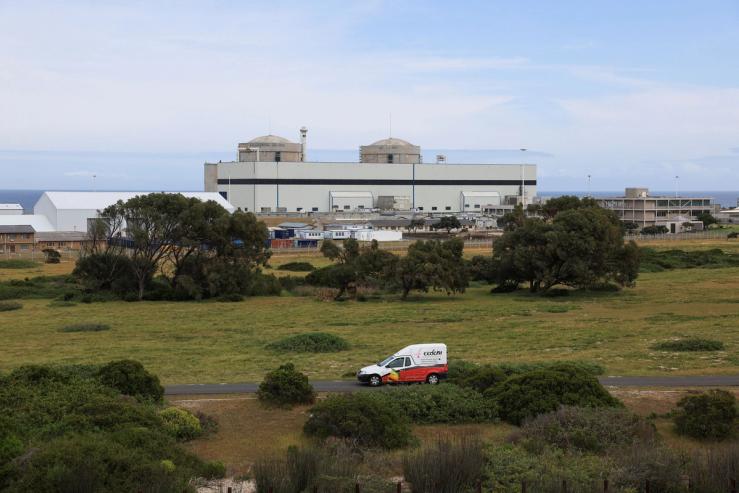
Thyspunt is not the only site in play. Another site at Duynefontein, near the existing Koeberg plant outside Cape Town, was already granted environmental authorization and is further along in the site licensing process. But it is now facing a fresh court challenge from environmental groups, who argue that the authorization is unlawful and based on outdated planning data.

The View From THE US
Americans are rethinking their energy preferences, according to a new Gallup poll. It showed that support for solar and wind dipped since 2021, even though most people still back them. At the same time, nuclear power is enjoying its strongest public support in years, making it the only major energy source gaining ground.
The divide in the US is mostly political, the poll showed, with Democrats still overwhelmingly favoring renewables, while Democrats are more open to nuclear, natural gas, and oil. Even so, nuclear is the closest point of convergence between the two parties — a rare area where attitudes are narrowing rather than widening.

Notable
- More than 20 African countries are actively exploring nuclear power to address an electricity deficit that leaves 600 million people without power across the continent.