




what’s at stake
The fear that artificial intelligence will eliminate white-collar jobs en masse has policymakers hunting for preemptive solutions.
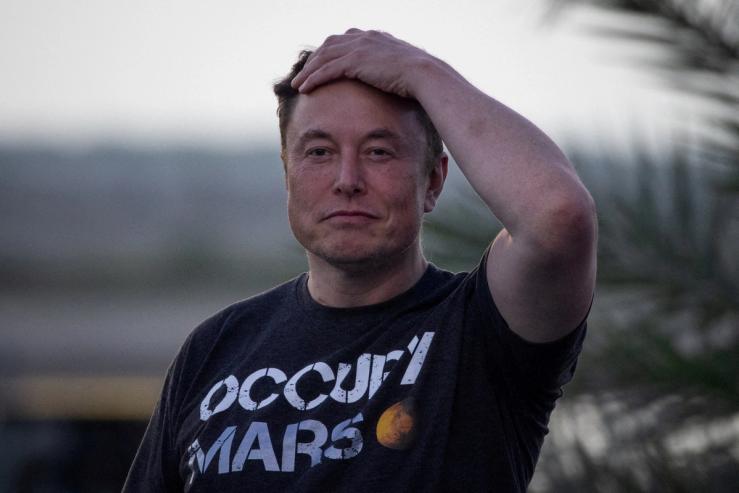
One progressive idea that predates AI is gaining traction in unusual corners: a government-backed universal basic income for workers displaced by the AI boom. Tesla’s Elon Musk voiced support for the idea, calling for a “universal high income” through regular checks from the federal government. Sam Altman, CEO of OpenAI, endorses a similar concept.
It’s controversial: Critics warn that imposing a universal basic income would be costly; others point to research that shows experiments with UBI haven’t worked as intended; and hanging over the debate is the open question of whether dire predictions about AI-fueled worker displacement will pan out.
In this article:
who’s making the case
Alex Bores, a New York State Assembly member and Democrat running for New York’s 12th Congressional District, argued that direct payments to Americans are a necessary “insurance policy” against the economic disruption threatened by AI:
“The enormous wealth AI companies are generating is built off our data, our ideas, our work. If AI transforms the economy and the role of human work in it, the gains should flow back to the public, not just to the people building the technology.
“AI executives themselves are telling us that their goal is to replace human labor entirely. They may not succeed, but the fact that they’re trying means that government needs to take it very seriously. We need an insurance policy, and the window to act is now, rather than try to claw it back after a handful of companies have displaced a significant share of American workers and captured the value.
“That’s why I’ve proposed the AI Dividend: direct payments to Americans — funded through a token tax on AI usage and government equity stakes in frontier AI firms, designed to automatically kick in on clear economic triggers. The program would also invest in workforce transition and public capacity to govern AI safely.
“A plan for direct payments is only part of the solution to the threats facing workers. Our tax code currently rewards companies for replacing workers — subsidizing AI investment while taxing the wages of the people being displaced. We need to reform that, reducing the ability to write off AI investment when it leads to less work.”
Ryan Bourne, an expert on economic policy at the libertarian Cato Institute, argued that enacting such a policy would be premature and too costly:
“Elon Musk’s call for a federally funded ‘universal high income’ is an idea for a future that remains conjecture. Yes, AI is displacing some work tasks and squashing entry-level hiring in some industries already. But jumping from that to predicting a full-blown singularity that delivers mass unemployment and astronomical national income levels should be filed safely under ‘speculative.’
“Anthropic’s early labor-market evidence finds no increase in unemployment in the most AI-exposed occupations, but slower hiring for younger workers, while overall US unemployment remains at 4.3%. AI will undoubtedly disrupt more jobs over time, but comparative advantage doesn’t disappear because AI gets better: when machines do more of certain tasks, humans will shift toward other jobs, and whole new industries will emerge.
“More modest US universal basic income trials have found recipients worked less and enjoyed more leisure, but showed little evidence of better entrepreneurship or lasting mental-health gains. Yet a basic income’s fiscal cost is high. Even $1,000 monthly payments to every American would cost $3.7 trillion annually — 50% of today’s federal budget.
“It seems fruitless to debate a bigger new entitlement we cannot currently afford to solve a labor-market apocalypse we haven’t yet seen.”

Notable
- Progressives are skeptical of tech billionaires’ support for universal basic income, Semafor’s Nicholas Wu reported.
- The debate over universal basic income has been raging for years, well before AI, and it’s evolved along the way even among backers, Vox writes.
- Andrew Yang popularized the idea during the 2020 Democratic presidential primary.