


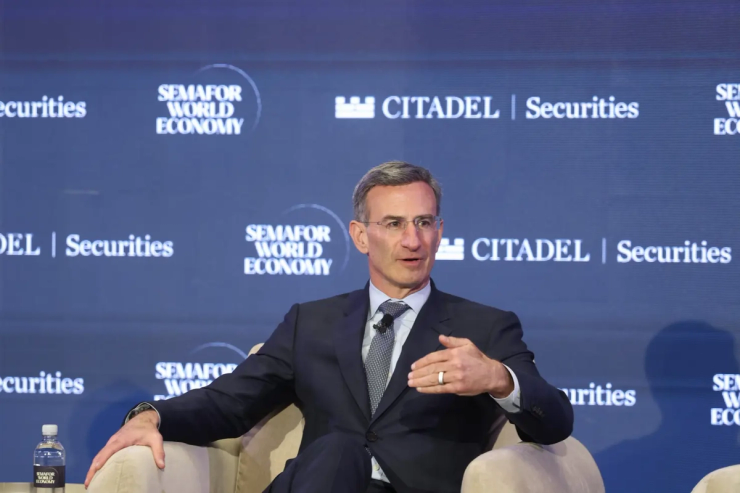
Whatever junior workers survive the automation of the knowledge economy will be scaling a pyramid that is steeper and sharper-elbowed. It also rewards EQ over IQ, finance executives said at Semafor World Economy last week.
“The faster that we can get them to master those skills and move up the value chain more into direct interaction with clients and thinking creatively, the better,” Lazard CEO Peter Orszag said. AI will lead to more fulfilling work, if not better work-life balance, for young bankers, he said. As for lower fees for clients? “I hope not,” Orszag said when asked whether M&A fees would come down if models do much of the spreadsheet and PowerPoint grunt work.
AI is already challenging the billing models of software firms, which are rethinking per-seat models in favor of contracts that capture some of the cost savings they generate, and law firms, which are rethinking the holiest of cash cows, the billable hour.
“If AI can do 90% of it in 15 minutes, you’re not charging for the full 12 hours” of work, Kate Barton, CEO of Dentons, one of the world’s largest law firms, said.
“There will be a hybrid” model that combines “the billable hour as well as some kind of value-based [fee] where the technology costs are incorporated.”