




Alexis’s view
One of the most eye-opening conversations I had at Semafor World Economy was about the fierce commercial battle playing out in space — and the impact that may have on the ground in Africa.
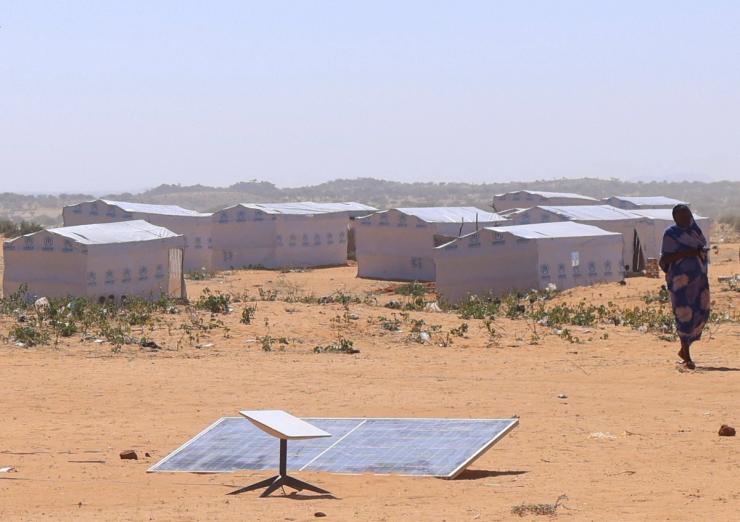
The chief executive of satellite company SES, which provides internet services in more than 30 African countries, told me his firm “can’t compete” with Elon Musk’s Starlink on price because it has “access to capital that very few companies actually can afford.” Both firms highlight the opportunity for satellite internet companies to reach millions of unconnected people in remote parts of the continent. And the market is getting crowded. Amazon is competing directly with Starlink for African consumers with a satellite network backed by a partnership with Vodafone, and last week struck a $11.6 billion deal to buy Globalstar, which operates a low-orbit satellite constellation.
Increased use of satellite technology could have a knock-on-effect in disparate ways: One estimate suggests that satellite technology could yield $900 million in annual agricultural productivity gains for the continent, such as water savings, improved crop yields, and reduced pesticide use.
But serious questions remain over whether this will result in actual benefits for ordinary people. The GSMA, the global mobile industry trade body, found sub-Saharan Africa has the world’s largest usage gap for mobile internet — 60% of its population lives within mobile broadband coverage but can’t get online due to various barriers, with handset costs cited as the biggest factor.
That doesn’t mean some companies and governments won’t benefit from satellite advances. Mining firms are already combining satellite imagery and AI technology to identify mineral deposits across the continent. SES CEO Adel Al-Saleh predicts competition will see the global “space economy” triple to $1.8 trillion within the next 10 years. The question is the extent to which this will trickle down to the continent.

Notable
- Starlink was banned in Namibia last month after it refused to comply with local ownership rules.