




The News
The Iran war will “redraw the global energy map in real terms,” the executive director of the International Energy Agency said Tuesday, as countries more closely scrutinize their energy ties.
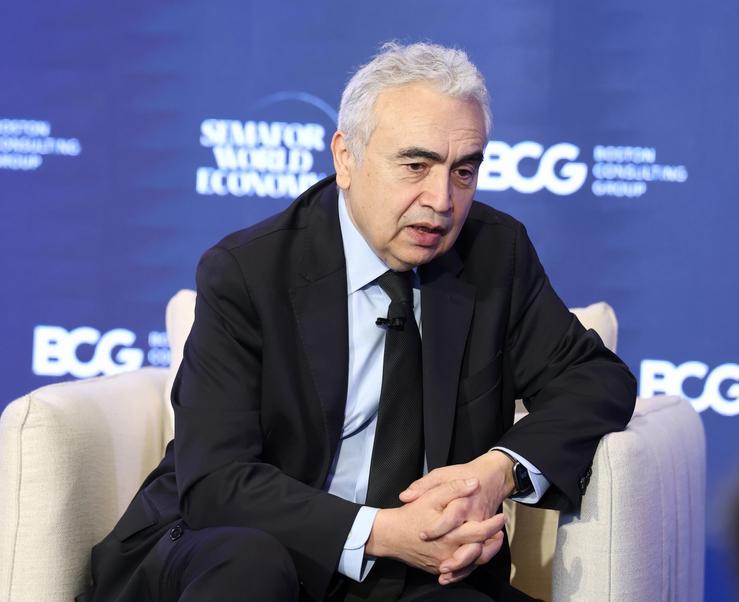
With tensions in the Strait of Hormuz exacerbated by a US blockade of all Iranian ports this week, Fatih Birol said at Semafor World Economy that “we are not going back to where we were” after the waterway reopens.
There will be a global “reaction,” Birol said, similar to the transformations that followed the 1970s energy shocks — which led to a surge in nuclear power and upended the auto industry — and Russia’s 2022 invasion of Ukraine, which led to strong growth in renewables.
“The question is, what will be the reaction,” Birol said.
He predicted more countries will prioritize energy security, adding a risk premium in trade based on the possibility for disruption, and whether countries can use their supply as leverage.
“Trustworthiness [and] predictability will be very important in the energy trade and energy security,” he said. “Which trade partners we are going to use will be a major, major chapter in the energy business.”

Know More
Birol, whose agency member countries last month agreed to release 400 million reserve barrels of oil, also said the IEA is “ready to act once again very quickly” to bolster global supply if needed, and that discussions about such a move are happening “all the time.”
He said oil releases, though, are only a “painkiller,” and that April will be more difficult for the global energy market than March, given that the last tankers to transit Hormuz pre-war are reaching their destinations.
The IEA said in its monthly outlook on Tuesday that global oil supply will fall by 1.5 million barrels per day this year, a contraction that will also dent demand.
Energy executives at Semafor World Economy on Monday also warned of the potential for long-term pain from the conflict. The TotalEnergies CEO said disruptions could become “a question of years” if the conflict escalates, while Lazard’s chief said the macro impacts are “not fully manifested yet,” with jet fuel, aluminum, and helium markets set to face “much more pressure.”