



The News
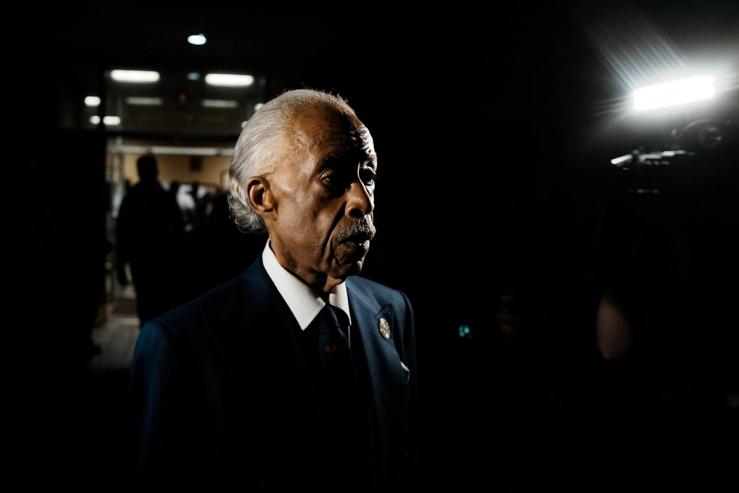
NEW YORK — Democrats showed up to Rev. Al Sharpton’s National Action Network with plenty of criticism for the Trump-era unraveling of racial equity programs, but fewer concrete plans for action.
“This administration has adopted a seek-and-destroy approach to anything that even looks like it might have something to do with helping disadvantaged communities or addressing inequity,” Pete Buttigieg told Sharpton, bemoaning how his work at the Transportation Department was being undone.
Kamala Harris warned that the conservative Supreme Court, “I am sad to say,” would roll back Section II of the Voting Rights Act, meaning Democrats were about to “lose that tool” that could stop “clearly racist-influenced laws to prevent certain people from voting.”
Beyond the excitement generated by nearly a dozen potential Democratic presidential contenders, the mood was grim at the NAN conference. Sharpton and his guests, from the candidates to Black pastors to embattled academics, worried that the gains of the Biden-Harris years were being rolled back. Younger voters weren’t organizing to fight for them again.
Harris got the most passionate response of the speakers and the warmest introduction from Sharpton, who chastised forces in the party that had wanted to deny her the 2024 nomination. The line to see her started hours before she spoke; she was interrupted by cries of “run again” even before she said that she was “thinking about it.”
“It’s amazing that we have a president in Donald Trump that claims that racism doesn’t exist, while he shows us what it looks like every single day,” said Kentucky Gov. Andy Beshear. “If you think a DEI policy is good for your company, they’re going to come after you.”
In this article:

The View From Democrats
Sharpton changed up his approach to each potential candidate, asking Arizona Sen. Ruben Gallego about the fight to release the “Epstein files” while giving New Jersey Sen. Cory Booker the stage for an uninterrupted speech.
“We have work to do when Black unemployment rates are skyrocketing and the man who [is] in the office right now and said, “Black people, what do you have to lose?’” Booker said. “We now know: It’s jobs.”
Each Democrat got a friendly hearing from NAN members who represented around 100 chapters of the group Sharpton founded 35 years ago — part of his journey from New York media to national political power.
They got the warmest reception when they defended racial equity policies that were being ripped out of the federal government and challenged in court by the Trump Justice Department.
Pennsylvania Gov. Josh Shapiro celebrated that his state “continue[s] to have an office for Diversity, Equity, and Inclusion.” He touted the $60 million that Pennsylvania has earmarked for “small diverse businesses” and the “billions” his state has pushed out to historically disadvantaged school districts.
“We believe diversity is our strength,” he said, not a “weakness, as Donald Trump thinks.” When he recounted how Philadelphia fought to keep historic markers “telling our actual history, the story of slavery,” Shapiro got more applause.
Rep. Ro Khanna, D-Calif., showered the civil rights movement with praise, crediting it for progressive ideas like Medicare for All. Democrats could do their part for the movement, he said, by using their power to reverse the anti-DEI trend, setting a goal of “100,000 Black Americans a year” in tech jobs.
“You do realize that in 2026, we’re going to have an African-American speaker of the House, Hakeem Jeffries?” Khanna said, conveying his message to corporations that were backing off racial equity policies under Trump.
“You do realize that when you look at all of the committees, whether it’s Maxine Waters or Bobby Scott or Bennie Thompson, you’re going to have many African-Americans from the South leading those committees?”

David and Brendan’s view
Beyond the horse race or the applause-o-meter — Harris won both — Sharpton’s conference was the 2028 field’s first long-form conversation with Black Democrats who are a critical bloc in the party. It was a style of dialogue that Democrats haven’t seen a lot of lately, as they search for the “liberal Joe Rogan” or ask working-class white Midwesterners why they abandoned the party.
Since Sharpton’s own campaign for president, 22 years ago, Black Democrats have largely gotten the nominee they wanted. Their votes were decisive in tapping Barack Obama, Hillary Clinton, and Joe Biden; Black Democrats and civil rights activists helped Harris win Biden’s veepstakes.
When Biden and Obama won, Black Democrats won policy changes, judicial appointments, and much more. Then, in 2024, Trump made inroads with young Black voters despite all of that.
Harris won the Black electorate by the smallest margin of any Democratic nominee this century — 83% to Trump’s 15%, according to Pew’s post-election exit poll analysis. She ran 10 points stronger with black voters over age 65.
The crowd in New York last week served as a reminder of that age gap; many in the audience rested on canes and walkers as panelists worried that the Black church was dying and that young Black people didn’t know movement history.
In front of Sharpton’s group, Democrats with 2028 dreams noted that corporate and academic America, all-in on diversity programs for so long, could be cowed by a president and didn’t want to lose business or grants if they got on his bad side.
They didn’t talk too much about how they’d restore affirmative action or voting rights protections if they manage to win.

Notable
- In Politico, Erin Doherty and Alec Hernandez captured just how decisively Harris won the room, and attendees’ angst about finding an electable candidate.
- Sharpton talked to Tim Balk to rate each potential candidate’s performance, finding some surprising interest in Beshear: “You know we may be looking at another ’92 with this Beshear guy.”
- In The Atlantic, Elaine Godfrey profiled Michigan Gov. Gretchen Whitmer, who wasn’t at NAN and hasn’t elbowed into the 2028 conversation as many Democrats expected her to.