




The News
The Trump administration will likely extend its waiver of sanctions on Russian oil this week, former Treasury and State Department officials said — teeing up a similar move on Iranian oil.
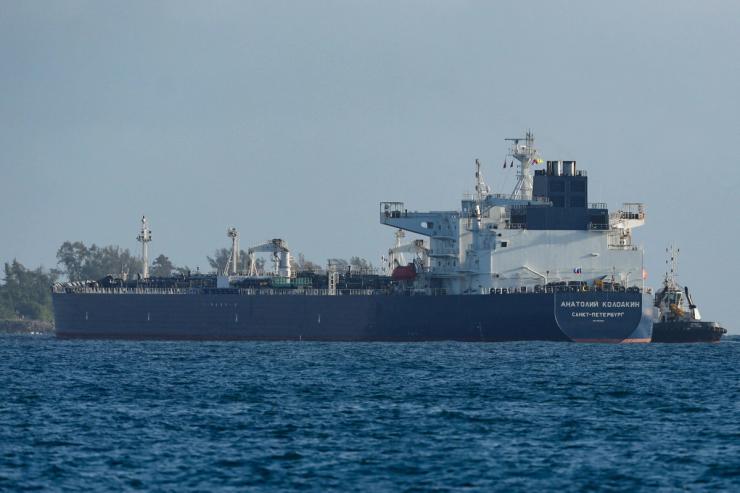
The Treasury Department last month greenlit the sale of previously sanctioned Russian and Iranian oil already on the water through April 11 and April 19, respectively. Treasury Secretary Scott Bessent explained the latter move as “jiu-jitsu-ing” to minimize the economic fallout from the Iran war, predicting it would boost global supply and lower prices.
Nearly a month later, experts say there’s little proof the moves have done much to bring down costs beyond temporarily soothing investors. A wider universe of buyers for Russian and Iranian oil has allowed the countries to charge more, with Russia at times making an extra $150 million a day. Meanwhile, most of the Iranian oil was already in transit to China.
“Tinkering with Iranian oil is not a sanctions question at the end of the day; it’s about the market’s general assessment of this conflict’s direction,” said Capitol Peak Strategies’ Alex Zerden, a former Treasury official.
Half a dozen former sanctions officials told Semafor recently that they’re still anticipating a Trump administration extension of the Russian oil waiver this week, which would pave the way for an extension of the Iranian oil waiver later this month. Americans are currently paying an average of $4 a gallon for gas, the most since 2022, while talks continue on an end to the war.
Both waiver extensions would serve as the latest sign sanctions have changed shape during President Donald Trump’s second term, morphing from a first resort for economic pressure into an occasional tool for leverage in markets.
“It’s hard for me to see a world where the Trump administration cracks down on Russian oil again, at least between now and the midterm elections,” said Chokepoints author Edward Fishman, who worked on sanctions at the Obama-era State and Treasury departments.
Even if Iran keeps its promise to temporarily reopen the Strait of Hormuz, there may still be a benefit to the Trump administration in extending the waivers. The president said on Truth Social Wednesday that the US is “talking Tariff and Sanctions relief with Iran.”
Prior to this week’s ceasefire, Ferrari and Associates’ Aydin Akgün, another former Treasury official, said: “I don’t see how they could get around” extending the Iranian oil waiver.
“The criticism [of the waivers] is very justified, but at the same time, if they’re in crisis and they need to do something to try to alleviate it, they should be able to use this tool,” said the Council on Foreign Relations’ Roxanna Vigil, another former Treasury official.
Supporters of the sanctions waivers insist they’re narrow enough to function “primarily as a market signal” without sacrificing pressure, as Foundation for Defense of Democracies’ Miad Maleki described the Iranian oil waiver. Critics counter that their extension risks cementing a new norm: Sanctioned nations that hit back hard enough will find the US could back off.
“What Russia and Iran showed — really, what Iran showed — is that your options aren’t either to accede to America’s policy demands or face the pressure of sanctions,” Fishman said.
“There’s a third option, which is … impose enough economic pain on the United States that Washington sees fit to ease sanctions to alleviate that pain on itself,” he added.
It’s unclear if Treasury officials would make any additional changes to either of the waivers, which exclude reporting requirements or payment restrictions and can be revoked at any time during the 30 days. A Treasury spokesperson said the department “does not preview actions related to our sanctions.”
In this article:

Know More
Every president has had to weigh the economic toll of sanctions against the political payoff. Trump’s approach represents a departure: “Instead of just worrying about imposing sanctions and what that’s going to do on prices, we’re affirmatively lifting sanctions because of the high oil prices,” said Georgetown Law School’s Peter Harrell, another former State official.
It’s a playbook Trump has used before; he lifted sanctions on a Russian company in 2019 after an aluminum shortage drove prices up. This time is different; the waived sanctions on Russian and Iranian oil had been in place for longer.
Lawmakers on both sides of the aisle have warned against doubling down.
“I don’t really like it,” Sen. Thom Tillis, R-N.C., told Semafor. “If it’s a temporary sort of release valve, I understand why the administration has to do it — but longer-term, that’s no bueno.”
But the GOP-controlled Congress is unlikely to push back much further. As Russia continues to wage war on Ukraine, a bipartisan Senate bill ratcheting up sanctions on Moscow has remained stalled for nearly a year.
That could change if Democrats prevail in the midterms. House Intelligence Committee ranking member Rep. Jim Himes, D-Conn., panned the waivers as “hideously stupid policy.”
In the meantime, experts expect Trump to continue showcasing the skepticism of sanctions he signaled in 2024, when he said he wants to use them “as little as possible.” He’s since leaned more on other tools to accomplish ambitious goals abroad.
“Sanctions are not the primary driver of foreign policy,” Zerden said. “He’s led with tariffs — and now he’s led with military action.”
Several of the former officials flagged that chronic understaffing remains an issue at OFAC’s licensing division, which fields firms’ one-off sanctions-related requests. The division is down from 40 staffers to 22, Akgün said, and facing 15,000 open license applications.
“Based on current staffing levels, it appears to be at its lowest point in years,” Maleki said.
The Treasury spokesperson said, “While Semafor’s reporting is not accurate regarding OFAC licensing, the Trump administration has made clear that by utilizing technology and being more efficient, we can achieve more for the taxpayer while spending less.”
“The Trump administration will continue to deploy America’s economic tools and military might to maximize the flow of energy to the world, strengthen global supply, and hold the Iranian regime accountable,” the spokesperson added.
Gene Lange, a veteran of Treasury Secretary Scott Bessent’s investment firm, took over the department’s sanctions policymaking earlier this year.

Room for Disagreement
Not everyone sees the Trump administration’s recent sanctions policy as evolving.
Maleki, who left Treasury last year, said the “short duration” of the Iranian waiver combined with “the constraints of the current financial sanctions network” means it is “unlikely to translate into meaningful additional revenue for the regime.”

Eleanor’s view
The Trump administration’s latest sanctions moves are tailor-made for opponents to criticize on X: Look at the relief for America’s enemies! The reality is more nuanced.
Some impartial experts welcome the flexibility getting demonstrated during wartime. Others suspect the administration may have little long-term strategy beyond short-term relief. Trump’s threat to destroy much of the infrastructure Iran needs to export oil, for instance, “does not signal that military and economic tools are harmonized,” Zerden told me.
One thing I’m sure about: Trump remains a tariff guy first, sanctions guy second.

Notable
- Trump’s second-term approach to sanctions follows “extensive attempts to use US economic leverage [that] failed to compel political change,” The New York Times explains.
- One vivid illustration of sanctions’ failure: How China worked with Iran to expand “one of the world’s largest sanctions-evasion networks, as The Wall Street Journal lays out.