




The News
South Africa held interest rates steady and pushed back the prospect of cuts as the Iran war threatens to interrupt a fragile recovery in Africa’s biggest economy, which had seen an investment surge in recent months after a decade blighted by low growth.
The South African Reserve Bank’s monetary policy committee, meeting for the first time since the US and Israel attacked Iran, voted unanimously to keep its main interest rate unchanged at 6.75% amid projections that the conflict would reignite energy-driven inflation. The MPC cited heightening global uncertainty after the outbreak of war in the Middle East sent oil, gas, and fertilizer prices sharply higher and rattled financial markets.
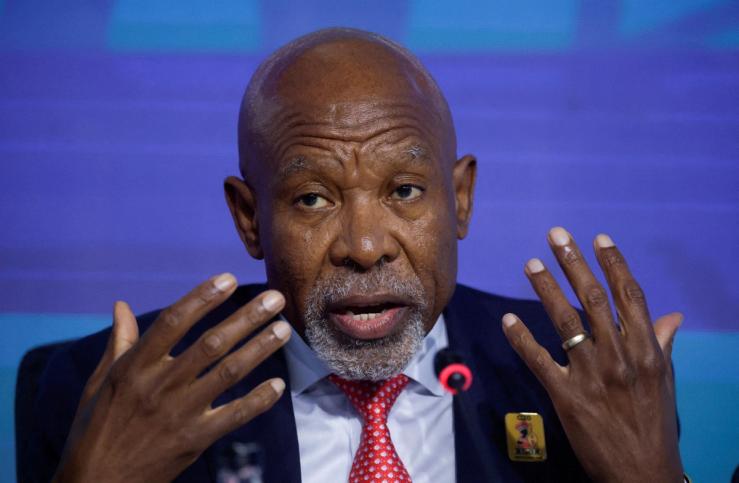
Governor Lesetja Kganyago said the shock was still unfolding and its longer term consequences remained unclear, but warned that global inflation was likely to rise in the coming months while growth would suffer from higher costs and supply chain disruptions.
“In these circumstances, leading central banks have generally kept rates unchanged, as they wait for more information,” Kganyago said, noting that the market had scaled back expectations for rate cuts in major economies and begun pricing in a higher risk of renewed tightening.
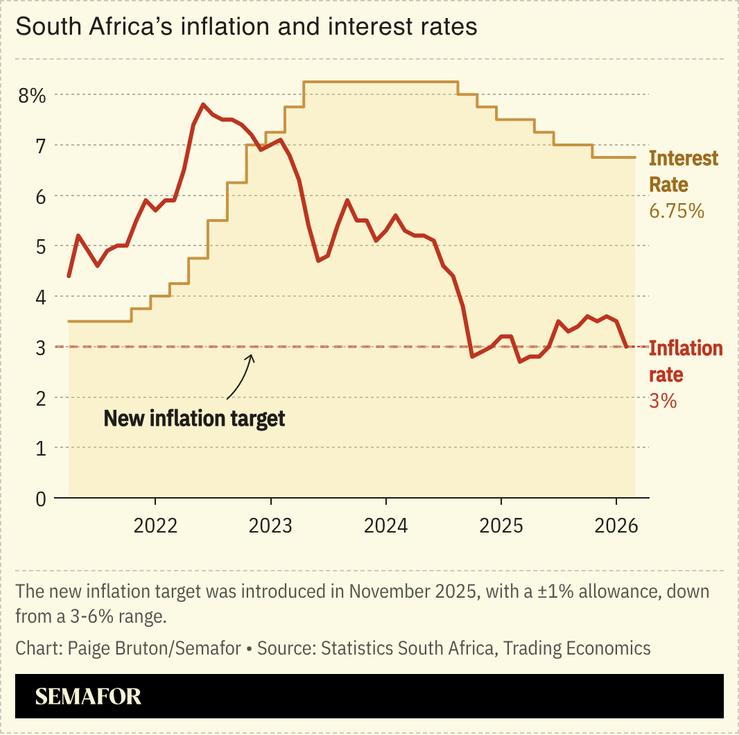
The central bank’s latest projections show interest rates remain unchanged for longer than previously expected, postponing cuts that had been pencilled in earlier this year. The bank had been widely expected to cut rates by at least three times, or by a total of 75 basis points, until strikes erupted at the end of last month.
The MPC laid out two adverse scenarios. In the first, the conflict lasts another two months, oil prices average close to $100 a barrel, and the rand weakens by about 5%. A more severe scenario assumes the war drags on for more than a year, keeping oil prices above $100 a barrel and weakening the rand by around 10%.
Under both conditions, the bank — whose MPC is due to meet again in May — would need to hike rates this year.

Know More
South Africa’s economy grew 1.1% in 2025, an improvement on recent years but still below the level needed to make a dent on one of the world’s highest unemployment rates in the world.
Inflation stood at 3% in February, exactly in line with the bank’s target. But higher energy prices are expected to push headline inflation toward 4% in the coming months, with fuel inflation forecast to exceed 18% in the second quarter.
When South Africa adopted a lower 3% inflation target, the bank said achieving it could take a couple of years. Kganyago acknowledged that the shock could extend that timeline.

Notable
- The European Central Bank is keeping alive the option of hiking rates as early as April, its President Christine Largade told a conference this week.