




Yinka’s view
The campaign for a $40 4G smartphone, led by Africa’s biggest mobile networks, is one of the most consequential digital policy developments on the continent in years.
The initiative, backed by nearly 20 telecoms companies, including MTN, Airtel Africa, and Vodacom, addresses a stark reality: While mobile broadband networks cover roughly 95% of Africa’s population, only about 40% use mobile internet services. Handset affordability is the top barrier.
As MTN CEO Ralph Mupita told me recently, all networks are in a race to get more Africans onto digital services — that’s where their growth lies. For policymakers and investors, the device is the entry point to a cascade of gains: mobile money, agricultural price data, telemedicine, and e-government services that have long eluded the unconnected majority.
But hardware alone won’t determine whether this initiative transforms lives. The more important question is who shapes the intelligence inside these devices — and who benefits when that intelligence collects data, drives commerce, and builds loyalty at scale.
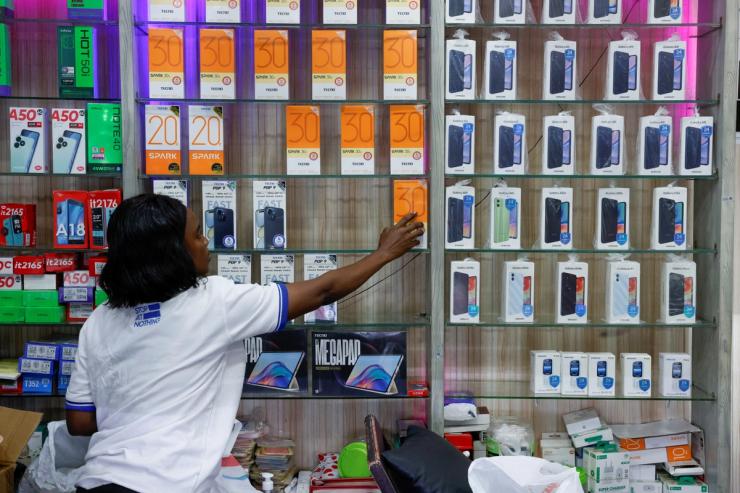
The Transsion story offers both a blueprint and a warning. The Shenzhen-based company behind Infinix, Itel, and Techno built something no Western or fellow Asian tech giant managed: A product genuinely designed for African users — dual SIM cards, extended battery life, cameras calibrated for darker skin tones — distributed deep into rural towns and villages. Crucially, as researcher Miao Lu documents in her book, The Transsion Approach, it did this alongside Africans. Local distributors were translators, market intelligence networks, and co-architects of the brand’s success.
Yet Transsion now faces patent lawsuits from LG Electronics, Huawei, and Ericsson, along with hard questions about who controls the AI and data ecosystems on its devices. The same risk applies to any affordable phone initiative that treats African operators and consumers as distribution channels rather than co-owners of the value being created.
Assembly location matters far less than where the intellectual property lives. Perhaps — as shown with the tagline on the boxes of Chinese-made iPhones: “Designed by Apple in California” — assembly location matters far less than where the intellectual property lives. African operators negotiating specifications with manufacturers today have genuine leverage — and they should use it to secure commitments around locally relevant AI features, data sovereignty, and revenue-sharing on digital services.
The $40 smartphone is a floor, not a ceiling — and what gets built on top of it will determine whether this becomes a genuine inflection point for African digital inclusion, or simply the next iteration of technology consumption without technology ownership.

Notable
- India has also sought to produce a cheaper smartphone, Rest of World wrote. However, these attempts often failed due to poor performance and low storage — pushing buyers back onto the secondhand market.