




The News
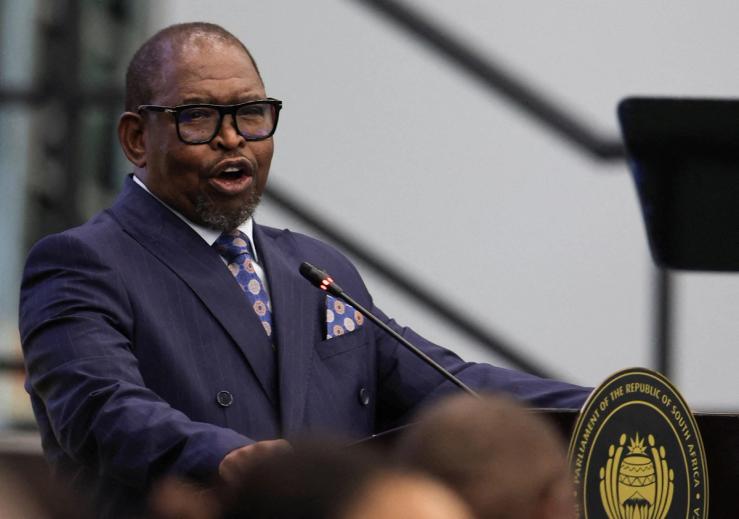
The war in the Middle East threatens to upend the economic assumptions underpinning South Africa’s budget, the finance minister has warned, reflecting unease over the way a growing number of external shocks undermine plans to reinvigorate Africa’s largest economy.
Less than three days after Enoch Godongwana presented the budget to lawmakers in the fuel-importing nation, the US and Israel launched strikes against Iran. The spending plan had been hailed as a turning point to public finances, thanks to tighter spending and a clearer path to debt stabilization, but the onslaught on Iran pushed oil prices and shipping-risk premiums higher.
Godongwana recounted how, in February 2022, he delivered what was widely praised as a strong fiscal plan, only to be told the following morning that his projections no longer held. The pattern has repeated itself this year, Godongwana said last week, “I was excited and then, all of a sudden, the Americans attacked Iran. My numbers are gone again. So that is the environment in which we operate.”
The remarks, delivered to Standard Bank executives and reported for the first time by Semafor, captured the growing unease among policymakers about how quickly the external shocks can undermine domestic planning, especially for an open, import-dependent economy like South Africa.
With the US-Iran conflict escalating days after the budget, the National Treasury is openly reframing credibility around built-in scenarios. Boipuso Modise, head of economic policy and international cooperation at the National Treasury, said uncertainty had become a defining feature of fiscal management, but “we do think there is now a range of numbers that need to be interrogated.”
The National Treasury is not alone. The South African Reserve Bank has already said it will redraw its risk scenarios ahead of next policy meeting, with Governor Lesetja Kganyago telling Reuters the January adverse case, which assumed oil at $75 per barrel and and an exchange rate of 18.50 rand to the dollar, “is gone” and will be replaced.
In this article:

Know More
It would not be the first time South Africa’s fiscal plans were thrown off course. In 2020, the COVID-19 pandemic collapsed domestic demand, trade revenues and spending on health and social benefits. That was followed by Russia’s 2022 invasion of Ukraine, which led to a spike in energy prices, snarling supply chains and prompting a risk-off move in emerging markets.
The budget’s macro‑fiscal framework already includes alternative scenarios alongside the baseline forecast. This year’s budget presented two such scenarios: one assuming slightly stronger global growth, and another modelling much weaker global growth amid heightened uncertainty.
“We are now living in a version of the world where some of those risks are materializing,” Modise said.

Tiisetso’s view
The Budget did the sensible thing by publishing downside scenarios and stress-testing the numbers. That makes the budget more honest. But being transparent is not the same as being protected.
The National Treasury’s built-in assumptions of prolonged supply chain disruption, weaker external demand, and higher energy prices, flagged GDP growth of 1.3% compared with what had been the most likely path of 1.6% or even 1.8% in the most optimistic scenario characterised by easing global tensions and more stable trade policies.
The impact of the unfolding conflict shows the extent to which Africa’s most industrialized economy, like others across the continent, is at the mercy of shocks caused by events beyond its control. A promising outlook has suddenly been imperiled. The budget came weeks after Gondongwana said South Africa’s debt is projected to peak this fiscal year after rising for nearly two decades, creating room for more infrastructure investment and tax relief. The package extended the belt-tightening path South Africa has been on since 2018, when President Cyril Ramaphosa took over a fiscally strained by ballooning budget shortfalls, rising budget shortfalls and a cascade of credit rating cuts.
The test now is how quickly Godongwana can reweight assumptions, communicate contingency plans, and if needed reprioritize spending to maintain the credibility of the budget touted as the start of South Africa’s economic redemption.
Any meaningful fiscal adjustment, be it spending reprioritisation or even the reversal of the tax relief, will be political freight in an election cycle. That jacks up the chance of delayed action, and deeper market repricing.

Room for Disagreement
Despite the threat posed to Godongwana’s plans the National Treasury’s top bureaucrat Duncan Pieterse insists South Africa’s budget can withstand external shocks such as the widening Middle East conflict, arguing that published downside scenarios give policy markets room to respond.
For South Africa to be thrown completely off course, revenue would have to fall by 60 billion rand ($3.6 billion) or government spending to rise by the same amount, he said.

Notable
- The Iran conflict has muddied expectations of imminent US Federal Reserve rate cuts, with rising oil prices reviving inflation fears and forcing investors to reassess how quickly the Fed can ease policy.
- IMF Managing Director Kristalina Georgieva warned that a 10% increase in energy prices sustained for a year would lift global inflation and shave 0.1-0.2 percentage points off world growth.