




The Scoop
Impala Platinum has opened formal talks with Zimbabwe’s central bank and lined up meetings with both the South African and Zimbabwean governments to press for clarity on Harare’s export-earnings policy, its CEO told Semafor, escalating a commercial cash-flow dispute into bilateral negotiations.
Nico Muller’s comments raise the stakes over the southern African country’s policy that requires every exporter, ranging from mining companies to agricultural firms, to surrender about one-third of foreign-currency receipts to the Zimbabwean central bank to rebuild its foreign currency stock, which it can use to meet import needs and defend the exchange rate.
The policy, introduced by Harare in 2024, has had exporters up in arms because they buy critical inputs such as spares and equipment and pay suppliers in hard currency.
Muller, speaking to Semafor on the sidelines of the Johannesburg-based miner’s half-year earnings presentation, said he had an “extensive meeting” with the Reserve Bank of Zimbabwe about the issue. “We are scheduled to meet with the South African government as well as with the Zimbabwe government.”
Muller said Implats, which relies on Zimbabwe for more than one third of its annual output, accepts the idea of the retention rule but noted that problems arise when the central bank cannot deliver the converted local currency on demand to pay wages, suppliers and other domestic expenses.
In this article:

Know More
Zimbabwe has cycled through hyperinflation, bond notes, partial de-dollarization, and stopgap measures since the early 2000s, when it launched a chaotic land reform that wrecked commercial agriculture and set off a decades-long economic collapse. The country’s gold-backed currency, Zimbabwe Gold, launched in 2024, is billed as a reset, and John Mashayavanhu, the central bank governor, has been building dollars and gold reserves to give the new notes credibility. That strategy makes earnings of exporters such as Implats part of his toolkit.
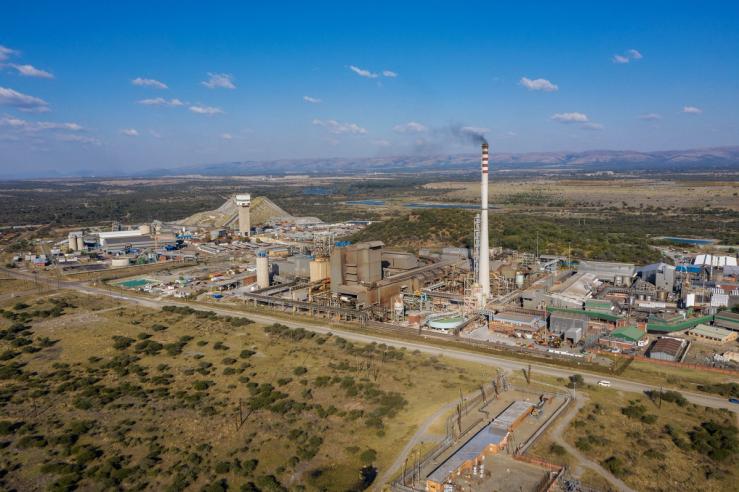
Implats, which competes with Valterra and Sibanye-Stillwater in the platinum group metals market, has a long-standing presence in Zimbabwe, having steadily built its stake in Zimplats in the early 2000s and become the dominant owner, holding more than 80% of the company.
Zimbabwe, home to the world’s third-largest PGM deposits after Russia and South Africa, is a major revenue and capex centre for Implats, generating about 35% of the company’s 31 billion rand ($1.8 billion) half-year revenue and almost 70% of its 1.7 billion rand capital spending.
The latest foreign exchange retention rule is a confidence test for Zimbabwe’s investment regime, with Muller, the Lesotho-born executive, saying “our perception of risk has materially shifted upwards over the last two years” due to policies that happen from time to time.
“I have to believe that a successful outcome will be achieved. It has always been achieved in the past. And I’m very confident that we will get to a similar position right now. So our posture will not necessarily change with immediate effect,” Muller said.

Tiisetso’s view
Zimbabwe has patient, deeply invested corporations willing to play along while the state tries to stabilize its currency, something many fragile monetary regimes would kill for. Implats is Exhibit A. After 25 years in the country, including a period when wages were paid in groceries, the company is not arguing the logic of FX retention. It understands the need to build reserves, defend the currency rate and keep essential imports flowing. That is goodwill most governments only dream of.
The problem is that goodwill is not infinite. What Muller is flagging, politely, almost generously, is that policy unpredictability is now doing more damage than hardship. A tough rule can be priced, hedged and managed. A rule that shifts “from time to time” cannot. That is when boards start re-rating risks, lenders start sharpening pencils and capex slips down the priority list.
Zimbabwe FX retention has become a confidence test, not because exporters reject it but because the state has struggled to execute it consistently. Companies that are otherwise supportive of the policy are forced into workarounds. Over time, that turns cooperation into caution.
Zimbabwe needs to lock in the goodwill it already has by delivering predictability. Squander that, and the next investor may not be as patient as Implats.

Room for Disagreement
Zimbabwe’s central bank has acknowledged the exporters’ complaints while pushing back against the rule, saying exporters are not being squeezed arbitrarily and that it must prioritise essential imports such as fuel, medicine and electricity and build reserves to underpin the new currency.
Officials point to a more than four-fold jump in foreign reserves, which rose from $276 million in April 2024 to $1.2 billion in December 2025, as evidence that the policy is working and that exporters ultimately benefit from greater macrostability.
But the size of the reserves means Zimbabwe’s foreign-exchange reserves would pay for only one and a half months’ worth of the country’s imports, a thin buffer compared with many peers that typically hold three months or more. The gap helps explain why authorities are tightening FX rules even as exporters press for more predictable conversion mechanics.
On the macrostability front, the central bank said the ZiG is backed roughly six time sby reserves, meaning it can point to dollars and gold that exceed the amount of local notes it has issued, making people more likely to accept and use the new currency.

Notable
- Indonesia moved to tighten export earnings rules for natural resource firms in December, requiring deposits in state banks, capping rupiah currency conversion, and limiting offshore transfers, to keep dollars onshore and support the rupiah.