Gulf states could review their overseas investments and future commitments to ease financial pressure caused by the Middle East conflict, a shift that would deal a blow to many African countries.
The Financial Times, citing an unnamed Gulf official, reported that a rethink could impact anything from investment pledges to foreign states to contracts with businesses. Gulf capital has helped African countries grappling with the impact of Western development aid cuts and China’s pullback from large infrastructure loans.
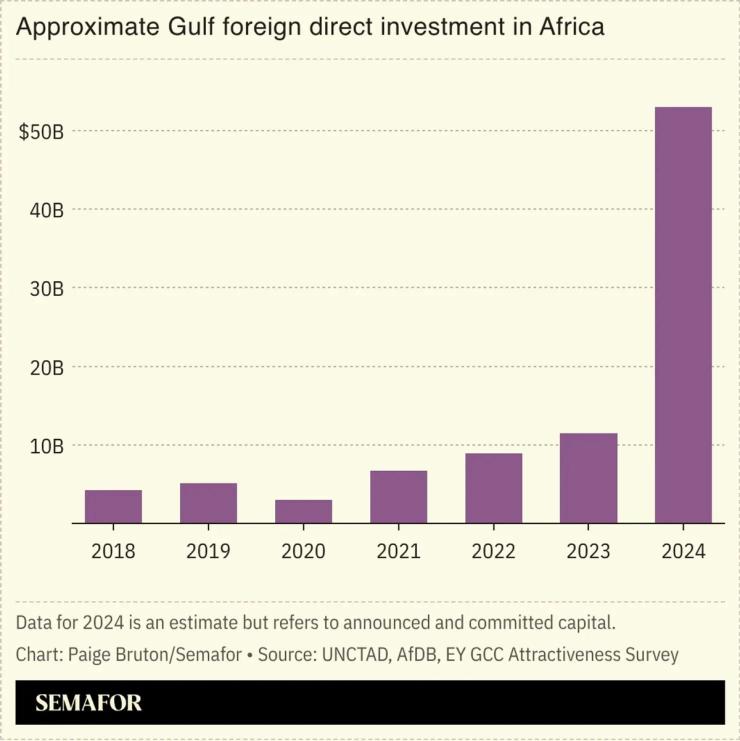
The Gulf Cooperation Council has pumped more than $100 billion into Africa over the last decade across energy, ports, logistics, and tech, dwarfing the US and rivalling Europe. And as Semafor’s Saudi Arabia Bureau Chief noted this week, “the appetite to show that life carries on as usual by continuing to do outbound deals is high.”
But any reduction in investment from the Gulf would compound the inflationary impact of surging oil prices and threats to remittances from the huge number of African migrant workers in the region if the conflict becomes a prolonged war. Most sub-Saharan African countries — even oil producers such as Nigeria — still import refined fuels, leaving them vulnerable to energy-price swings, and many are reliant on transfers from migrants living in the Gulf: In 2024, inbound remittances across the continent from abroad were roughly equivalent to foreign direct investment.