




Liz’s view
Wall Street spent the past few years rushing into the Middle East and now finds itself in a nice house in a rough neighborhood.
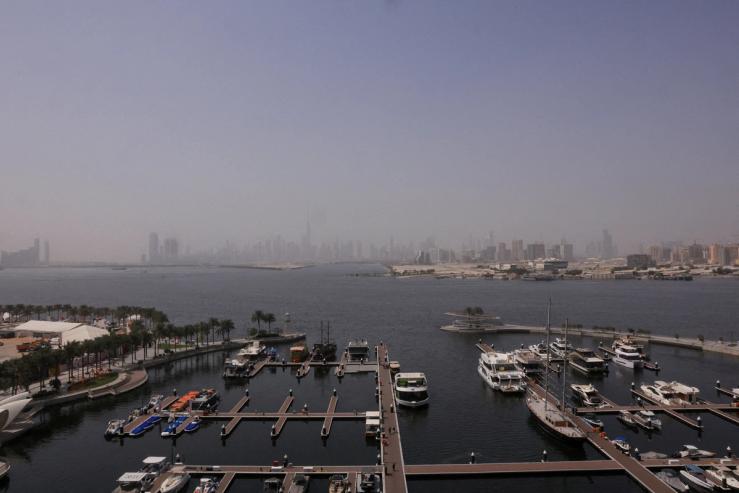
The widening war in Iran is a reminder that the Gulf, for all its modernization and courtship of the global high-finance set, remains a volatile place. A drone struck a hotel in Dubai’s Palm Jumeirah, and missile interceptors were fired near the financial center and the world’s tallest tower. Reopened airports are allowing expats to evacuate. How many of them will come back?
The Middle East has become a playground for American financiers, who are salivating at the chance of tapping huge sums of money and shaping the region’s financial markets in their own image. But long before the missiles started flying, the economics of doing business in the Gulf were already changing — and not to Wall Street’s benefit.
For two decades, Gulf governments played the role of rich aunt — writing checks, asking few questions, and happily letting New York bankers run the show. But Abu Dhabi, Doha, and Riyadh have morphed from deep-pocketed clients to fully fledged principals that are driving harder bargains in their dealings with Western financiers. They’re demanding better terms, more control, and richer economic returns in the form of domestic investment.
Riyadh’s giant Public Investment Fund has shifted its spending toward projects at home. At the US-Saudi Investment Forum hosted by the Trump administration in November, most of the deals ran in one direction: toward Riyadh. The UAE is going a step further, making a play to manage not just more of its own money, but everyone else’s, too, raising the question of what happens if Wall Street’s best clients become their competitors.
Twenty years ago, Western asset managers coming to Abu Dhabi would end meetings with Gulf sovereign wealth funds by saying, “This is how much we expect from you,” Khaled Al-Marri, CEO of real assets at Abu Dhabi sovereign fund Mubadala, told me in December at Abu Dhabi Finance Week, the Emirates’ answer to Davos and Milken. Now, Al-Marri said, “we are co-architects of deals together.” When the KKR executive sitting next to him chimed in about “partnership,” he was acknowledging that the power dynamic has flipped.
Those partnerships can be profitable, but the easy money for Wall Street is disappearing. What remains is a harder bargain in an uncertain place — assuming the bankers choose to come back at all.
In this article:

Room for Disagreement
Semafor’s Saudi Arabia Bureau Chief Matthew Martin has a different take: Expats have flocked to the UAE over the past few years on the promise of tax-free salaries, safety, and a luxury lifestyle. It’s understandable that right now some of those people want to flee. No one came to Dubai expecting to spend their evenings in a basement car park sheltering from missiles.
Yet the apocalyptic scenarios may be overdone. The UAE has proven resilient, bouncing back after Covid, financial crises and other periods of regional instability.
The things that made the country attractive a week ago are still there: vast sovereign wealth, an open attitude that welcomes different cultures, modern infrastructure, and increasing liberalization. Sure, there’s more work to be done, but it’s generally been heading in a positive direction.
Without knowing how long the Iran war is going to stretch, it’s tough to say when things might turn around. Memories of air raid sirens and explosions are too fresh. But already finance giants including BlackRock and Brookfield have said they remain committed to investing in the region. And as the region’s nearly $5 trillion of sovereign wealth funds have already demonstrated, they have some sway over Wall Street.

Notable
- As conflict hits the Gulf, investors into and out of the region are adapting to a new reality of dealmaking, Matthew writes. On Tuesday, even as Qatar was stopping gas production after Iranian strikes, Qatar Investment Authority backed a $10.7 billion buyout of AES Corp, and Aluminium Bahrain, controlled by the kingdom’s sovereign fund, agreed to acquire the EU’s biggest aluminum smelter even as a missile hit the Mina Salman port.