




The News
Democrats have long laid the groundwork for the 2026 election to look like their blue wave in 2006: a referendum on an unpopular president with a shaky economy. The prospect of a costly war in Iran makes that parallel even more clear to them.
Donald Trump campaigned as a very different US president than George W. Bush, arguing he would seek to avoid military entanglements like the Iraq war, which he once called a “big fat mistake.” Trump has abandoned that image in his second term with moves into both Venezuela and Iran, and Democrats are prepared to try to make him pay for it by tying him to the establishment Republican ideology he’s savaged in the past.
They started to hammer that message home by the time the sun was up on Saturday, declaring that Trump is more interested in starting a war with Iran than solving the affordability problems of everyday Americans.
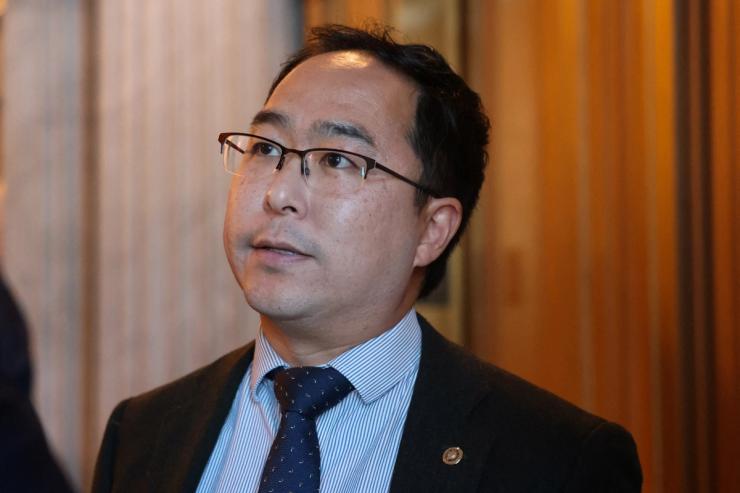
“This is a president that’s wildly out of sync with the American people. And you know, the voters are seeing that,” Sen. Andy Kim, D-N.J., told Semafor on Saturday afternoon. “I cannot comprehend what American voter is out there saying that the top priority is for the United States to be engaged in a war without off-ramps that is seeking regime change in the Middle East.”
Twenty years ago, the public soured on Bush’s operations in the Middle East during his own second term, a major factor in a wave election that cost Republicans both chambers of Congress. Democrats are far more divided as a party nowadays, however — and their disagreements, on tactics to fight Trump as well as midterm strategy, could easily hurt their ability to portray the president as wrong on the merits and the politics of attacking Iran.
But there’s one factor helping them on Iran policy right now, two decades after Iraq cleaved the Democratic Party in two. Trump has not asked Congress to authorize his attacks on Iran, and nearly all Democrats oppose them. Support for the Iran war of 2026 is far less bipartisan than Iraq was.
“It’s even worse in terms of the lack of public understanding and public discussion,” Kim said. “I do see some parallels here.”
Senior Democrats tried a surgically skeptical response on Saturday. Minority leaders Chuck Schumer and Hakeem Jeffries dinged Trump for not consulting with Congress but also said Iran does need to be reined in, with Jeffries saying it “must be aggressively confronted” and Schumer saying it “must never be allowed to attain a nuclear weapon.”
Others in the party were more blunt.
“The Iranian regime’s human rights abuses and its support for violent proxies across the region are unacceptable. But those realities do not give a president the authority to start a war. The so-called President of ‘peace’ is anything but,” said Sen. Jeff Merkley, D-Ore.
In this article:

Know More
Kim, a former State Department official in the Iraq office and a White House national security aide, said there are too many variables in Iran to bet on a tidy regime change. Republicans may end up more entangled whether they like it or not, he added.
Iran is “stronger” than Iraq, Kim said, and when the US ousted Iraqi leader Saddam Hussein, “we had a brutal civil war that empowered insurgents and terrorists and kept us there for many, many years.”
“After 20 years of war in Afghanistan, I see the American people just unbelievably rejecting the war. They want a focus on affordability. And they really have no tolerance for this type of action after what we saw in Iraq,” Kim added.
The first priority for Democrats is to get the GOP on record in the coming weeks by forcing a war powers vote in the House and Senate, which would almost certainly demonstrate the partisan nature of support for the Iran war strikes. But their ultimate goal is taking control of the House and Senate to put themselves in a far stronger position to rein Trump in.
Schumer is talking to Democrats about how to get that war powers vote, Kim said. And Democrats were in near-harmony Saturday on requesting it. There is also bipartisan desire for a briefing on Iran, although Kim said a public hearing is more important.
“We just continue to have this administration use these classified briefings as a means to check the box without actually having to engage the American people in anything public. And it ties my hand in terms of what we’re able to say to the American people,” Kim said.

Room for Disagreement
Trump and Republicans say this Iran engagement will be far different than Iraq in a positive sense, touting the potential to bring the Islamic republic’s leadership to its knees in weeks and avoid entangling the United States in a protracted conflict.
The president’s claim that Iranian leader Ali Khamenei was killed in the Saturday attack reflects a confidence among his allies in the GOP Congress that his attack would pay off.
On top of that, no one in either party — especially Democrats close to Israel — wants to oppose action in Iran vocally enough to get labeled as too friendly toward Tehran.

Burgess’s view
Many Republicans said they agreed with Trump’s criticisms of Iraq and reluctance to use the US military when he campaigned that way, but the reality now is the GOP is mostly falling in line.
That leaves Democrats to prosecute the case against the war. Despite their early optimism, that’s going to be tricky, especially if the war is over by November.
Democrats also don’t want to be seen as rooting against the US military, nor for a long war that ties up US troops in Iran for months if not years. For now they seem confident enough that Trump will mismanage the conflict, allowing them to go on offense themselves.

Notable
- Gulf states are no longer bystanders in the US-Israel-Iran war, our Gulf editor reports.