




The News
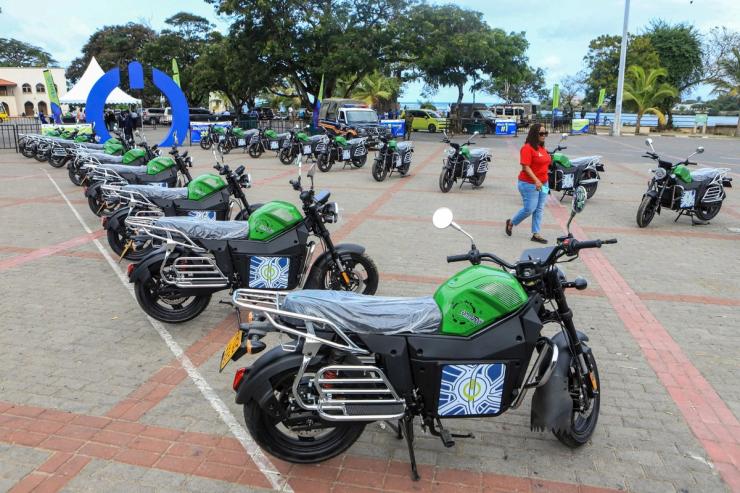
Electric motorcycle manufacturer Spiro plans to expand the number of motorbikes it sells in Africa and ramp up battery production, after raising $50 million from the continent’s trade finance bank.
The move comes as electric vehicle adoption grows in African cities with the rise of competitors pushing to take market share away from dominant Chinese manufacturers.
Dubai-headquartered Spiro raised $100 million last October and plans to use its latest war chest — secured through a debt round led by the African Export-Import Bank — to add to the 80,000 motorbikes and 2,500 battery swapping stations it operates across Benin, Kenya, Nigeria, Rwanda, Togo, and Uganda, said CEO Kaushik Burman. The company entered Cameroon last May and plans to set up full operations in Douala, the economic capital and largest city.
“We are expanding rapidly in these markets because there is huge demand and we want to be sure to meet it,” Burman said, noting that the company had deployed less than 10,000 bikes in three countries in 2023, a year after launch. Spiro’s presence is largest in East Africa where national governments have pushed policies to deliberately encourage the use of electric vehicles and reduce the presence of new commercial gas vehicles on the roads, Burman said.
Spiro’s operation in Africa’s largest country Nigeria is nascent, by comparison. The coming on stream of a large local oil refinery that reliably supplies fuel has created a need for the EV company to better understand macroeconomic forces at play and fortify its strategy, Burman said. “Nigeria is probably going to involve some recalibration to see how the fuel market is trending and how Spiro can still make a solid business case.”
In this article:

Know More
Two- and three-wheeler vehicles are an essential part of the public transportation mix across Africa where, on average, less than a fifth of roads are paved in each country. In crunch time, a boda boda or tuk-tuk can be the quickest means of dashing between venues in Lagos, Nairobi, Kampala, or Kigali.
Several companies have begun taking advantage of this need to seed Africa’s EV revolution. Founded by Gagan Gupta, an Indian entrepreneur, Spiro launched in Benin and Togo in 2022 after a rebrand from M-Auto, and today makes its electric motorbikes and owns stations where riders can bring in discharged batteries to exchange for charged ones. After-sales service is handled by local third-party franchisees who the company works closely with to provide technical training.

Alexander’s view
Spiro’s second multimillion-dollar round in less than six months suggests that setting up an EV operation in Africa is proving to be capital intensive.
The company has now raised over $230 million since 2022, through a mix of debt and equity rounds. Roam, a Kenya-based company that assembles electric motorbikes in a 10,000 sqm factory, started a funding round last November to raise between $15 million and $20 million to fund growth plans, opening up to 10% of the target to retail investors through a crowdfunding campaign.
Beyond having money in the bank for operations, battery capacity over long distances and affordability are set to influence the race to own Africa’s EV market. A typical Spiro model costs upwards of $1,000 in Nigeria, nearly twice the price of a reliable petrol motorbike.
Multiple EV players are ultimately needed to effect a lasting transition from fossil fuel-driven transportation on the continent, Burman said. “Our competition is not another EV player but gas bikes and the hydrocarbon industry that we want to substitute.”

Room for Disagreement
The global EV market has faced strong headwinds over the past year since US President Donald Trump signed an executive order repealing Biden-era incentives and tax credits created to encourage consumers to buy electric vehicles.
The industry’s challenges may be aggravated by the US government’s recent rollback of emissions regulations. The US carmaker Ford recorded a net loss of $8.2 billion for the 2025 full year, in results published this month. It came on the back of a $19.5 billion writedown related to its struggling electric vehicles division. Ford has had to cancel years-long plans to make some fully electric cars, blaming low demand and a change in “operating reality.”

Notable
- Tariff and tax amendments in South Africa and Ethiopia have helped to boost electric vehicles adoption in Africa.
- African EV companies such as Saglev in Nigeria are depending on Chinese-made kits for key components of their electric vans and taxi assembly operations.