



The News
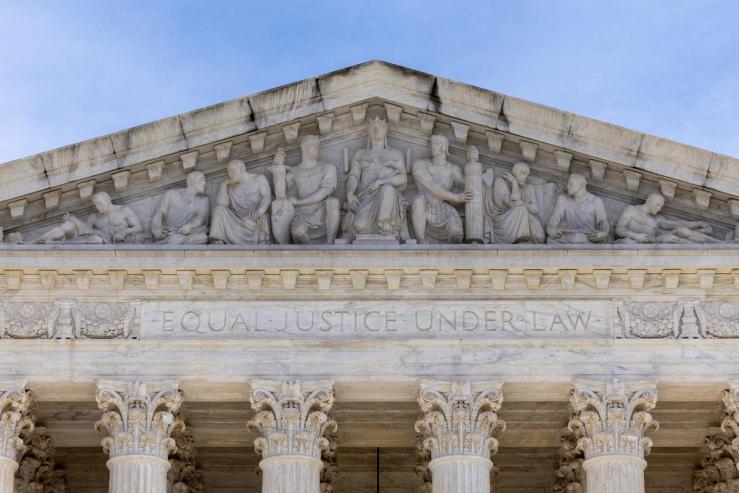
The Supreme Court crushed a keystone of President Donald Trump’s economic agenda on Friday by invalidating most of his sweeping tariffs — raising massive questions for businesses that had largely passed the resulting costs onto consumers.
“Had Congress intended to convey the distinct and extraordinary power to impose tariffs, it would have done so expressly, as it consistently has in other tariff statutes,” Chief Justice John Roberts wrote for the majority in the 6-3 decision.
The high court ruled that Trump could not impose tariffs using a 1977 law that let presidents erect levies during a national emergency. But the president said Friday that he would wield more specific legal authorities pegged to unfair trade practices to sign an order imposing “a 10% global tariff” and start laying the groundwork for more.
“Other alternatives will now be used to replace the ones that the court incorrectly rejected,” Trump said. He suggested the US may even “take in more money than we did before.”
Yet those alternatives grant Trump far less leeway than he’s wielded previously by citing the International Emergency Economic Powers Act.
Section 122 of the Trade Act of 1974, which Trump cited in implementing his new 10% tariff, requires congressional approval after 150 days. And investigations under Section 301, which Trump also referenced, can take several months.
“It is not a death blow. It is a major step back,” Council for Foreign Relations senior fellow Brad Setser, who previously advised the US trade representative, told Semafor. “It does force the president and the Trump administration back into the world of more aggressive but traditional trade remedies, which have a lot more process and take more time.”
Treasuries and the dollar fell after the ruling, while stocks rose amid hopes it might juice economic growth. The reality, however, will likely prove more complicated as the administration weighs its next moves and how — or whether — to issue refunds for tariffs already paid.
Companies are “back in a wait-and-see position again,” said Sam Tombs of research firm Pantheon Macroeconomics. “Nobody is going to make any big moves.” He said businesses had passed on about two-thirds of the tariff hit to consumers by January, a rate that might slow down, but “it’s a one-way ratchet when it comes to price rises.”
Economist Jason Furman told Semafor that the ruling would boost consumer spending and corporate profits, though “it won’t be huge” and the latter will acutely depend on refunds. Penn-Wharton Budget Model economists recently pegged the total refunds due from a high-court negation of tariffs at more than $175 billion.
Asked by NBC last year if the administration was prepared to provide refunds, Treasury Secretary Scott Bessent replied: “If the court says it, we’d have to do it.” He, like other administration officials, has consistently projected confidence that the White House would win the case.
The Roberts-authored opinion did not address refunds, something Justice Brett Kavanaugh described in his dissenting opinion as “likely to be a ‘mess’.” Justices Clarence Thomas and Samuel Alito joined him.
Setser said he was looking to the Court of International Trade for a possible resolution. Congress may also want to weigh in, he said.
The Commerce Department said Thursday that the US’ trade deficit widened more than analysts expected in December. It released lackluster fourth-quarter GDP data Friday.

Know More
Trump would have far greater leeway if he brings along Congress, which some GOP lawmakers called for after the ruling.
“Today’s Supreme Court decision underscores the need for Congress to play a role in trade policy,” House Financial Services Chair French Hill, R-Ark., said.
But Trump said on Friday that “there’s no reason” to seek its approval. And even if it did, his administration would have to exert far more pressure if it wants to bend the lower chamber to its will.
A handful of House Republicans concerned over rising costs recently joined Democrats to vote down the president’s tariffs on Canada, even after Trump threatened to primary them.
“Broad-based tariffs are bad economics,” retiring Rep. Don Bacon, R-Neb., said Friday.
Sen. Bernie Moreno, R-Ohio, called for GOP lawmakers to attempt to codify the tariffs using reconciliation, the process that allows legislators to pass spending legislation using a simple majority. But the party’s narrow control of both chambers makes that a heavy lift.

The View From Corporate America
Not much will change in the near term for companies that were eating the cost of the tariffs. They’ll likely see slightly more falling to the bottom line, which should boost stock prices. Consumers who were, or thought they were, swallowing the cost might shop a little more.
“It will help consumer spending and corporate profits but won’t be huge,” Furman said.
The ruling also means “materially more trade uncertainty,” Goldman Sachs analysts wrote, as the wait begins for the Trump administration to reintroduce some of the tariffs under different legal authority.
Most companies would have a hard time passing any potential refunds back to customers because they don’t know exactly what people bought; Costco, with its membership model, is an exception, and has an opportunity to lock in customer loyalty.
The View From The White House
Just before the ruling came down, Trump began a meeting with governors at the White House. In an unusual move, the US president swiftly booted journalists from the event, telling the room they’d be able to “talk very candidly” without reporters there.
Trump has not been shy in his belief that tariffs are a necessary cornerstone of his domestic agenda — and coupled with the shaky GDP numbers, the ruling made for a tough day for him.
The View From Democrats
The opposition’s message: Trump should give up his tariffs for good.
Senate Minority Leader Chuck Schumer called on the administration to “end this reckless trade war,” and House Minority Leader Hakeem Jeffries urged it to “refrain from any further unilateral action.”
A spokesperson for Democrats’ House Majority PAC said that the party would still try to wield tariffs against congressional Republicans in the midterms.
“The Supreme Court’s decision clarifies the law, but it doesn’t rewrite history,” House Majority PAC spokesperson Katarina Flicker said.

Eleanor and Liz’s View
Like firms have told us for the last year, Friday’s ruling reduces uncertainty — but doesn’t eliminate it. Until the administration makes clear its next steps, on refunds and on tariffs, it’s premature to declare that the Supreme Court has boosted the US economy.
One thing is certain: The White House’s trade showdown with congressional Republicans is about to get more intense.
Hill leaders want to shelter vulnerable members who have to face voters frustrated over the cost of living. But they now must also contend with an administration that has a far smaller menu of options to execute its top economic priority.

Notable
- Some Republican senators were privately rooting for this outcome striking down Trump’s tariffs, we reported in October.
Shelby Talcott contributed.