




The News
Washington’s withdrawal from dozens of UN-affiliated bodies is already sending ripples through Nairobi, with growing concerns over how the disruptions in US funding could overhaul the UN’s largest hub in the Global South and hurt the Kenyan capital’s economy.
The US began withdrawing from 66 international organizations earlier this month, including 31 UN entities. The most directly affected Nairobi-based UN agency is UN-Habitat (United Nations Human Settlements Programme), which is explicitly included in the US withdrawal list and is headquartered in the city’s upscale Gigiri suburb. However, no full withdrawal has taken place so far and no relocations out of Nairobi are reported or planned, with concerns instead focusing on the city’s local economy.
Between $250 million and $350 million in annual US-linked funding of Nairobi-based UN operations is at potential risk, according to estimates by local analysts, Kenya’s The Standard newspaper reported.
“Certainly, the loss of such major financial support will have negative impacts on people’s jobs and welfare,” said Maria Nzomo, a former Kenyan ambassador to the UN in Geneva. Nairobi’s UN presence has supported a workforce comprising thousands of international and Kenyan staff as well as a wider ecosystem of contractors, consultants, civil-society organizations, and diplomatic missions.
While some in the expat-service ecosystem around Gigiri expressed concern about a possible slowdown in business activity, others pointed out that the complex contributes meaningfully to the local service economy through staff spending, procurement, and ripple effects on hospitality, transport, retail, and real estate — yet this remains only a small fraction of Nairobi’s overall output.
The UN did not respond to a request for comment by the time of publication.
Kenya’s National Treasury told Semafor it has not yet taken a formal position on the potential economic impact of staff cuts to Nairobi-based UN agencies.

Know More
The US announced its withdrawal from international organizations in a presidential memorandum signed on Jan. 7. The White House said the chosen organizations were running “contrary to US national interests, security, economic prosperity, or sovereignty.”
Critics, including UN officials and rights groups, counter that the move is a self-defeating retreat from global cooperation that would harm US influence and prosperity on shared challenges like climate change and development.
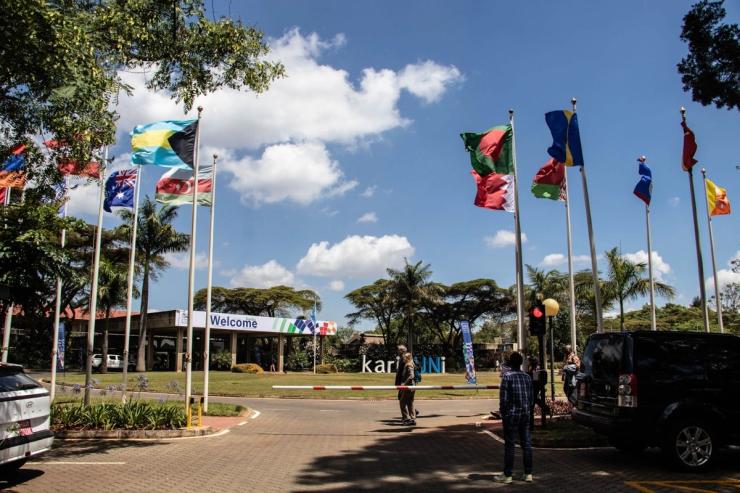
Kenya hosts the United Nations Office at Nairobi (UNON), the UN’s only headquarters in Africa, as well as regional offices for 23 agencies. The US withdrawal announcement specifically named UN-Habitat, a program for human settlements and sustainable urban development.
However, the impact of the US funding withdrawal on immediate closures or cutbacks in Nairobi remains unclear, as mandatory assessed contributions from all member states continue to support core functions in the Kenyan capital.

Step Back
Kenya’s emergence as a multilateral hub dates back to the 1970s when the government offered land to the UN in Nairobi, which then became the global headquarters of the UN Environment Programme in 1972. UN-Habitat came next, followed by the inauguration of UNON in 1996.
Nairobi has since become a key convening center for climate negotiations, regional development initiatives, and diplomatic engagement.
Analysts have said the reduction in US engagement could weaken Nairobi’s influence within multilateral decision-making and slow some donor-funded initiatives, even if core UN operations continue.
While acknowledging that Nairobi will feel economic pain, particularly from the abruptness of the decision, Nzomo, the former ambassador, said the city’s status remains secure. “Nairobi was selected long ago to be the headquarters of UNEP and UN-Habitat. In addition, many diplomatic missions in this region are here. Those are not things that will change because of these developments,” she said.
“I think the momentum to move the agencies to Nairobi might even be higher,” added Nzomo, referring to earlier UN proposals for phased relocations to shift the operations of agencies like UNFPA and UN Women from New York to Nairobi by the end of 2026.

Room for Disagreement
UN officials have downplayed fears of immediate disruption. UN spokesperson Stéphane Dujarric, in a Jan. 8 statement, said “all UN entities will go on with the implementation of their mandates,” emphasizing that assessed contributions are legal obligations under the UN Charter.
Back in Nairobi, Kenya’s Foreign Affairs Principal Secretary Korir Sing’oei sought to put the potential fallout in perspective. He told The Standard that the US withdrawal would have “very limited impact on Kenya.”
Steve Otieno, a Nairobi businessman who buys and resells second-hand household goods from departing expatriates, said the news gave him “a bit of a jolt,” as he depends on the expat cycle. “We’ve seen this before, aid pauses, the 2025 freeze, and COVID, and we always come through. Hopefully, this will be the same.”

The View From Addis Ababa
African diplomats and policy experts warn that if the US pulls back from international groups, it could make things harder for peace efforts, humanitarian aid, and climate funding across Africa.
African Union Commission Chairperson Mahmoud Ali Youssouf said Africa’s partnership with the US was built on common goals such as peace, security, and economic opportunities, adding that multilateral groups have offered a solid path to make progress on these shared interests.

Notable
- International schools are booming in Kenya, Semafor reported, due to the country’s popularity as an expat destination.