




The Scoop
Nigeria’s United Bank for Africa is drafting a $50 million working-capital facility for Congolese metals trader Buenassa to support its bid to acquire Chemaf, the Trafigura-backed copper-cobalt producer, according to documents reviewed by Semafor. The move comes as banks and mining corporations on the continent prepare for US-aligned mineral deals at a time when the White House is vying to outdo China in securing DR Congo’s critical supply chains.
The Congolese bank Rawbank is also pitching up to $300 million tied to Buenassa’s refinery plan to construct a copper-cobalt refinery in the country’s southeastern Lualaba region, according to a note seen by Semafor. The note, dated Nov. 14, 2025, says the mandate is non-exclusive and frames the funds as part of a wider financing and advisory package. It also references a broader $700 million phase 1 financing project for the refinery project, where Rawbank would offer advisory services alongside financing. In a private exchange seen by Semafor, the bank signaled it would be open to participating in financing a Chemaf acquisition.
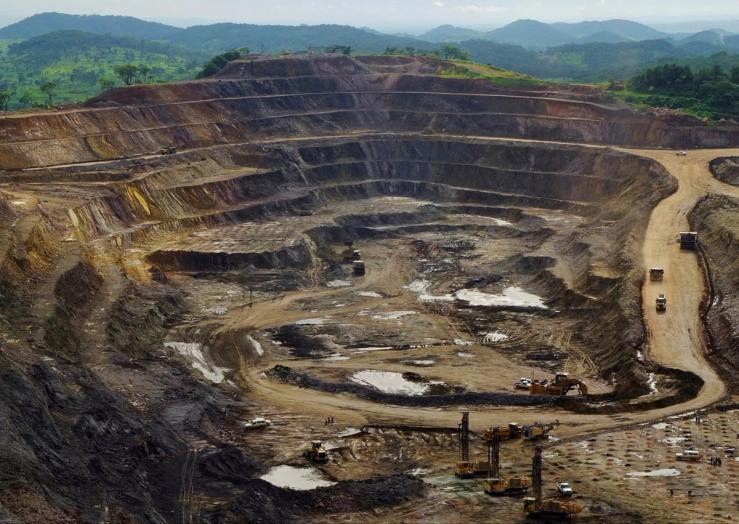
Chemaf, which is headquartered in Dubai, has been in a sale process since late 2023 after an earlier agreement to sell the company to a Chinese buyer was announced in 2024 but the deal lapsed last year after failing to secure regulatory approval. Chemaf’s flagship Mutoshi mine project is among the assets on a shortlist that Kinshasa has recently flagged to US investors under the US–DR Congo minerals partnership track.
There is growing interest and competition to secure mining and processing rights to DR Congo’s minerals. State miner Gécamines has also proposed an approach to acquire Chemaf and bring in a new investor while marketing output to US buyers, adding another route to the same asset.
Buenassa CEO Eddy Kioni told Semafor the company was open to teaming with Gécamines and US partners, aiming to direct output “mainly to the United States.”
UBA’s DR Congo office declined to comment, and Rawbank did not immediately respond to Semafor’s requests for comment.
In this article:

Know More
While Chemaf is a relatively small producer of copper and cobalt in southeastern DR Congo, the collapsed deal has loomed far larger than its balance sheet would suggest. The aborted sale has become a proxy battle in Washington’s push to blunt China’s grip on critical mineral supply chains. Numerous reports have said that US officials pressed DR Congo President Félix Tshisekedi’s government to block a transfer to the Chinese buyer Norin Mining last year.
Congolese mining operators and financiers are in a race to position themselves to take advantage of this broader push. A list of state-linked manganese, copper-cobalt, lithium, and other assets has been submitted by Kinshasa to a joint steering committee under the US-DR Congo minerals partnership reached last month, sources told Reuters.

Ruben’s view
The Chemaf/Mutoshi file has become the clearest real world test of the US-DR Congo minerals partnership’s two faces: politics and capital. Politically, it gives the US and Kinshasa a channel to influence who gets to own strategic assets and where the metal ends up. Financially, it forces the harder question: Can US-backed money move fast enough and take enough risks to compete when the outcome depends on financing, not just marketing volumes?
Kinshasa has shown it can steer the process but analysts say the pressure is now on the US: The issue is whether this partnership can deliver risk capital and rapid execution for assets that still need heavy lifting.
What’s already changing is behavior on the ground. Local private players are learning that being US-aligned is becoming its own form of credibility, an argument for political acceptability and, potentially, financing access. Banks are reading the same signals: In DR Congo the lenders earn heavily from mining-linked flows, so if trade routes and offtake start tilting toward these favored channels, it’s rational for them to position early.

Room for Disagreement
Some African analysts question whether the US-DR Congo minerals deal is a “balanced partnership.” Shikana Group’s Amne Suedi called it an “extraordinary level of influence” for an external power over DR Congo’s mineral assets and said it raised “legitimate concerns about asymmetric power between parties.” It added that DR Congo’s history of resource exploitation made this “a sensitive political question,” warning that weak institutions and corruption could leave reforms :theoretical,” even if the text looks strong.

Notable
- Africa’s largest banks see a major growth opportunity in DR Congo, where they are following the mining money.