




The News
Kenya launched the privatization of the state-run petroleum transporter Kenya Pipeline Company on Monday as the government offloads valuable assets to fund infrastructure projects, but legal challenges threaten the plan.
The government aims to raise $824 million from an initial public offering, selling a 65% stake of KPC in Kenya’s first IPO since 2015, channeling part of the proceeds toward a new fund for the construction of roads, modernization of ports and airports, and expansion of energy infrastructure.
Kenyan President William Ruto’s administration is selling stakes in assets including KPC and telecoms giant Safaricom to fund the projects due to the government’s precarious fiscal position, with debt servicing costs draining nearly 70% of government revenues, and strong public opposition to higher taxes. This year’s budget avoided introducing new taxes, a year after proposed hikes sparked massive youth-led protests that left hundreds dead.
Financial analysts who spoke to Semafor said that legal challenges and transparency concerns threaten the KPC IPO, highlighting fears that the company is being undervalued.
Opposition senator Okiya Omtatah is leading a case filed this month to stop the privatization of KPC, which posted an EBITDA of $144 million for the 2024/25 financial year. The petitioners argue that there was a lack of public participation in the decision to privatize KPC, which they say also failed to meet constitutional requirements on the disposal of public assets. Among issues the court is expected to rule on is whether the process met transparency and accountability standards.
Mbui Wagacha, former Central Bank of Kenya chairman, told Semafor that “the process was not transparent,” cautioning that concerns over boardroom dealings “affect investor confidence” and could make the IPO less “attractive.”
In this article:

Know More
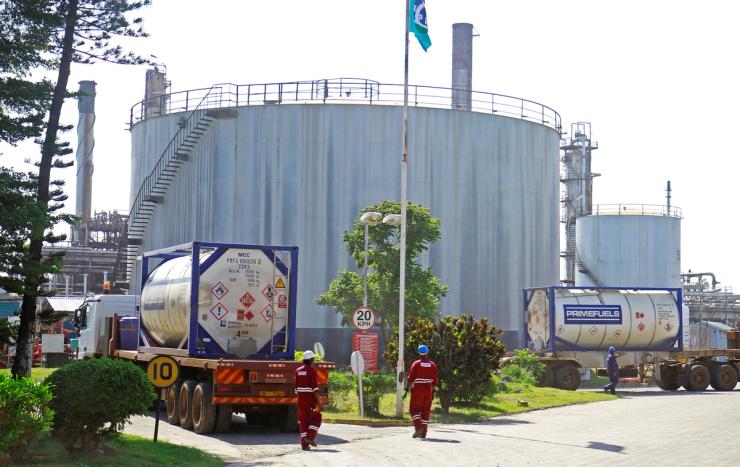
KPC has an extensive pipeline network of over 1,342 kilometres and at least 884,000 cubic meters of storage capacity, enabling the transportation of imported petroleum in Kenya. This infrastructure is also used by several neighboring countries including Burundi, DR Congo, Rwanda, and Uganda to transport petroleum via pipelines from the port city of Mombasa.
KPC will list at an implied valuation of approximately Kes 163.6 billion Kenyan shillings ($1.2 billion) and is expected to be the largest IPO in the country since the telco Safaricom’s listing in 2008. The offer period officially opens on Jan. 19 and closes on Feb. 19, with trading slated to begin on March 9 on the Nairobi Securities Exchange (NSE).
The Kenyan government will retain a 35% stake in the company. Uganda, one of Kenya’s largest trading partners, plans to acquire a stake in the privatized company using part of a proposed $2 billion loan backed by global oil trader Vitol.
Ruto, at a function earlier this month, encouraged citizens to purchase KPC shares for as little as 200 Kenyan shillings ($1.55), eyeing significant retail participation. “We have said the shares will be sold to everyone,” Ruto said. “Come and buy, so that when profits are announced, you are part of it. You take your share and use it to grow your business.”
KPC is one of several assets where the government is looking to offload its shareholding. The government is also selling a 15% stake in the region’s largest telco, Safaricom, to Vodacom for $1.6 billion, reducing its stake in the company to 20%. The deal, however, still requires regulatory and parliamentary approvals, and has raised questions over transparency. Similar to the KPC IPO, opposition leaders have threatened to go to court to stop the transaction.

Martin’s view
The debt burden in Kenya has increased dramatically over the past decade, leaving the government with little breathing room, and efforts by Ruto to raise taxes in recent years have triggered massive public opposition. With Ruto eyeing reelection in 2027, the government is desperate to execute projects that can help shore up its popularity.
Not everyone is convinced, however, that giving up stakes in profitable enterprises is the way to go. The argument in favor of privatization is that institutions such as KPC have long been associated with corruption and have been plagued by scandals costing taxpayers millions of dollars.
But the perceived opacity of the privatization process is fueling fears that such moves are designed to benefit connected individuals rather than the general public. Analysts and potential investors will be closely watching the expected disclosures by KPC at the NSE in search of details of the plan. A transparent process would guarantee significant participation from both retail and institutional investors, and its success would help the government make its case for offloading more assets. Opacity, on the other hand, would disrupt the privatization plan.

Room for Disagreement
Treasury Cabinet Secretary John Mbadi sought to counter the legal challenge against the KPC privatization, arguing in court documents that the government followed legal procedures and that the move was meant to unlock funds to support key development projects and enhance Kenya’s regional competitiveness.
“As the financial needs of the government continue to outpace available public resources, private sector participation has become a critical tool in addressing infrastructure gaps, enhancing service delivery, and promoting sustainable development,” he said.

Notable
- Kenya’s Ethics and Anti-Corruption Commission (EACC) is investigating an alleged 70 billion Kenyan shillings ($542 million) corruption scandal at Kenya Pipeline Company, the country’s Standard newspaper reported.