




Liz’s view
Remember when bad news was supposed to be bad news?
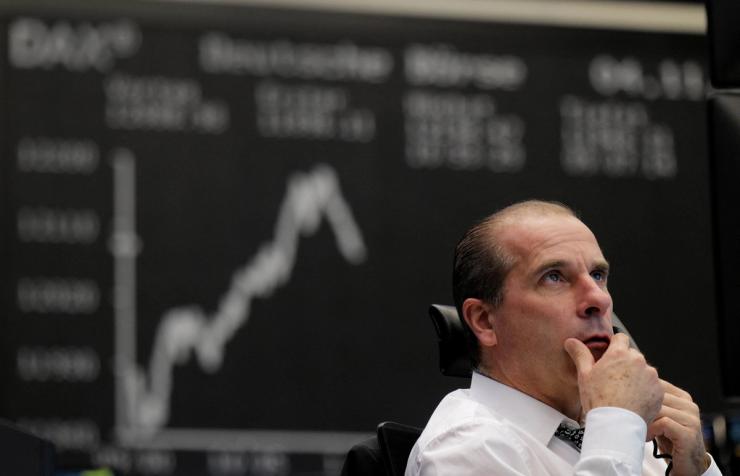
Now markets keep climbing like a teenager with noise-canceling headphones, oblivious to the chaos around them. The world is as unsettled and uncertain as it’s been since the days after Sept. 11, 2001, and Nicolás Maduro’s capture only adds to it. One widely credited measure of geopolitical risk, developed by two Federal Reserve researchers, has doubled since the spring. The S&P 500 is up by about 40% over that period. In what should be a double-take moment, “US political revolution” tops Eurasia Group’s list of 2026 risks, out yesterday. (Read on for our question to the group’s president, Ian Bremmer.)
But Wall Street analysts, those perpetually optimistic souls, are all predicting more gains in 2026, even if their calls are tinged with a little squeamishness. “Things have been going my way for so long that it is kind of worrying,” perma-bull Ed Yardeni told Bloomberg last week. Their arguments are that corporate earnings have weathered tariffs and economic fears just fine. The Fed is cutting rates, which, through the magic of yield-seeking, will lift stocks.
I’ve been wondering lately whether the rise of private credit, Wall Street’s asset class du jour, might inject some bearishness into overall market sentiment. Not because credit is imploding — yes, there will be defaults, though I’ve written repeatedly that I think the drama is overbaked — but because credit investors are the natural pessimists of the finance world, the ones who wake up wondering what might go wrong and what value would remain if it did.
When investment banks are sorting first-year analysts into groups, the confident and well-oiled types go straight to equity capital markets. The kids who ask annoying questions get put on the credit team. (The kids who ask the really annoying questions get put on the distressed credit team.) As credit investors gained more clout on Wall Street, I’d expected to see their “downside protection” worldview pop up in more places.
In this article:

Room for Disagreement
“Geopolitical events only have a long-term market impact to the extent they affect other macro variables” like economic growth and inflation, Deutsche Bank analyst Henry Allen wrote this week. That’s been a short list in recent history: the 1970s oil shock (which stoked inflation), the Persian Gulf War (when the US was still a net importer of oil) , and Russia’s invasion of Ukraine (which expelled one of the world’s largest economies from its operating system). “When geopolitical shocks happen — even if they’re highly significant events — the broader global market reaction will still be dependent on economic channels,” Allen wrote.

Notable
- “The muck is still sliding off Teflon-coated markets,” the FT’s Katie Martin writes.
- Are we living in 1996 or 1999? Ritholtz’s Ben Carson asks. The S&P 500 doubled in the four years after Alan Greenspan’s famous “irrational exuberance” speech of December 1996.