




Tim’s view
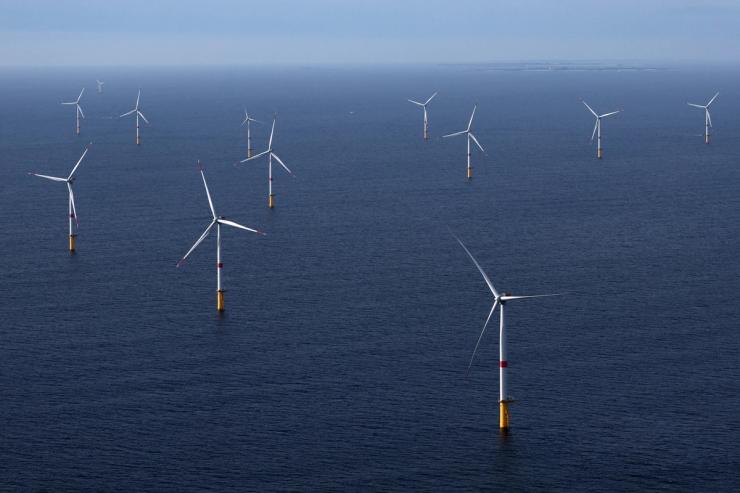
The Trump administration’s latest salvo against offshore wind is a risky maneuver that could backfire for fossil fuels, and for Republicans’ midterm election prospects. On Monday, Interior Secretary Doug Burgum said he is “pausing” five large offshore wind projects on the East Coast, all of which were previously approved and are billions of dollars deep into planning, construction, and in some cases even partial operation. The reason: “national security risks identified by the Department of War in recently completed classified reports.”
The spinning turbine blades, apparently, cause radar interference that can obscure the movement of enemy “targets.” This must be a new kind of threat; a former senior Energy Department official told me the Pentagon and intelligence services, which are normally sensitive to even extremely low-probability risks, never flagged this as a concern previously. And for what it’s worth, the soldiers who patrol the wind farm that is the world’s closest to an active front line, in southern Ukraine, are still perfectly able to spot and shoot down drones there.
Of course, the more likely explanation is that US President Donald Trump has a longstanding personal grudge against offshore wind and is merely carrying out the latest in a year-long series of attacks on the industry. But the stakes are especially high this time. The move comes only a few days after the House of Representatives passed its stab at permitting reform legislation — which picked up a few recalcitrant Republican votes by dropping provisions that would have limited federal agencies’ ability to do exactly what Burgum just did. That bill’s chances in the Senate were already slim; now, as two senior Democrats wrote in a press release, it is “dead in the water.” And as much as Republicans might not want to tie Trump’s hands, those provisions also would have stopped a future Democratic administration from cancelling fossil fuel projects. Instead, Trump is reinforcing a pattern of tit-for-tat retributive permitting that could ultimately be more damaging to the oil and gas industry, which is under pressure to maintain market share in the US and globally before the economy shifts more to clean energy. “I’m sure there are a lot of oil and gas execs who are thinking the same thing,” the DOE official told me.
Finally there’s the affordability issue: These wind farms were some of the biggest new power projects in the country. Cancelling them not only needlessly sacrifices 2.5 million homes’ worth of badly-needed electrons (and more to come, as investors balk at any future projects), but hands Democrats another potent talking point ahead of the midterm elections. Before then, the pause will certainly be challenged in court — a chance for Burgum to share more details about the supposed security threat, or forever give up any pretense to the “all of the above” mantle.

Notable
- The scientific and engineering challenges facing Trump Media are “enormous,” The Verge argues, so don’t expect electricity production to begin anytime soon.