




The News
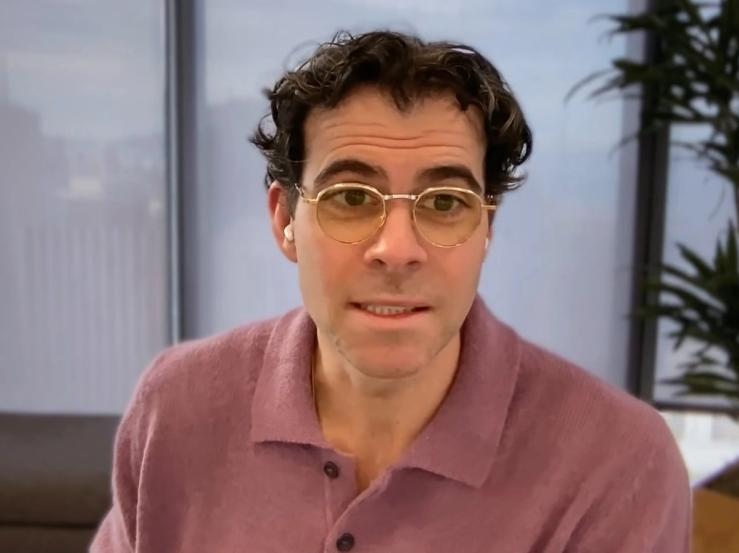
A day before Instagram’s new integration for Amazon Fire smart TVs was set to roll out, Adam Mosseri, who runs the platform for Meta, admitted to Semafor that he isn’t sure how people will use the app on their televisions.
Maybe people will start by watching Reels passively, he said, or try collaborating with others in the room to share content on the TV screen.
Not that the uncertainty bothered him: “We’re going to learn a lot,” he said. “I’m sure we’ll get a bunch of things wrong, but we’re gonna iterate quickly.”
It was one of many insights that the Instagram chief shared with Semafor’s Mixed Signals show earlier this week. In a wide-ranging interview, Mosseri laid out Instagram’s vision for its role on television and the path for its next several years of growth, as well as the places where he felt the platform had fallen short.
Instagram’s television app is both evidence of Instagram’s dominance on phone screens and a test of whether it can make the jump from small phone screens to living rooms, where its rivals like YouTube are increasingly competing for attention.
Mosseri was surprisingly candid about where Instagram sits in the current social media landscape.
He acknowledged that the federal government’s pressure on TikTok to sell its US business or be shut down in America had slowed down one of Instagram’s biggest competitors, allowing Meta to retune its algorithmic feed. He said that while TikTok was better at “breaking” new content to users, he felt Instagram was better at monetizing its business, and also speculated that TikTok was increasingly “too complicated” for Western users.
“They are very much applying lessons they’ve learned in China to the rest of the world. And there’s good and bad or pros and cons or to that. One of the pros is they had a massive faith in the short-form video format, long before anybody else did,” he said. “The flip side is: The ‘super apps,’ which are very popular in China, are not popular in the same way outside of China, and I think they’re turning into a Chinese super app. And that may or may not work outside of China. Are they overly projecting one win on the next, or am I just a naive out-of-touch Westerner who’s underestimating where the future’s gonna be? That’ll be interesting to see how that plays out.
Instagram’s plan, for the moment, is different from the strategy embraced by YouTube, the other dominant platform competing on home television screens. While YouTube increasingly encourages its creators and media companies to make long, highly-produced videos that increasingly resemble traditional television, Mosseri emphasized that as it stands, lengthy content does not work on Instagram, and part of the appeal is the constant variety.
But Mosseri said that could change, in a way that could radically alter the platform.
“It might turn out that maybe we’ll need premium content to work,” he said. “It might be that we need longform video. And then if we need long-form video, what does that mean for us? Because that’s literally been a market we’ve explicitly decided not to enter.”
While longform content may or may not end up on the platform, Instagram is likely to change over the next few years in even more dramatic ways. Mosseri said Instagram plans to let users proactively shape content in their feeds in a way that would feel “fundamentally different.”
“Some of these new technologies should evolve in a way that you can kind of touch metal, where you can go in there and just tell it what you want, or make it what you want, whether that is shaping [your] feed to give you what you’re interested in or going deep in search to understand something, or creating something and being able to really mold it into what you want more proactively — I think that’s gonna happen over the next two to four years,” he said.
Instagram in 10 years, he predicted, will be even more surreal. He imagines smart glasses will replace phones and radically alter how people use Instagram.
“For a visual platform, [being] in a medium where you probably want most of your interactions with your smart glasses to be audio-only is a much bigger, more open question that we need to think about.”

Max’s view
Instagram’s decision to experiment with TV is the latest sign that once unique platforms are converging.
TikTok’s endless shortform video feed partially inspired Instagram to prominently emphasize shortform video from people users don’t know in their feeds. YouTube followed up with its own knockoff of TikTok and Instagram reels in its feeds. YouTube’s growing popularity on television screens forced other tech giants to move in its direction. Instagram is dabbling in content for living room screens, podcasts are now on Netflix, and Spotify is trying to get its podcasters on video.
It’s a head-spinning moment in media that Instagram has seemingly navigated fairly well.
Over the last several years, Instagram has completed its metamorphosis from an app for sharing photos with cute filters to what for many people now serves the same function that Facebook did at its peak: It’s a home base on the internet for a bit of messaging with people you know, a bit of watching what acquaintances are up to, and a bit of consuming content from people you don’t know.
Unlike Facebook, the platform isn’t slowing down, either; it remains the most-used social media application among 18-29-year-olds, and is right behind TikTok as the second most popular app among teenagers.
Mosseri acknowledged that some of the drift away from Instagram’s original mission — a photo-sharing platform for friends — had angered users. But his unsentimental approach has clearly kept Instagram relevant and interesting, no small feat in an unforgiving social media landscape in which countless social media platforms have come and gone in an instant (does anyone still use BeReal?).
Instagram is flexible, Mosseri suggested — a key attribute that has sustained its longevity.
The long-term challenge, of course, for the dominant social platforms is to figure out how to maintain their identity at a time when they are trying to be on every screen that their competitors are on. And as the platforms race to copy each others’ most popular features, they could lose their creativity and make themselves vulnerable to a true disruptor, as TikTok was when the app landed in the US in 2016.
Asked what Instagram is in 2025, Mosseri talked about the platform’s mission, and listed the ways in which people interact on the platform, rather than describing its key feature.
“The mission has been for a long time to inspire creativity that connects people,” he said. “But how people connect with their friends, how people create, how people entertain themselves has changed a lot. So the how changes constantly, and I know that can be a lot sometimes for people who are used to things one way.”