



Faisal’s view
There’s a lot of talk about expanding the Abraham Accords to include Saudi Arabia and other Arab countries, which is a nonstarter from the kingdom’s perspective without a recognition of a Palestinian State. Israel’s rejection of a two-state solution also complicates the matter.
Sometimes, we need to simplify matters in order to solve them. At the end of the day, many seem to forget that at the heart of the conflict is an illegal Israeli occupation of Palestinian lands. This is why a rebrand of the current US efforts — away from the religious to the political — might be helpful.
Renaming the agreements would be symbolic, but also strategic. It would give the initiative a fresh identity, unburdened by religious overtones, and anchored instead in political realism and transactional diplomacy — something US President Donald Trump understands better than most. Indeed, the “Trump Treaties” has a good ring.
As Saudi Prince Turki Al-Faisal once said, Abraham is a revered prophet in Christianity, Islam, and Judaism. His name should not be politicized or tethered to what is, at its core, a territorial dispute where Israel continues to violate international law through its occupation of Palestinian land.
The religious framing, while understandable, makes the conflict seem more intractable. Arabs’ and Muslims’ issue isn’t Judaism, it’s occupation. Once Israel complies with UN resolutions and recognizes Palestinian rights, normalization will be inevitable. The Arab and Muslim worlds will not only embrace Israel but will seek full economic integration. For Saudi Arabia, peace and prosperity in the region are at the core of Crown Prince Mohammed bin Salman’s vision of making the Middle East the “new Europe.”
This logic — if not the rebranding, yet — is now mainstream in Europe and gaining traction in the US. At the Athens Policy Dialogue last week, conversations that were supposed to focus on “The Eastern Mediterranean in Flux” quickly shifted toward the crisis in Gaza, reflecting not only Greece’s proximity to the Middle East but how deeply intertwined its fate is with ours, politically, economically, and socially.
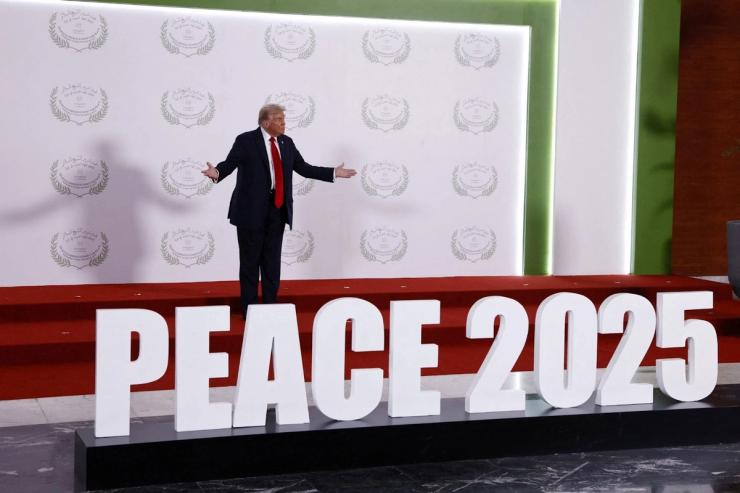
I didn’t hear anyone in Athens speak about an ancient animosity between Jews and Muslims. Instead, the discussions were about the Trump Peace Plan, unveiled in Sharm El-Sheikh. Despite some critiques, there was consensus that it serves as a blueprint, a process that Europe hasn’t been able to deliver despite being the largest donor to Palestine and having strong ties to Israel.
With the keys to peace internationally recognized to lie in Washington — and specifically with Trump, as both former Arab League Secretary General Amre Moussa and former Israeli Prime Minister Ehud Olmert noted — then maybe he deserves credit if he’s able to succeed where others have failed.
There’s no denying the historic breakthrough of the Abraham Accords. But for them to evolve, to expand, and to endure, they need a new narrative based on the hard truths of geopolitics, not the soft language of interfaith harmony.
Faisal J. Abbas is an award-winning journalist and Editor-in-Chief of Arab News.

Notable
- The fifth anniversary of the Abraham Accords on Sept. 15 was marked, not celebrated. Trade ties remain intact, but the broader regional integration envisioned under the accords has yet to materialize, Semafor reported.
- Saudi crown prince Mohammed bin Salman’s visit to the White House locked in a security pact and a nuclear deal, but there was no progress on Trump’s wish for Riyadh to normalize ties with Israel, according to The New York Times.