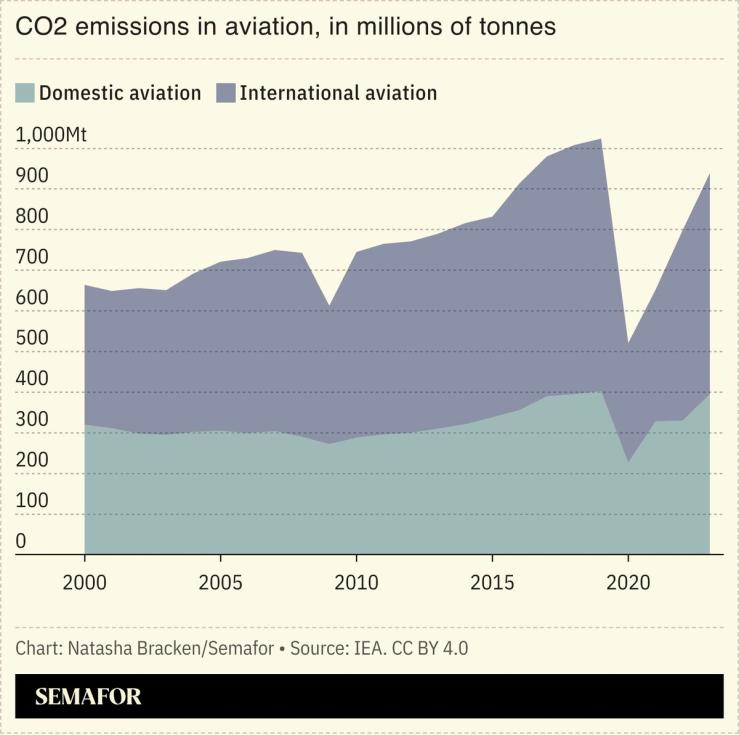
Efforts to curb aviation-related emissions range from far-off hopes for electric aircraft to near-term pressure to fly less, but other solutions exist, including one that would barely affect how passengers experience commercial flight while cutting the fuel outlay of air travel by around a tenth: That, at least, is the case put forward by the head of one of the sector’s biggest tech providers.
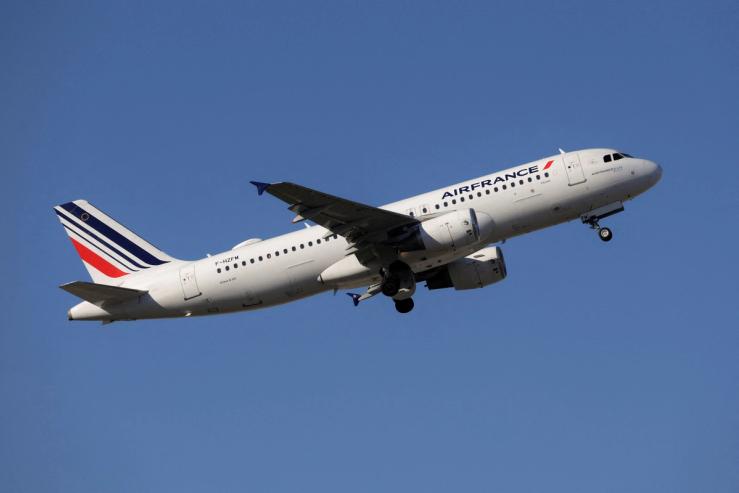
Most flight planning is done in general terms: Aircraft manufacturers provide recommendations on how to fly a particular model, and information about weather conditions is layered on top. But companies like SITA — which counts Singapore Airlines and Air France-KLM among its customers — are now providing more granular information, using a particular plane’s flying history, maintenance schedule, and other factors, combined with far more detailed weather-prediction data in order to help airlines cut fuel use, particularly during the emissions-heavy climbing phase of a flight.
The next step, SITA for Aircraft CEO Yann Cabaret said in an interview, was to combine those recommendations across masses of aircraft, taking into account airspace congestion and conditions on the ground in order to advise pilots to begin descent earlier or later (thereby saving fuel, again), or decelerating to avoid having to circle an airport. “This is just the beginning,” Cabaret said.