




Alexis’s view
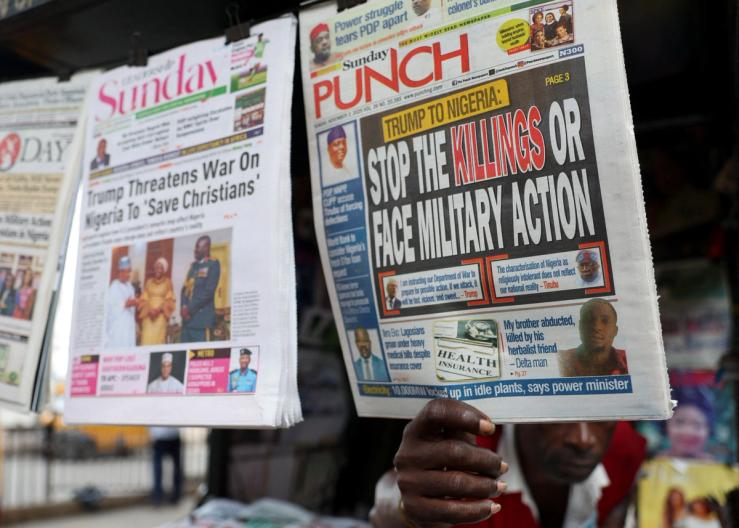
Nigeria’s government is learning that disagreeing with Donald Trump’s White House can carry tough consequences. This week the US State Department announced it will “restrict visa issuance” to people deemed to have violated religious freedom.
It’s the latest move in a steady drip-feed of punishments being meted out to Abuja over its perceived failure to tackle the alleged mass killings of Christians. This one will be felt deeply, probably even more than the threat to enter Nigeria “guns-a-blazing,” because it’s personal: Nigeria’s jet-setting political elite — many of whom have children studying in the US — will find it particularly painful if they can’t travel freely to the country where many also hold property and business interests.
Much like Nigeria, South Africa has been hit hard after pushing back. The US president’s decision to bar Pretoria from next year’s G20 summit is his latest salvo in a barrage of attacks. In Abuja’s case, it refused to accept deportees denied entry to the US. The country’s foreign minister even made light of the request by quoting American rap group Public Enemy. Pretoria’s refusal to drop Black empowerment legislation laws and acknowledge the alleged persecution of Afrikaners added to irritation over its pro-Palestinian stance.
Both countries have concluded that they’ll need other friends to successfully navigate the next three years of the Trump presidency. Last month, South Africa’s special envoy, speaking at our Next 3 Billion event in Johannesburg, said Pretoria needs to diversify its commercial ties to protect itself against the “weaponization of trade.” Similarly, Nigeria’s foreign minister has spoken of the country’s need for “strategic autonomy.”
Africa’s economic and political giants are not alone in this predicament. India is doubling down on a “multialignment” strategy to strengthen relations with other countries following Washington’s tariff onslaught. These are cautionary tales but, as the potential business opportunities tied in with the DR Congo-Rwanda peace deal show, there are ways to benefit from the White House’s transactional approach.

Notable
- China has opposed Donald Trump’s threatened military action in Nigeria but some say Abuja is “just a piece” on a geopolitical chessboard.