




what’s at stake
A push by the White House and its allies on Capitol Hill to block states from regulating artificial intelligence set off a fierce debate in the Republican Party this week.
House Republicans ultimately failed to attach the controversial ban on state-level AI rules to their annual defense policy legislation, but the battle isn’t over. Some lawmakers are still pushing to rein in states like California that have moved forward with their own AI restrictions, with a unified federal approach appearing unlikely to pass in the near future.
President Donald Trump is among the Republicans taking the side of industry, which doesn’t want to navigate a labyrinth of state laws. But others in the GOP warn of federal overreach.
In this article:
who’s making the case
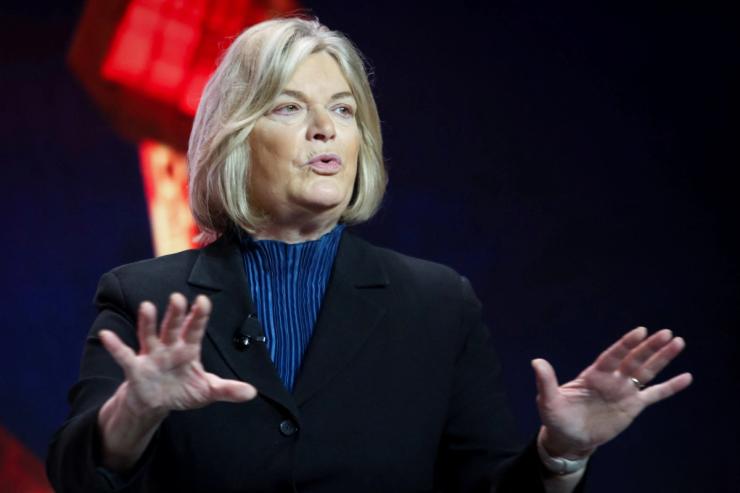
Sen. Cynthia Lummis, R-Wyo., a member of the Commerce Committee, argued that there should be baseline federal regulation — but that the US government shouldn’t prevent states from going further if they choose:
“I think there needs to be a base standard that applies nationally, but that doing a moratorium at the federal level on state regulation, I believe, is a mistake. While there should be a national standard that is a floor that allows AI to pursue the extent of its civilian capabilities, I think we also want to allow states that want to go further to do so.
“At some point, artificial intelligence may itself solve the problem that certain states are trying to address. For example, Tennessee has passed laws to try to protect name, image, and likeness, and voice for its singer-songwriters, and that’s a legitimate area of concern for them. At some point, artificial intelligence is going to be able to detect whether it truly is a singer’s voice or a singer’s image. But until that happens, I think we have to respect states’ desires to protect their creative talent.”
Nathan Leamer, executive director of Build American AI, a group affiliated with the pro-AI super PAC Leading the Future, argued that a patchwork of state regulations hampers industry and negatively impacts the US economy as a result:
“To secure America’s long-term economic and technological leadership, Congress must decisively meet the moment and work with the administration and innovators to pass a national regulatory framework for artificial intelligence. The current proliferation of approximately 1,200 distinct AI proposals and laws emerging across the 50 states would be a disaster for our economy, American workers, and our ability to protect users, families, and communities and hand the leadership over all of these critical areas over to China. This patchwork of conflicting, ideologically driven rules creates a massive compliance burden, making it virtually impossible for startups and entrepreneurs to navigate.
“Instead of empowering builders with a single, clear national standard, they would face 50 different interpretations of AI governance. This politically driven fragmentation will inevitably slow the pace of American innovation and job creation, risking a surrender of technological leadership at a moment when nations like China are strategically defining future global AI standards.”

Notable
- A separate push for a measure restricting sales of advanced chips to China and other adversarial nations also fell out of the defense bill, Bloomberg reported.
- Leading the Future launched earlier this year with $100 million in initial backing from Andreessen Horowitz and an OpenAI cofounder, The New York Times reported at the time.