


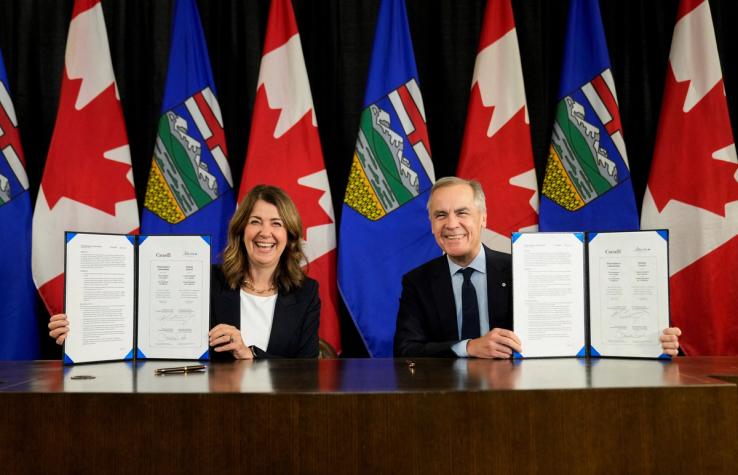
Canadian Prime Minister Mark Carney signed a deal with the energy-producing province of Alberta to help expand the country’s Pacific oil exports, a move Ottawa framed as essential to developing the province’s energy sector while reducing Canadian dependence on the US.
At the heart of the deal is a push to advance plans for a pipeline that would carry a million barrels of oil daily from Alberta to a Pacific export terminal, shipping primarily to Asian markets, which currently seem to offer more stability than Ottawa’s southern neighbour. The trade interdependence between the US and Canada, “once a strength, is now a weakness,” Carney said.
The agreement exempts Alberta’s proposed pipeline from some federal climate laws in order to spur investment in the province, although Carney also stressed the deal would require Alberta to raise industrial carbon levies on emissions and invest in multibillion-dollar carbon capture projects. The plans drew strong opposition, but improved strained relations between Carney and Alberta’s premier, who had openly blamed the federal government for stifling the province’s economic potential with restrictive emissions policies.
