


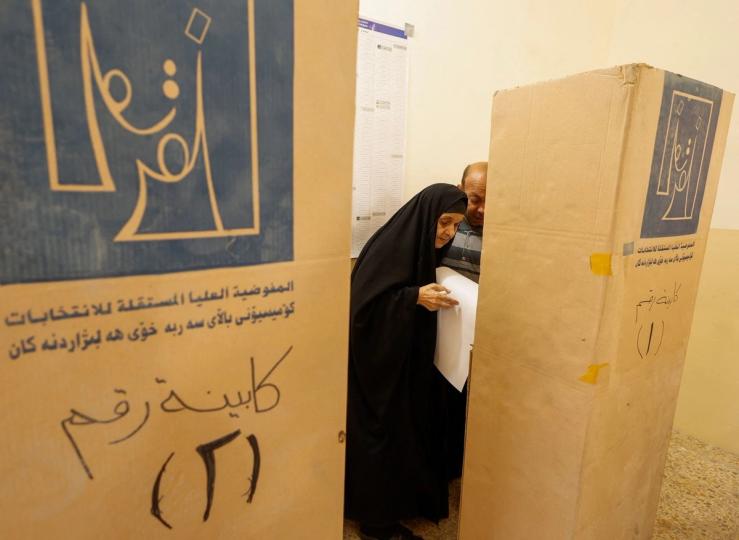
Iraqis began casting ballots in parliamentary elections that analysts fear may entrench disillusionment with democracy in the country.
Prime Minister Mohammed Shia al-Sudani is seen as having balanced ties between Washington and Tehran — Iraq’s two dominant patrons — while delivering a modicum of improved services and security. But turnout has been persistently low, months of horse-trading to form a government are likely to follow, and voters are weary of high levels of corruption.
Sectarianism also remains embedded in the political system, if not in the voter base, while a coterie of Shia armed groups retain extralegal power. The “ballot may do little more than endorse a familiar political order,” one analyst told Reuters.