




The Scoop
Both OpenAI and Anthropic lobbied lawmakers on the ability of AI companies to share information with one another without running afoul of antitrust rules in the third quarter of this year, according to federal lobbying disclosures reviewed by Semafor.
Anthropic’s lobbying form lists the Collaboration on Adversarial Threats and Security Risks Act, a bill that would allow labs to coordinate with each other on security risks, as a point of focus for the company on Capitol Hill. The legislation could make it into law as part of must-pass defense policy legislation, Semafor previously reported.
OpenAI’s lobbying form is less specific, listing “AI-security collaboration and information-sharing, including proposed antitrust protections” as topics discussed in Washington. Lobbying forms don’t say whether companies are arguing for or against the proposals discussed in meetings.
The antitrust lobbying is of interest given the talks around a coordinated AI development “slowdown” pitched by AI leaders last month. The companies regularly lobby Washington lawmakers on proposed AI regulatory bills, as well as legislation on export controls and data centers.
OpenAI’s head of global affairs, Chris Lehane, has argued that an antitrust exemption specifically for model pacing would not be necessary. But Trump administration officials criticized AI leaders for calling for such a carve-out, saying they were capable of deciding to slow down among themselves without the government’s blessing.

Know More
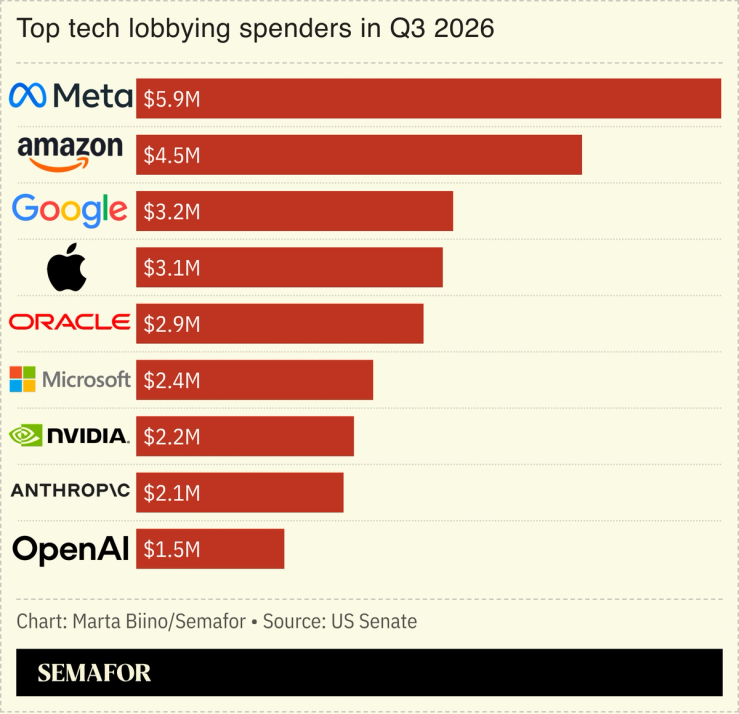
Meta spent $5.9 million lobbying Washington lawmakers in the third quarter of 2026 — the most of any big tech firm during that period — as the AI race grew more competitive and high-profile hacks put pressure on the AI safety debate in Washington, according to Senate lobbying filings.
Meta often is the biggest lobbying spender among its Big Tech and AI counterparts, but OpenAI and Anthropic have been spending more and more each quarter, nearly doubling and tripling their spends in the first half of the year, respectively, as they navigate Washington’s discussions about containing their technology.
Google, Amazon, and Apple lagged behind Meta in spending but beat AI and chip companies, though Nvidia also posted its highest-ever quarter at $2.2 million as the chipmaker stays dominant and influential in the Trump administration. All three companies have built up massive lobbying portfolios on a range of tech policy topics including kids’ online safety, immigration, taxes, education, and energy policy.