




Andy’s view
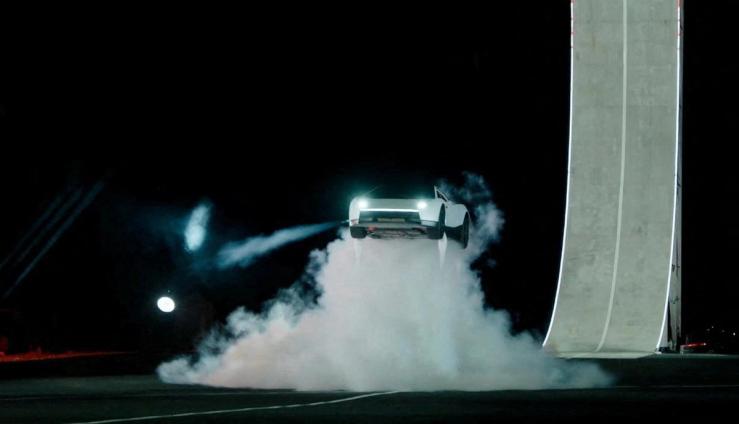
The new Tesla Roadster is science fiction: It can zoom into the air, perform barrel rolls, and then plop down softly using cold-gas rocket thrusters.
Unveiled last week at a rocket facility in Texas, the Roadster is a triumph of engineering — an exquisite toy for the super-rich, if it ever reaches production (the disclaimers on the advance orders suggest CEO Elon Musk himself has doubts).
Yet, paradoxically, it also represents a defeat: The Roadster isn’t a vehicle that will turn the tables on China, outcompeting the likes of BYD in the consumer market. Instead, it represents the future in another way, one in which China owns global mass manufacturing not just in cars but everything else — machine tools, pharmaceuticals, ships.
As low-priced Chinese exports swamp global markets, politicians from Washington to Brussels to Berlin diagnose the problem largely as one of Chinese overproduction, and are putting up trade barriers to protect their domestic industries. The EU and China, for example, recently agreed to set quotas with tariffs for Chinese hybrid cars, and are considering similar restrictions on other industrial categories.
But this misses the broader challenge. China’s surging shipments are much more than just surplus production, the difference between what comes out of Chinese factories and what can be sold domestically in a sagging economy. They are a deliberate strategy, clearly stated in the country’s five-year industrial plans and, ultimately, represent China’s quest for national power.
The implication for Western industry leaders is existential: They can either climb the technological ladder into increasingly rarefied niches — like Tesla, with its Roadster — or risk being destroyed by Chinese rivals, as is currently happening to Volkswagen in China, still its largest single market.
In fact, influential Chinese strategists don’t recognize the concept of overproduction at all. Lu Feng, a professor at Peking University’s School of Government, sees a showdown on the way between China’s “industrial socialism” and the US’ “financial capitalism” — and he warns that caving to foreign pressure to curb “overproduction” would be “tying our own hands.” In this way of thinking, since China’s desire for power is limitless, there can be no question of producing too much. Kyle Chan, a researcher specializing in China’s industrial policies at the Brookings Institution, labels Lu’s brand of economic nationalism, “industrial maximalism.”
Perhaps, then, we should call the Roadster a prime example of its opposite: “industrial minimalism.”
Among leading global automakers, Tesla had the best chance of owning the future of mobility. Indeed, its Shanghai gigafactory, built in 2019, and the local supply chains it developed were a catalyst for the entire Chinese EV industry. But Musk is now clear-eyed about the competition he helped spawn. Without trade barriers, he warned in 2024, China would “pretty much demolish most other car companies in the world.”
Musk is now betting Tesla’s future on becoming a robot maker. But he’ll run into the same issues in that sector, too. The challenge from China is systemic, not industry specific. The country’s industrial machine is set up to commoditize products through overwhelming economies of scale, to bring down prices, and conquer global markets — regardless of financial return. This is not about profit maximization. It’s about power maximization.
Writing in The Guardian, the tech reporter Chang Che, who recently visited 11 Chinese robot makers across five cities, sees a future where the US leverages its advanced research capabilities to try to build the ultimate robotic machine — one that can “mow your lawn, walk your dog, and babysit your children” — while China cranks out functioning robots for each of those tasks at a fraction of the price. Already, China accounts for 60% of all the world’s new factory robots.
It also has the capacity to supply 100% of global demand for EVs. Michael Dunne, the author of the forthcoming Car Wars, told The Wall Street Journal that what remains for Western carmakers “is to move up or get pushed out.” The Tesla Roadster is, quite literally, aiming for the skies. Other carmakers will have to make a similar vertical ascent, or bite the dust.

Notable
- Zeroing in on the term “scenario innovation,” a recent Sinocities article explained China’s state-sponsored process of opening up real spaces, like roads and factories, so that companies can test new technologies in real-world settings.