




The News
FREDERICKSBURG, Va. — In a matter of weeks, when the midterm results are tallied and the next campaign begins, Democrats with presidential dreams know the question will be coming.
Do Israel’s actions in Gaza constitute genocide?
The question flew at Democrats all year. Progressives generally said “yes.” Pro-Israel Democrats said “no.” Many rejected the idea that they had to use that word or were otherwise endorsing every action taken by the Jewish state.
As potential Democratic 2028 contenders fan out across the country this month, campaigning with battleground Democrats and building their win/loss scorecards, just two have said “yes” to the question: Reps. Ro Khanna, D-Calif., and Alexandria Ocasio-Cortez, D-N.Y.
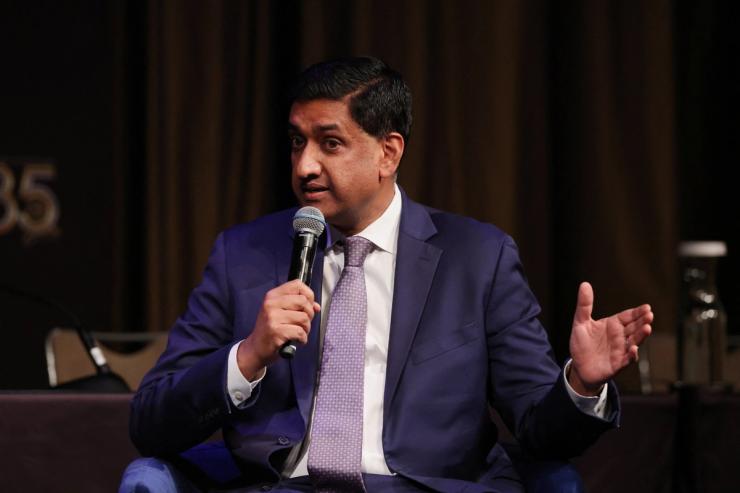
Khanna has been particularly direct, using interviews and public appearances not only to insist that Israel committed genocide, but also that Democrats who won’t say so are too weak to lead the party.
“Israel has committed a genocide in Gaza, and we should have the courage to say so,” Khanna said at the Democratic National Committee’s summer meeting in Texas — a historically red state where this year’s top statewide Democratic nominees, Senate candidate James Talarico and gubernatorial candidate Gina Hinojosa, have not gone as far.
The question hasn’t dominated the last few weeks of campaigning, with primaries long over and stark differences on Israel between most Democrats and Republicans. Last week, when Ocasio-Cortez made three campaign stops for Michigan Senate nominee Abdul El-Sayed, neither Democrat — and no audience members — brought up the topic of Gaza.
But the question still looms over the party’s first wide-open primaries in eight years. They’ll be the first since small armies of activists pressed Democrats to take more progressive positions on immigration, the environment, and criminal justice reform. In retrospect, many Democrats now think that the candidates in 2020 were too willing to bow to pressure with cameras rolling. There is no sign that anyone but Khanna or Ocasio-Cortez is moving towards a new Gaza answer that activists might prefer.
“I think we have to acknowledge the seriousness of the issue, the seriousness of what’s happening in Gaza, the seriousness of what’s happening in the West Bank,” Maryland Gov. Wes Moore told Semafor earlier this month at a campaign stop, when asked why he thought the word “genocide” was so important to many Democrats. Moore has accused Israeli Prime Minister Benjamin Netanyahu of committing war crimes, but hasn’t called the violence in Gaza a genocide.
“I think it’ll be up to the voters to decide whether or not they feel that people are meeting the moment,” Moore continued.
In this article:

Know More
When the Gaza questions do pick up again, most Democrats are likely to punt to the International Criminal Court — already a popular way to dodge them. The ICC has issued arrest warrants for Netanyahu for war crimes and crimes against humanity, but hasn’t accused Israel of committing genocide.
“The question of genocide is a question of whether a government has the specific intent to destroy a national or ethnic group,” Sen. Jon Ossoff, D-Ga., said in his first debate against challenger Mike Collins this month. “And that is a question for the International Criminal Court.”
That answer is unlikely to satisfy many Democratic primary voters, according to a poll of six early primary states conducted by YouGov on behalf of the Institute for Middle East Understanding Policy Project.
In South Carolina, where Democrats opted to hold their first primary, 57% of likely primary voters said that Israel was “committing genocide against Palestinians.” In the other five early-voting states, the number was much higher: 78% in New Hampshire and Nevada, 76% in New Mexico, and 72% in Virginia. And in Michigan, where El-Sayed has said he will play an active role in the primaries if he wins his Senate race, eight in 10 likely primary voters agreed with the “genocide” term.
These are more lopsided numbers than other pollsters have found, but according to an Associated Press survey this summer, half of all Democrats now agree that “genocide” was the appropriate word to describe what they saw happen in Gaza.
“It’s certainly been a question that keeps coming up in debates,” said the IMEU Policy Project’s spokesman, Hamid Bendaas. “And I’d expect there will be a key 2028 moment where the candidates are asked to raise their hands with a yes or no.”
Some Democrats have tried to cancel the test before they can take it. In March, Kentucky Gov. Andy Beshear told Politico that “genocide” was “becoming one of those new litmus tests that we said we would never do as a party again.” He wouldn’t answer the question, but assumed he’d be asked again.
Democrats uncomfortable with the term have watched how even using it does not stop questions about their commitment to cutting off arms to Israel — the policy fight they expect, with a little less dread, next year.
In August, two months after he defeated Rep. Dan Goldman in New York’s Democratic primary, Brad Lander joined a protest of a Hindu nationalist politician in Manhattan and was filmed being heckled as a “zionist” — even though he said that the war “meets the definition of genocide.” Last month, after Drop Site and New York magazine reported that consultants were urging Maine Democratic Senate candidate Troy Jackson not to say “genocide” so much, supporters began asking him about the war again, worried that he’d gone wobbly.

David’s view
If Israel elects another government led by Netanyahu, just days before the US midterms, the nuanced answers that many Democrats give to the “genocide” question will grow even trickier to land. The party has already shifted leftward. Rahm Emanuel’s endorsement of conditions on aid was an early signal that the field engaged in the “invisible primary” would be less pro-Israel than Joe Biden.
But most of the likely Democratic candidates simply don’t agree that a genocide happened in Gaza, and reject the question’s premise. “Having one conversation about one country means you are politicizing a term that has huge, historic, moral complications,” Emanuel told Meet the Press this month.
Still, it’s possible public pressure — including demonastrations organized by interest groups — changes their stances. Eight years ago, protesters frequently drove coverage in their preferred direction by disrupting candidates (Movimiento Cosecha pushed Biden to endorse a deportation moratorium, for instance) and showing up to press them at Q&As.
Kamala Harris’ defeat convinced some Democratic strategists, like the big-tenters at Third Way and the Searchlight Institute, that Democratic candidates were too easily moved by activists, and that voters held this against them. It in turn fostered a reluctance to let activists shape their next primary. This is the topic that will stir those emotions next.

Room for Disagreement
Pro-Israel Democrats, who had a dispiriting set of primaries, say that the “genocide” term is inapt. Brian Romick, the president of Democratic Majority for Israel, put out an issue framework last month in an attempt to move the conversation from the language to the actual policy.
“What doesn’t help anyone is twisting the definition of genocide or turning the use of that word into a purity test,” Romick said. “I’d rather see the primary spent arguing about what a Democratic president is actually going to do.”

Notable
- In National Review, Noah Rothman wrote about Democrats being asked to say “genocide” and wondering if a “yes” will help their careers.