




The News
More investors are looking to hedge against a potential downturn in the AI boom, driving up the cost of credit default swaps tied to hyperscalers.
Investors are piling into the insurance contracts as anxiety grows over the huge amount of capital it will take to scale up artificial intelligence and how quickly the revenue will materialize to support it.
The cost of protection on hyperscalers that have taken on the most massive levels of debt is going up the most, including cloud provider CoreWeave, whose debt load has tripled over the past year, and Oracle, whose $160 billion of debt is teetering just above junk-rated status.
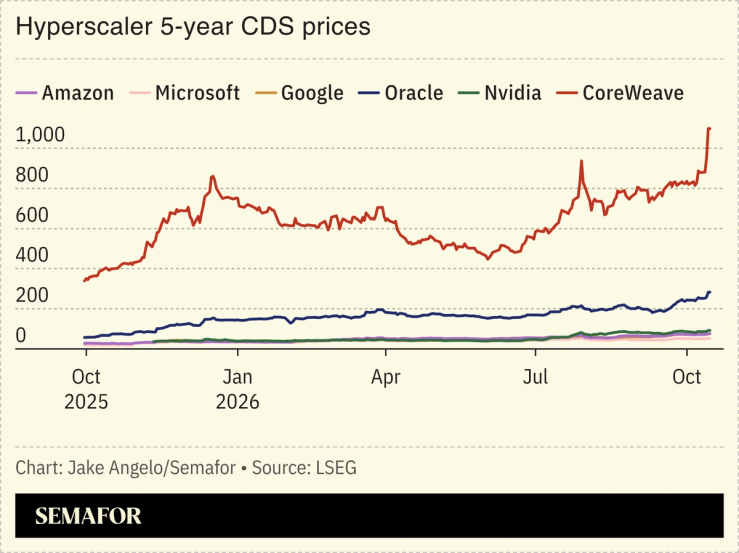
The cost to insure $1 million of CoreWeave’s bonds against the risk of a default has risen from under $40,000 a year ago for five years to $100,000 today. This week, CoreWeave bond prices fell sharply, causing yields on the debt to top 15%. Its CEO sent a memo to employees saying the market was acting “irrationally.”
The cost of hedging against an Oracle default has risen 12% in a week, with a $1 million policy now costing $28,000. Part of investors’ concern about the company is tied to a data-center project in New Mexico that Oracle is building that’s run into setbacks.
The company last month informed one of the lenders, including Blue Owl, that it would defer lease payments and other financial obligations tied to the deal if the datacenter fails to come online as planned in 2028. It has already faced regulatory snags and opposition on the ground. Oracle still has to pay some interim costs, as well as the rent for the space.
“There’s a derivative market. If you want to make a bet that Microsoft could default and not pay their lease, you can go in the derivative market and do that,” Blue Owl CEO Doug Ostrover said on a recent episode of Compound Interest. “We don’t. But it’s available to us.”
New debt deals are struggling, too. This week a deal for Volta Infrastructure faltered as investors feeling full-up on data center debt demanded higher yields.

Know More
Credit default swaps are a financial engineering tool that allows investors to protect themselves against potential defaults, similar to paying a premium on an insurance policy. Should something go awry, the swap would compensate the buyer.
Record amounts of debt have been issued over the last year as companies look to rapidly build the infrastructure and compute capacity needed to power the AI boom. That issuance has slowed in recent months, as interest rates are rising and as investors get more selective about who they’re willing to lend to.