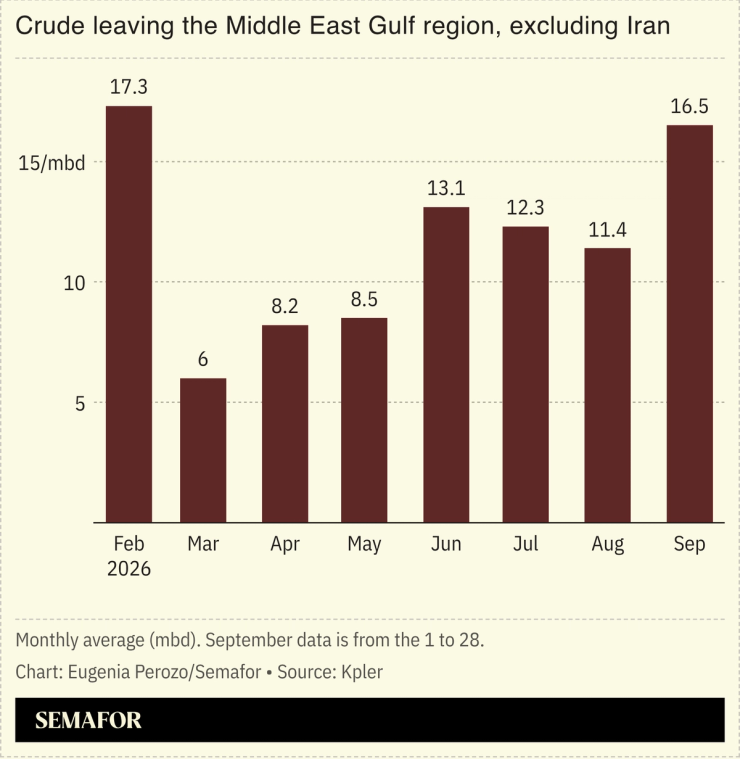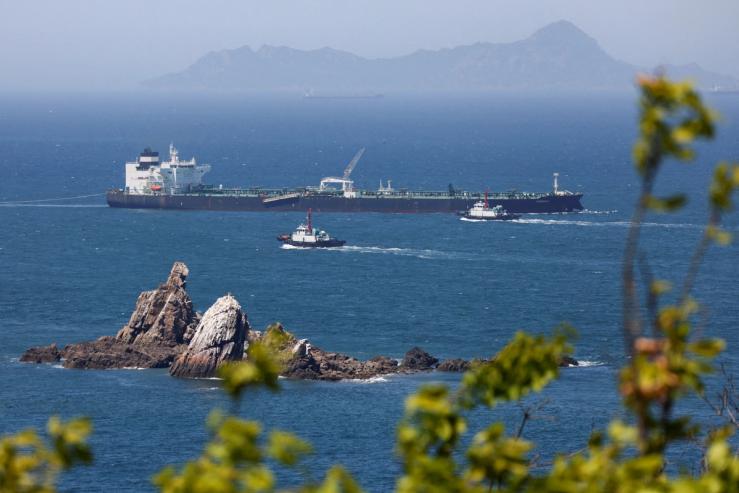
Charter rates for oil tankers hit a fresh record, driving a larger wedge between the nominal price of crude futures and what it costs to actually receive barrels. Crude oil exiting the Strait of Hormuz averaged about 10 million barrels per day over the past week, despite a rising number of attacks on tankers. But the time required for the largest tankers to rest outside the strait waiting for crude deliveries from smaller vessels has effectively created a tanker shortage. It now costs up to $77 million to hire a large tanker to move crude from the US to Asia, up from less than $10 million last year.
Crude futures, meanwhile, fluctuated based more on traders’ perceptions of Trump administration statements than by the flow of physical barrels, which has made them “increasingly unreliable as a proxy for genuine supply,” analyst Amrita Sen wrote in the Financial Times; the gap between the “dated” and futures prices for Brent is now the highest since the war started. And because emergency crude stocks have already been drained, if Gulf exports fall again, “you do have that $200-a-barrel scenario,” the CEO of trading house Vitol warned.
Meanwhile, the International Energy Agency clarified that last week’s G7 commitment to release diesel from strategic supplies will be drawn from the volume originally authorized in March, and not represent any new barrels; European diesel prices jumped 8% on the news.