




The News
When immigration enforcement deaths sparked bipartisan calls for Kristi Noem’s resignation, Sen. Susan Collins privately lobbied her to stop the surge in Maine. When the Commerce Department cut off sea grants for Maine’s flagship university, Collins called Secretary Howard Lutnick to save them.
And when President Donald Trump hit Canada with new tariffs, Collins negotiated on the side with US Trade Representative Jamieson Greer to exempt concrete and road salt — the latter a critical commodity during Maine’s long winters.
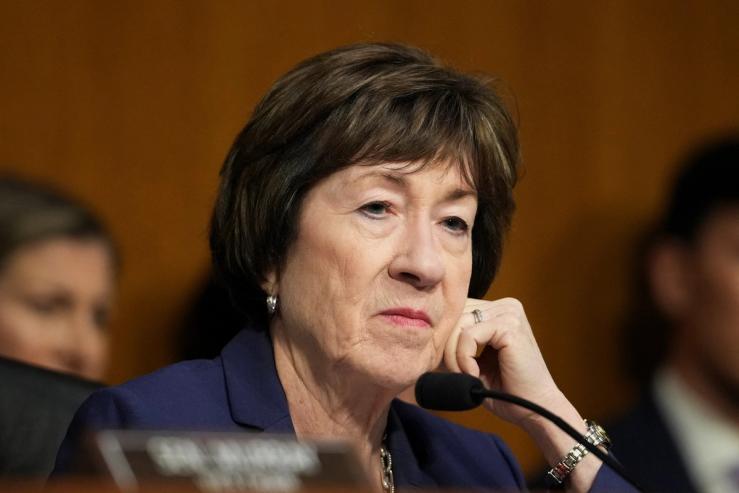
In other battleground Senate races this fall, voters must choose between a combative Democrat and a Trump-friendly Republican. Maine’s battle pits that type of Democrat, former statehouse leader Troy Jackson, against a rarer breed in Collins: She’s the only incumbent Senate Republican who criticizes Trump in public while using her personal connections to reverse some of his actions.
It’s not clear whether Collins’ backchanneling will be enough to satisfy anti-Trump voters in Maine — or at least enough of them to put her over the top yet again. But her strategy will become a national political story on Tuesday night, when Jackson and Collins kick off a series of Senate debates.
Collins told Semafor ahead of the October campaign season that her “challenge is making sure that Mainers know what I’ve done” in unwinding some of the Trump administration’s decisions. She said Maine would lose her direct line to the Trump Cabinet if Jackson wins — and thus get robbed of tangible victories.
“When you take that kind of adversarial approach, you’re unlikely to get the results, and I got results,” Collins said in an interview, referring to her quiet talks with Noem. “The Troy Jackson approach would be to rant and rave about it, but never contact [her] directly.”
Despite Collins’ frequent breaks from his administration, Trump has largely laid off her and “by and large has given her a pass and even been complimentary of her,” said Sen. Kevin Cramer, R-N.D.
Yet he hasn’t made it easy for her to repeat her past odds-defying wins in a blue state: In recent weeks he’s sought to take over National Institute of Health grants and rescinded congressionally approved spending while repeatedly antagonizing Canada, which shares hundreds of miles of border with Maine.
“He’s making the lives of Maine families difficult, and Maine’s businesses and Maine’s communities difficult. And obviously, he’s not thinking about the implications for them or for me,” Collins said. “I’m not a focus for the president. I think that’s probably fair to say. But working families and small businesses and communities ought to be.”
Asked to respond to Collins’ comment, a White House official touted Trump’s “countless wins” in Maine, including a reduction in homicides and his tax cut law — which Collins opposed.
In this article:

Know More
Collins handily won her race in 2020 despite trailing in the polls for months to Democrat Sara Gideon. Six years later, the Maine electorate is worn out by Trump, but polls still show the race as a tossup. Collins benefited from Democratic discord as the party jettisoned its original nominee Graham Platner over sexual assault allegations, replacing him with Jackson.
The national Democratic effort to defeat Collins kept going; now the party is spending millions on an ad hitting her for a ProPublica story about her links to a corrupt defense contractor. The ad alleges that, after an FBI investigation into the matter was dropped, that “maybe there’s a reason Susan Collins does whatever Donald Trump wants her to.”
The typically genteel Collins has a volcanic response to that line of attack.
“Anyone who knows me or has worked with me knows that I am a person of integrity, and that’s why I’m so offended,” she said. “It is clearly an attempt to try to persuade the people of Maine that I’m not who I am.”
And even with the ProPublica report, Democrats are focused on turning the race into a referendum on Trump — and, by extension, Collins’ complicated relationship with his administration.
“It’s hard to push back against Trump when you vote with him 96 percent of the time,” Senate Minority Leader Chuck Schumer told Semafor. “She has backed Trump and refused to go against so many of the bad things he’s done.”
Collins argues that her approach is consistent: She’s supported major nominees of presidents in both parties, opposed some moves made by both parties, and never aligned neatly with the GOP agenda. That assessment used to apply to quite a few senators in both parties. Now it’s a strange place for a Republican to be.
Of the 17 Republicans in both chambers who supported impeaching Trump after the 2021 Capitol riot, Collins is one of only five still in Congress. Another of them, one of her closest allies, said that blanket opposition isn’t always productive.
“That’s what people don’t get. Sometimes they just want you to ‘fight fight fight.’ Then on the other hand they say, ‘What have you done for me?’ And Susan is trying to deliver on both counts,” said Sen. Lisa Murkowski, R-Alaska, a fellow Trump critic.

Room for Disagreement
Collins has opposed Trump on upwards of a half-dozen major initiatives and worked behind the scenes to temper him on multiple other occasions. To her opponent, that’s window dressing.
“Maine voters aren’t stupid, and they see the game Susan Collins is playing,” said Jackson spokesperson Dan Gottlieb. “In the moments when it mattered, she sided with Trump to confirm the justices who overturned Roe v. Wade, give ICE billions more in funding, and advance legislation that cuts Medicaid while delivering massive tax breaks to the wealthy.”
Senate Democrats know Collins could win and continue to wield power atop the Appropriations Committee, so few are taking open shots at her. They still see her seat as crucial to establishing a more pugnacious anti-Trump majority.
“I’m not questioning her effectiveness. I’m just telling you, when they have the majority — and they have had the majority for two years — they have not stopped his actions,” said Sen. Patty Murray, D-Wash., who runs appropriations with Collins.

Burgess’s view
Forget everything else you know about this race. The fundamental questions are whether Trump will sink Collins, and whether her distance from him matters to Mainers.
Clearly her approach is working to some extent. The polls show her running well ahead of Republican gubernatorial candidate Bobby Charles, so clearly some percentage of voters are planning to split their tickets for her and Democratic gubernatorial candidate Hannah Pingree.
She’ll need every independent voter she can lasso into her tent to overcome Trump’s unpopularity. Just ask Jon Tester and Cory Gardner, two former senators whose states’ view of the national party made it impossible for them to win.

Notable
- Collins and Jackson will debate four times.