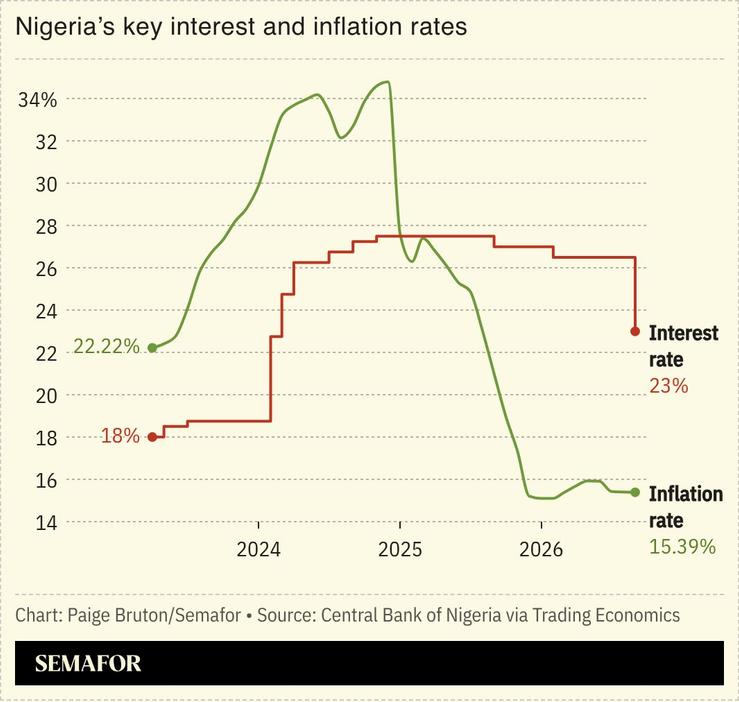
Nigeria’s largest interest rate cut in two decades raised the possibility of an easing cycle next year, analysts said. The central bank said its 3.5 percentage point cut this week was a reset aimed at making monetary policy more effective.
The move should help debt-laden firms to refinance existing borrowing or access new capital more easily, Lagos-based investment bank CardinalStone said in a note. The move could also reduce the Nigerian government’s debt service costs, Nigerian economist Bismarck Rewane said.
Nigeria has faced high inflation in the three years since the removal of fuel subsidies raised costs for households and businesses. A sequence of rate hikes to tackle inflation is now giving way to cuts, and increased oil and gas export earnings that have boosted the naira should give room for further reductions, said David Omojomolo of Capital Economics.