




The News
Namibia’s president has a message for foreign investors eyeing the country’s critical minerals: build processing plants at home, or look elsewhere.
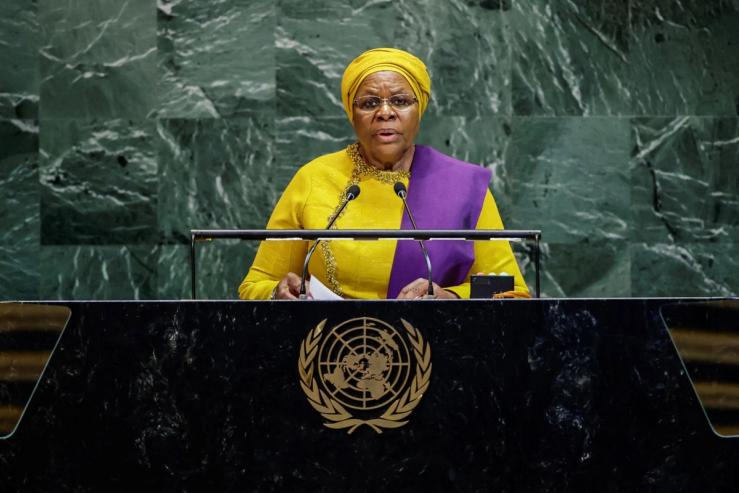
“When you are coming to Namibia, you don’t want to be a briefcase business,” Netumbo Nandi-Ndaitwah told Semafor at an Invest Africa event on the sidelines of the UN General Assembly this week. “You have to put up a processing plant in our country.”
Namibia is a mining-based economy, she said, whose minerals have for too long been exported raw and shipped back as finished goods. The country is a major uranium producer with deposits of lithium, rare earths, copper and graphite. In exchange for processing at home, she offered investors a long-term partnership and a stable place to do business, pointing to 36 years of peace since independence. She also wants foreign firms to team up with local entrepreneurs, “so that you become part and parcel of us.”
Her pitch reflects a hardening line across the continent. With demand for critical minerals surging and Washington and Beijing competing for supply, African governments are betting they have the leverage to demand more than royalties. About a dozen countries, including Guinea, Malawi and Zimbabwe, have restricted exports of unprocessed minerals to force local refining, borrowing from Indonesia’s nickel playbook. The goal is to capture more of the value chain, and the jobs that come with it, rather than remain suppliers of raw inputs for other countries’ industries.

Know More
Nandi-Ndaitwah is also going further than many peers on ownership. Asked whether local partnership would be mandatory for foreign investors, she told Semafor: “In fact, we are putting it in the law.”
That promise has a long history. Namibia’s empowerment framework won cabinet approval in 2015 and was meant to become law by 2018. It stalled over a clause forcing businesses owned by previously advantaged Namibians to cede 25% to previously disadvantaged citizens, which was dropped in 2018. Business groups also warned it would scare off foreign investment. As recently as last October, officials described the bill as at an “advanced stage.”
Mining is moving faster. Namibia has required 15% local ownership for new mining licenses since 2021. Officials floated a 51% threshold last year, drawing pushback from the Chamber of Mines, which warned against importing other countries’ models.
Nandi-Ndaitwah dismissed comparisons with South Africa’s empowerment rules, saying it depends on the approach. She cited tourism conservancies she oversaw as environment minister. There, investors started with 60% to 70% stakes that stepped down to roughly 51-49 with local communities.

Step Back
Behind the hard line is a jobs emergency. “Over 40% of our people are unemployed. And we are sitting on a time bomb,” Nandi-Ndaitwah told Semafor. “Even when you have your mine there, it’s not safe.”
Nandi-Ndaitwah won the presidency in 2024 on a pledge to spend 85 billion Namibian dollars (about $5 billion) creating 500,000 jobs by 2029, a steep target for a country of 3 million people with a GDP of about $14 billion.
She framed the stakes in continental terms: without opportunity at home, young Africans will keep leaving. “If they have to leave, it is by choice,” she said. “But as it stands now, they are pushed out by the conditions in the continent.” Offshore oil discoveries could bankroll her jobs promise, or deepen the sense that Namibia’s wealth flows elsewhere.