




The News
An AI crisis communications line between the US and China should be a “starting place” for relations between the superpowers on the technology, OpenAI’s head of national security policy said.
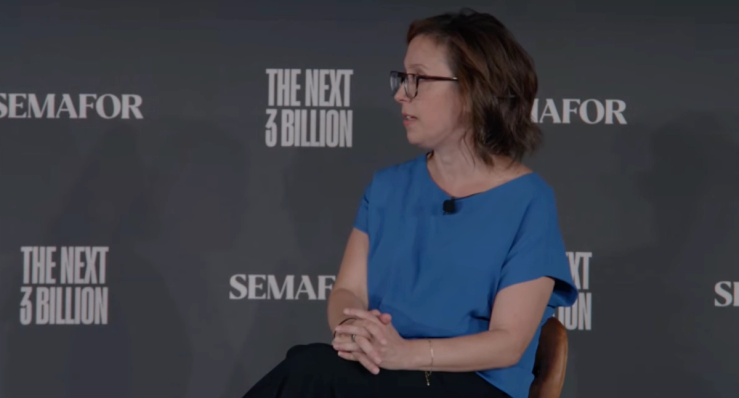
Sasha Baker said at Semafor’s Next 3 Billion event on Tuesday that she is “cautiously optimistic” about reports that Washington and Beijing are discussing an AI safety notification system, with a special focus on national security concerns.
It’s “a great place to start,” she said. “I see that as a starting place, not the ending place. But it’s substantive and real.”
She said the US and China have to find common ground because they are home to the world’s leading AI labs, but “every country in the world has a stake in what happens with advanced AI, and we want for those voices to also be represented in the conversation.”
OpenAI’s Sam Altman, who has backed calls to pace frontier AI model development, will tell the UN Security Council on Wednesday about the need to “internationalize the conversation around standards” around AI, Baker said. Earlier on Tuesday, US President Donald Trump rejected the idea of international oversight of AI, calling it a “globalist scheme.”
He will also relay “the gravity of the moment that we’re in, and a recognition that these models really are displaying capabilities that are strategically significant,” she added.

Know More
Baker’s remarks came amid concerns that advanced AI models could be turned into potent hacking tools, capable of finding and exploiting unknown security flaws with little human direction.
OpenAI earlier this month launched Astra, its first model designated as being “cybercritical.”
Baker said there are no current plans to leverage the model to allow the US government to do offensive cybersecurity work, like proactive attacks on adversaries.
“We… acknowledge that in the wrong hands it could be used for offensive cyber,” she said. “That is not something that we’re provisioning models for right now.”