




Andy’s view
In Mao Zedong’s 1938 essay On Protracted War, penned during the Japanese invasion of China, he divided conflict into three phases: strategic defense, strategic stalemate, and strategic counter-offensive.
On the eve of a leaders’ summit this week in Washington, US-China ties are stuck in the stalemate stage, deadlocked on everything from trade and technology to Taiwan — and it’s only a matter of time before hostilities ramp back up.
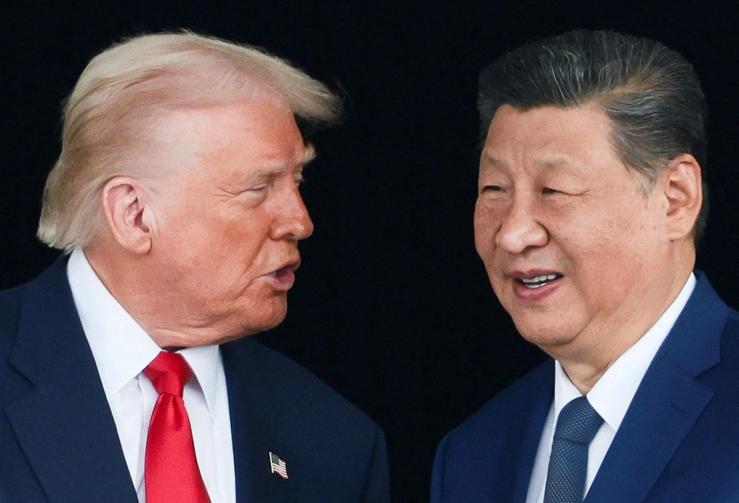
Of course, there’s the mercurial Trump factor, which throws off any tidy analysis. The US president plans to personally greet Chinese leader Xi Jinping on the tarmac at Andrews Air Base this week — an honor normally reserved for popes and close partners — and has been conciliatory to Beijing ahead of these talks. But Trump could just as easily flip, perhaps if Republicans are routed in November’s midterms, as he did at the end of his first term when he blamed China and COVID-19 — “kung-flu” — for his election defeat.
And stalemate isn’t quite the same thing as a truce. Beneath the diplomatic surface, the two sides are radically at odds over just about everything: Beijing’s role in providing a financial (and, reportedly, tactical) lifeline for Iran as it lashes out at its Gulf neighbors and the US; keeping Russia’s economy afloat as it pummels Ukraine; tariffs, sanctions, currency levels, student visas, and much more. Scott Bessent, the US Treasury secretary running point on the summit, once likened the superpowers’ relationship to a game of water polo: Above the water, the two teams toss the ball back and forward; below, legs kick and flail.
But in a stalemate, the most awkward problems either get ignored or deferred. Trump’s extravagant welcome gesture will almost certainly be matched by prosaic summit outcomes. A Financial Times headline summed up the low expectations: “The main Trump-Xi summit achievement will be it happening at all.”
A case in point is the activation of the Board of Trade, an arrangement agreed upon at the leaders’ meeting in Busan, South Korea, that is explicitly designed to avoid the tough issues. China is demanding the US ease export bans on high-tech goods, like chipmaking gear; the US bitterly complains about Chinese overproduction and transhipment. The trade board, however, limits itself to “non-sensitive” consumer products — flip flops, toys, and kitchenware.
On AI safety — arguably the most significant topic on the agenda, given the risks of an AI-induced blow-up (CNN reports a recent close call involving a Chinese ship in the Middle East, wrongly identified by a US chatbot to be carrying nuclear material) — it isn’t even clear the two sides are talking about the same thing. In the US, AI safety refers to existential risk; in China, it means preserving regime stability.
As always, Xi’s priority is saving the party that he leads — that’s why he was selected for the job — and a good summit outcome would be simply prolonging the superpower standoff, at least until a party gathering next year that’s expected to hand him a fourth five-year term in office. To borrow Mao’s parlance, Xi’s not ready yet for the strategic counter-offensive stage.
Among the proposals put forward by the Trump administration is a regular AI dialogue, alongside setting up something akin to an AI crisis hotline. The offer is perhaps unintentionally symbolic of the countries’ stasis — limited in scope and ambition even as they grapple with huge geopolitical and societal instability.
It’s even unclear whether an AI hotline mechanism would work. Decades ago, their militaries installed a telephone link to be used in the event of an emergency. One arrived in 2001 when a US spy plane limped into Hainan Island with a 24-member crew after a collision with a Chinese fighter jet that killed its pilot. The American side made a frantic call: Nobody picked up.

Notable
- China holds “escalation dominance” over the US when it comes to economic conflict, but that “would not spare its own economy pain if it were forced into a tit-for-tat conflict with Washington,” Adam Posen argued in Foreign Affairs.