




The News
It was a scary weekend in European capitals, where leaders fretted about Russia testing NATO’s limits and grappled with a threatened drawdown of American troops in Europe.
French President Emanuel Macron delivered a briefing to the candidates running to succeed him so disturbing that even the far-right National Rally’s leaders emerged denouncing Russian hybrid attacks.
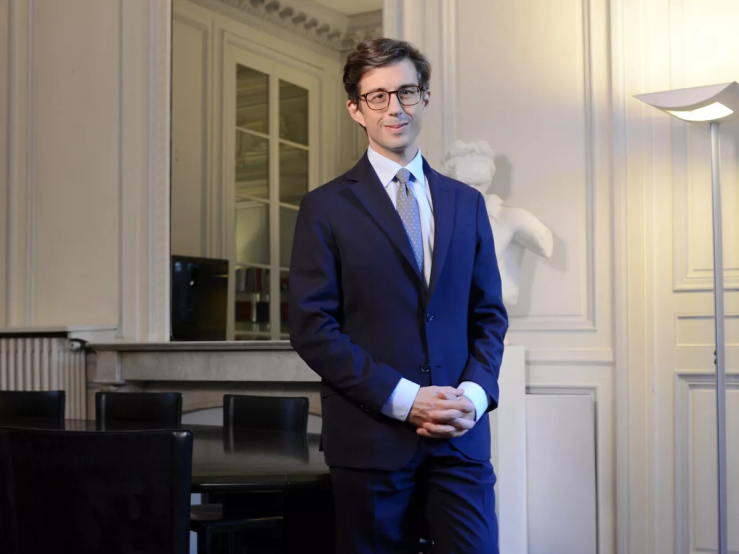
The looming question is whether European leaders, institutions, and citizens can pivot swiftly enough so that the bloc can use its economic heft to take responsibility for its own security. One institution is testing that: Sciences Po, the training ground for French and other European policy elites, has sharply redirected its resources to the moment. This fall, it launched a new Centre for Global Security and Governance and expanded its defense and intelligence offerings, the school’s president, Luis Vassy, told Semafor.
“We had been the school of happy globalization,” he said in a phone interview from Paris on Sunday. “We need to readjust the mindset of future European elites to a world that is going to be more competitive, more brutal.”
“That doesn’t mean we should dissolve our value system, but if we believe it’s a value system that is worth defending, that has some consequences in terms of the way we should act,” he said.
Sciences Po, which also recently launched a climate school to meet the other looming crisis, had long lacked the sort of security-minded focus on “international relations” present at big American universities — take, for example, Johns Hopkins SAIS and Columbia University SIPA.
The field “in its US shape is seen as a right-wing domain, because it is states, it’s power, it’s conflict,” Vassy said. “If you look at issues more from the bottom-up, you look more into social trends, the oppressive nature of the state, et cetera.”
But his students have already begun to pivot for the new moment: Defense and security majors in the existing policy school have increased 30% per year for the last three years, he said, and the school of international affairs is launching new concentrations in defense and intelligence to meet the rising demand. This reflects a new consensus that, however far Trump and Defense Secretary Pete Hegseth take their current campaign, a new era has begun.
“If India can be independent from a defense standpoint there’s no reason Europeans shouldn’t,” said Vassy, a former French diplomat in Washington and chief of staff to the Foreign Ministry. “It’s simply not reasonable to have your whole security depending on a foreign actor.”
Sciences Po’s graduates typically supply about three-quarters of the enrollees at the training academy for French leaders known as ENA. Barring a cultural revolution, its current students will more or less be running the country from about 2045 to 2070.
In this article:

Ben’s view
Even as European leaders press forward to centralize the bloc’s economy and invest in its shared security, the rising politics in Germany and France are pulling those nations in the opposite direction. The radical AfD in Germany and moderating National Rally in France are both focused on ending immigration and enjoy support from voters wary of escalating conflict with Russia.
The longer-term trend, though, is clear. Sciences Po’s turn reflects a European assumption that, whatever happens in the US elections in 2026 and 2028, the American security umbrella is receding over the long term.
“I worked in the foreign ministry where we could happily lecture the rest of the world. This is completely outside their worldview,” said Vassy. Instead, the new classes are “extremely conscious about the challenges. They have not been educated like you and me in a world where the West was the unique center of power.”

Room for Disagreement
“The European Union is a vehicle for economic cooperation. It is a peace project, not a war project,” Hugo Bromley wrote in Foreign Affairs in March, arguing that an attempt to build a common European defense front would turn into a domestic political disaster.

Notable
- Vassy laid out his views recently in Grand Continent: “We have moved from a world where we projected ourselves with our ideas, our values, and our strengths, to a world that projects itself onto us,” he wrote, according to a translation from French.