Quantum computing could eventually address 20-40% of emissions from sectors like steel and cement that are otherwise hard to abate, according to a report shared first with Semafor.
To be sure, commercially viable applications will have to enter the market, old industrial equipment will need replacing, and computing power will need to be built. However, the BCG Institute argued in its analysis that these long deployment cycles are more reason to plan ahead. “Many of the industrial assets that we’re going to need or deploy are being built now,” Maurice Berns, one of the report’s authors, told Semafor.
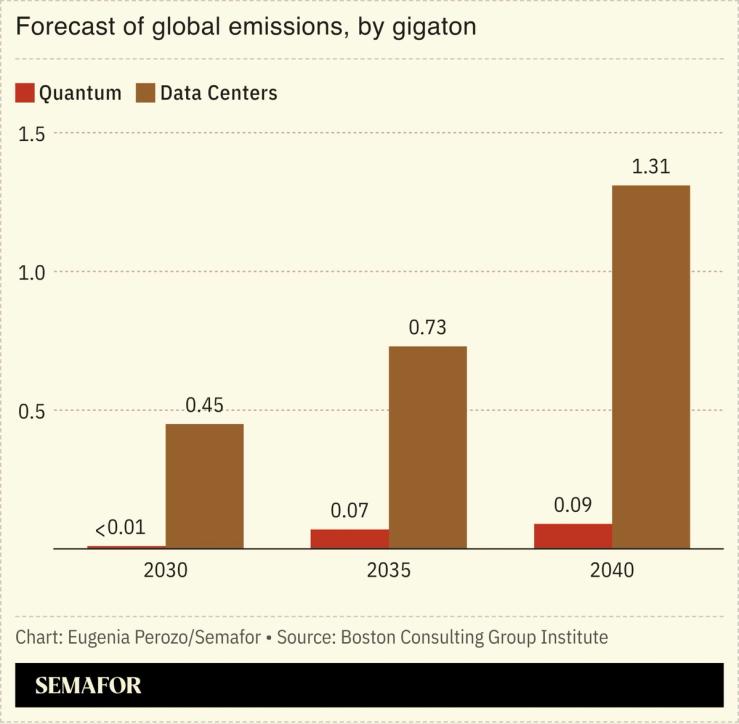
The study estimates the sector’s carbon footprint will be relatively small compared to the AI industry’s because quantum is more likely to be used to address specific problems rather than as a general purpose technology. In terms of climate applications, the report highlighted carbon capture, green hydrogen and ammonia, and batteries.