



At a moment when the US is reconsidering the extent and purpose of its engagement abroad, I find myself returning to a lesson I confronted often in my time in government: After more than five decades working on Africa, one of the most important things the US can do is show up and listen.
The story of how the African Growth and Opportunity Act came together in 1999 is instructive as I recall in my memoir. We were preparing to roll out AGOA under the Clinton administration and invited the leadership of the African diplomatic corps to the State Department for a briefing. We told the ambassadors that only 10 countries would be selected and that their governments would be informed through our ambassadors in Africa.
That went over like a lead balloon.
The dean of the group, the highly respected Roble Olhaye of Djibouti, reminded us that the diplomatic corps had been advocating for AGOA for five years. They had been updating their capitals and lobbying Congress for the legislation. How, he asked, could we treat them in such a “shabby manner?”
He was right. We had not been listening.
So we changed course, inviting more than 180 ministers from 43 African countries to Washington for four days of discussions with President Bill Clinton, cabinet members, Congress, business leaders, and civil society representatives to discuss trade, investment, conflict prevention, food security, democracy, and human rights.
We then went back to the list of potential AGOA beneficiaries and determined that 32 African countries met the conditions of the legislation.
The rest, as they say, is history.
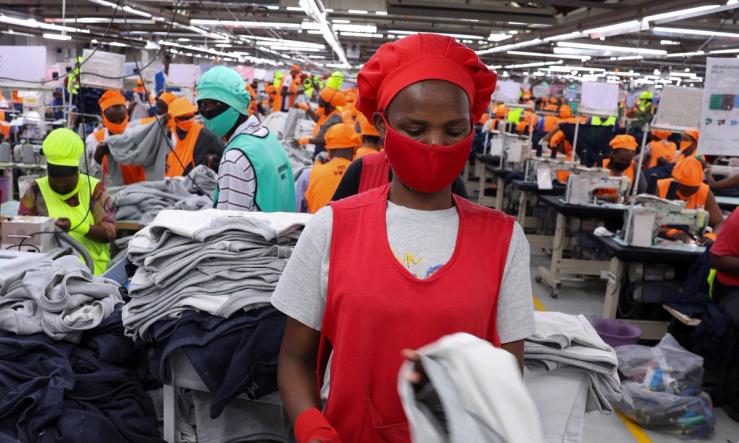
More than a quarter-century later, AGOA is again in flux. Congress extended the program through the end of 2026, and the Trump administration has said it wants to modernize the legislation to align with its America First trade policy and create more opportunities for US businesses.
This creates an opportunity to ask a bigger question: What should the US-Africa commercial relationship look like for the next 25 years?
The answer should not be developed in Washington alone.
Africa has changed dramatically since AGOA was created. It is building a continent-wide market, while its governments are seeking investment in manufacturing, energy, infrastructure, and technology, while looking to add value to their mineral resources.
The US has interests of its own: new markets for American companies, resilient supply chains, and access to critical minerals. Those interests can align with African priorities, but Washington should not assume they do.
That is why listening is a strategic tool, not simply a diplomatic courtesy. If Washington wants American companies to compete more effectively in Africa, it first needs to understand what its potential partners actually want.
That is why the Trump administration should convene the US-Africa Ministerial called for in the recently extended AGOA legislation — and make the meeting more than a ceremonial gathering. It should bring together African governments, continent-wide blocs such as the African Union, US and African businesses, investors, and civil society to help shape the next generation of the relationship.
The goal should be more than modernizing a trade preference program. It should be to identify where US and African interests genuinely intersect — and where they do not — and build policy around that reality.
There is a broader lesson here for US policy toward Africa. A relationship centered more heavily on trade, investment, and mutually beneficial commercial opportunities can be entirely consistent with America’s interests.
But transactional does not have to mean transactional-only.
The most successful commercial relationships are built on knowledge, trust, and sustained engagement. My experience in 1999 taught me that showing up is not enough. You have to listen before you decide what the partnership should look like.
That is as true for the next 25 years as it was for the first 25.
Witney W. Schneidman is the author of This Africa Idea: A Memoir of Discovery, Diplomacy, and Opportunity, published by Bloomsbury. He served as the Deputy Assistant Secretary of State for Africa during the Clinton Administration.